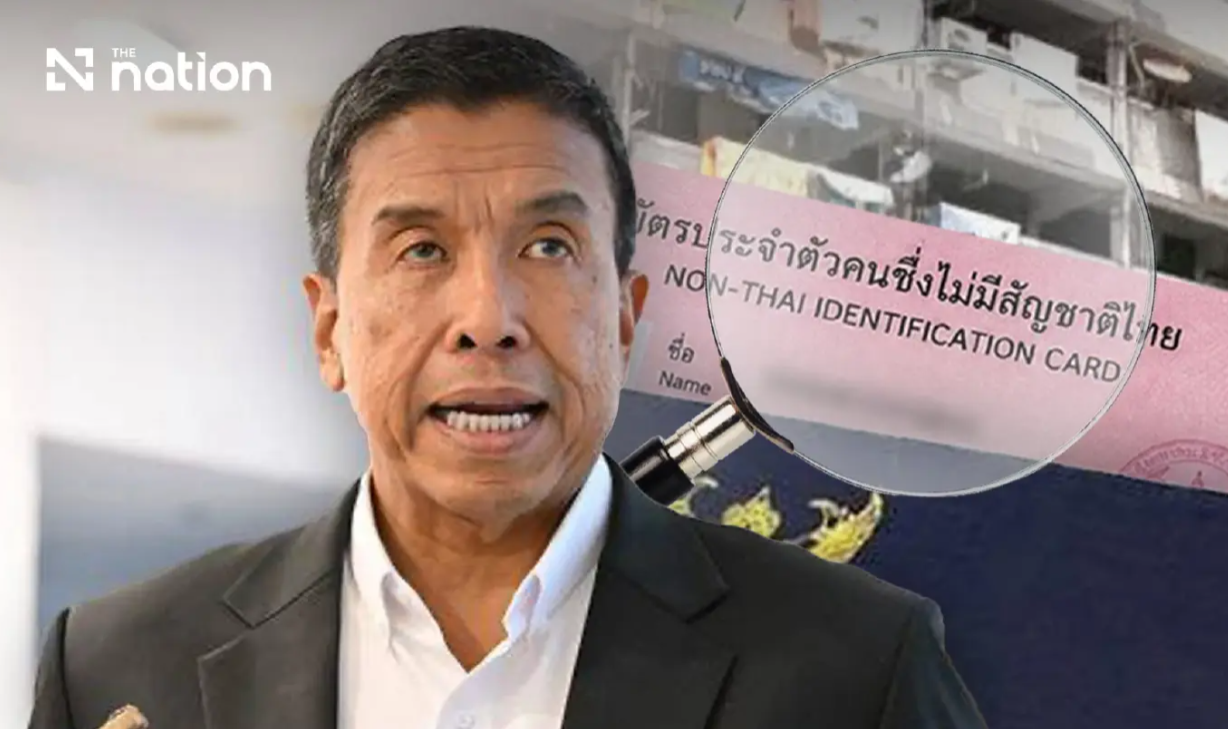
Bangkok Governor Chadchart Sittipunt has ordered a comprehensive audit spanning ten years of household-registration documents across the city's 50 district offices, responding to evidence of organised fraud in the issuance of pink cards—the identification credentials issued to foreign nationals residing in Thailand. The review targets records from 2017 onwards and will scrutinise whether individuals without Thai citizenship were improperly incorporated into household registrations in a scheme designed to support fraudulent applications for the pink-card documentation.
The suspected irregularities represent a troubling breach of Thailand's civil-registration system, one of the foundational mechanisms through which the state maintains demographic records and issues official identity documents. Investigators have identified multiple methodologies through which fraudsters allegedly manipulated this system. One common approach involved birth certificates of children born in Thailand to foreign parents who subsequently relocated to their home countries, leaving the certificates behind in Thailand. These documents were allegedly repurposed to insert unrelated individuals into household registrations under the children's identities, creating a false paper trail for pink-card applications.
A more sophisticated variant of the scheme allegedly involved transferring names from the central household register into ordinary residential registrations while fabricating familial relationships between applicants and ostensible household members. Officials investigating the matter have referred to these constructs as "phantom child" and "phantom father" arrangements, terminology that underscores the completely fictitious nature of these relationships. Such arrangements would have required complicity or negligence at multiple administrative points, suggesting the fraud extended beyond isolated incidents of individual malfeasance.
The scheme first drew sustained official attention in Din Daeng district, where investigators uncovered startling density in residential registrations. A single property measuring approximately 40 square metres was found to contain between 40 and 45 individuals listed in its household registration—a figure that immediately signalled administrative irregularity. The subsequent audit of Din Daeng registrations from 2024 identified over 2,000 address transfers that appeared anomalous, suggesting the problem extends far beyond a few isolated cases. This concentration in a single district raises questions about whether corruption was localised or whether Din Daeng simply represented a visible manifestation of broader systemic vulnerabilities.
The Bangkok Metropolitan Authority has taken immediate administrative action against four district employees connected to the investigation, removing them from service pending formal disciplinary proceedings. These individuals have not been formally charged with wrongdoing; the administrative suspension represents a precautionary measure while authorities determine the extent of employee involvement. Separately, the Royal Thai Police are conducting their own investigation, which carries the potential for criminal charges should evidence of intentional fraud be established against any individual.
Governor Chadchart has characterised the investigation as potentially extending to senior figures and retired officials, signalling that rank and tenure will not provide insulation from accountability should the evidence warrant action. However, the Bangkok Metropolitan Authority faces a structural constraint in its investigative capacity: it cannot independently compel individuals outside the administration to provide information or examine their financial records. This limitation explains why police assistance has become essential to the inquiry, particularly in tracing financial flows between alleged brokers facilitating the fraudulent applications and government employees who may have enabled them. Establishing such monetary connections would constitute crucial evidence of intentional corruption rather than mere administrative oversight.
Authorities estimate approximately 3,000 potentially questionable registrations remain under review, though Governor Chadchart emphasised that this figure has not been confirmed and may represent either an upper or lower bound. The cases are likely distributed across multiple properties rather than concentrated at single addresses, he explained, which means investigators must employ more sophisticated screening methodologies than simply identifying abnormally large household rosters. The initial phase will focus on properties with at least 15 registered residents, a threshold that authorities may subsequently lower to allow broader random sampling of individual properties and identify additional irregularities.
The fraud scheme carries implications extending beyond administrative concern into questions of sovereignty and border management. Pink cards represent Thailand's formal acknowledgment of foreign residents' legal status within the kingdom, and fraudulent issuance of these documents could obscure the actual composition and movement of the non-Thai population within Bangkok. Should substantial numbers of fraudulent pink cards have been issued, this would represent a material breach in the state's capacity to monitor and regulate foreign nationals—a fundamental function of immigration authority.
Beyond the immediate investigation, the Bangkok Metropolitan Authority is implementing structural reforms intended to prevent similar schemes from recurring. Future registration approvals will require shared responsibility among district directors and section heads rather than concentrating authority in individual officers, a design change intended to strengthen institutional oversight and reduce opportunities for unilateral abuse. Officials working in sensitive registration positions will be subject to periodic rotation, disrupting the entrenchment of relationships and authority that enabled past abuse. The authority is also expanding its anti-corruption policies to encompass administrative affairs and civil registration more comprehensively, signalling an institutional recognition that previous frameworks proved inadequate.
These preventive measures address what appears to have been a systematic failure of existing checks and balances within Bangkok's registration infrastructure. The concentration of decision-making authority in individual officers, combined with what investigators suggest was insufficient oversight of residential transfers, created conditions under which corruption could flourish relatively undetected. The fact that fraudsters could maintain a 40-to-45-person household registration in a 40-square-metre property without triggering immediate administrative challenge indicates that basic plausibility checks were either absent or not applied consistently.
The investigation represents a significant governance challenge for Bangkok's municipal administration and raises broader questions about administrative integrity throughout Thailand's bureaucracy. The pink-card fraud scheme suggests that determined actors with resources can exploit civil-registration systems despite their apparent formality and documentation requirements. For Malaysia and other Southeast Asian nations, the Bangkok case offers cautionary lessons about ensuring that identity-registration systems include adequate supervisory mechanisms, financial-transaction oversight, and rotational assignments that prevent the accumulation of unchecked authority within individual administrators. The investigation's outcomes and any resulting reforms may inform discussions about strengthening identity-documentation systems across the region, particularly in contexts where non-citizen populations require formal registration.

