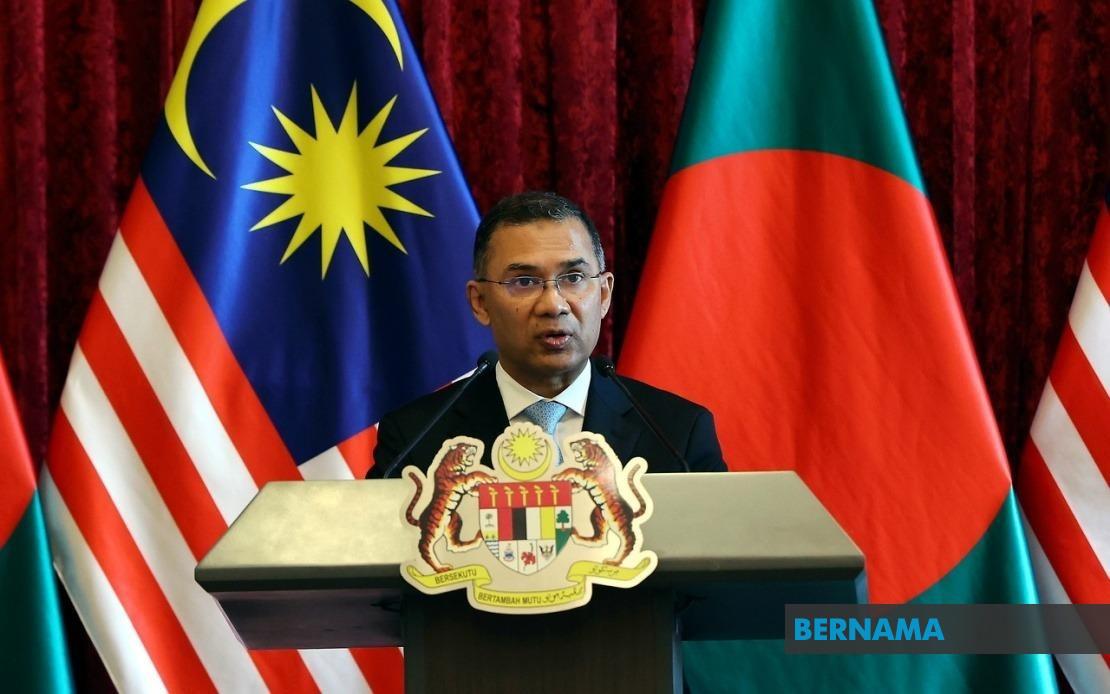
Bangladesh's Health and Family Welfare Minister Sardar Mohammad Sakhawat Hossain has highlighted the positive impact of Prime Minister Tarique Rahman's recent visit to Malaysia, describing the June trip as a significant milestone in deepening diplomatic and economic ties between the two South Asian and Southeast Asian neighbours. Speaking at a formal engagement in Dhaka organised by the Bangladesh-Malaysia Chamber of Commerce and Industry, Sakhawat emphasised that the relationship rests on a foundation of genuine mutual trust and shared strategic interests.
The minister's remarks underline Bangladesh's commitment to leveraging its diplomatic channels with Malaysia to advance bilateral cooperation across multiple sectors. For Malaysian policymakers, Sakhawat's intervention signals Dhaka's keen interest in positioning the relationship beyond ceremonial exchanges, with substantive economic content. The timing of his comments, delivered at a chamber of commerce event, reflects deliberate efforts to engage the private sector in consolidating state-level diplomatic gains.
Central to Sakhawat's address was the role of business communities as vital conduits for sustained engagement. He drew particular attention to the organic interactions between Bangladeshi and Malaysian firms, characterising these commercial networks as essential to the relationship's resilience and depth. This observation carries weight in Southeast Asia's economic landscape, where business-to-business connections often prove more durable than official channels alone in weathering political transitions or policy shifts.
The minister issued a direct appeal to Malaysia to expand its import portfolio from Bangladesh, a pointed reference to the persistent trade imbalance between the two nations. Bangladesh has long sought greater market access in Malaysia for its manufactured goods, textiles, and agricultural products. By framing this request in the context of strengthened diplomatic relations, Sakhawat attempted to create political momentum for commercial negotiations that might otherwise stall in routine bilateral forums. For Malaysian businesses and policymakers, such requests warrant serious consideration given growing regional emphasis on balanced economic partnerships.
The event itself, titled "Towards a Stronger Bangladesh-Malaysia Partnership," reflected institutional commitment to consolidating gains from high-level visits. The presence of Malaysian High Commissioner to Bangladesh Mohd Shuhuda Othman underscored Malaysia's acknowledgment of the event's significance. The participation of Federation of Bangladesh Chambers of Commerce and Industry administrator Mohammad Fazlul Haque indicated that Bangladesh's private sector viewed the diplomatic opening as a genuine opportunity for commercial expansion rather than mere ceremony.
Bangladesh's emphasis on the June visit speaks to the importance Dhaka assigns to maintaining robust ties with Malaysia, a country that holds considerable economic and geopolitical weight in Southeast Asia. Malaysia's role as a developed economy with established global trade networks makes it an attractive partner for Bangladesh as the latter pursues industrialisation and export-led growth. Conversely, Bangladesh represents a substantial market opportunity for Malaysian services, investments, and technology transfer.
The bilateral relationship encompasses several strategic dimensions beyond commerce. Educational exchanges, migration patterns, and shared security concerns in the Indian Ocean region provide additional layers of engagement. Bangladesh's significant diaspora in Malaysia—numbering in the hundreds of thousands—creates personal and remittance-based connections that reinforce state-level initiatives. These grassroots linkages provide resilience to official ties and create constituencies within both nations advocating for continued cooperation.
Sakhawat's call for "broader economic cooperation" suggests Bangladesh's willingness to explore partnership models beyond traditional trade. Joint ventures, infrastructure projects, and financial services collaboration represent potential avenues that could deepen integration. For Malaysia, such proposals align with national strategies to position itself as a hub for regional commerce and investment, though careful evaluation of terms and reciprocal benefits remains essential.
The minister's focus on mutual trust as the bedrock of the relationship carries implications for how both governments might navigate disagreements or competing interests. In Southeast Asia's complex geopolitical environment, where countries balance relationships with major powers and manage competing regional claims, trust becomes a valuable commodity. Sakhawat's emphasis suggests that Bangladesh views its Malaysian partnership as sufficiently stable to weather potential friction points and that investment in the relationship should continue regardless of global or regional turbulence.
Looking ahead, the challenge for both nations lies in translating diplomatic goodwill into concrete commercial outcomes. Business chambers and official trade missions must follow through on the momentum created by high-level visits. For Malaysian importers and exporters, understanding Bangladesh's export capabilities and market dynamics becomes increasingly important. Similarly, Bangladeshi entrepreneurs require better information about Malaysian market entry requirements and regulatory frameworks.
The strategic timing of Sakhawat's remarks—several months after the June visit—suggests ongoing efforts to sustain diplomatic momentum rather than allowing bilateral engagement to revert to baseline patterns. This maintenance work, though less visible than state visits, often proves crucial to long-term relationship building. Bangladesh's willingness to publicise its investment in Malaysia ties also signals confidence in the relationship's trajectory and commitment to regional integration.

