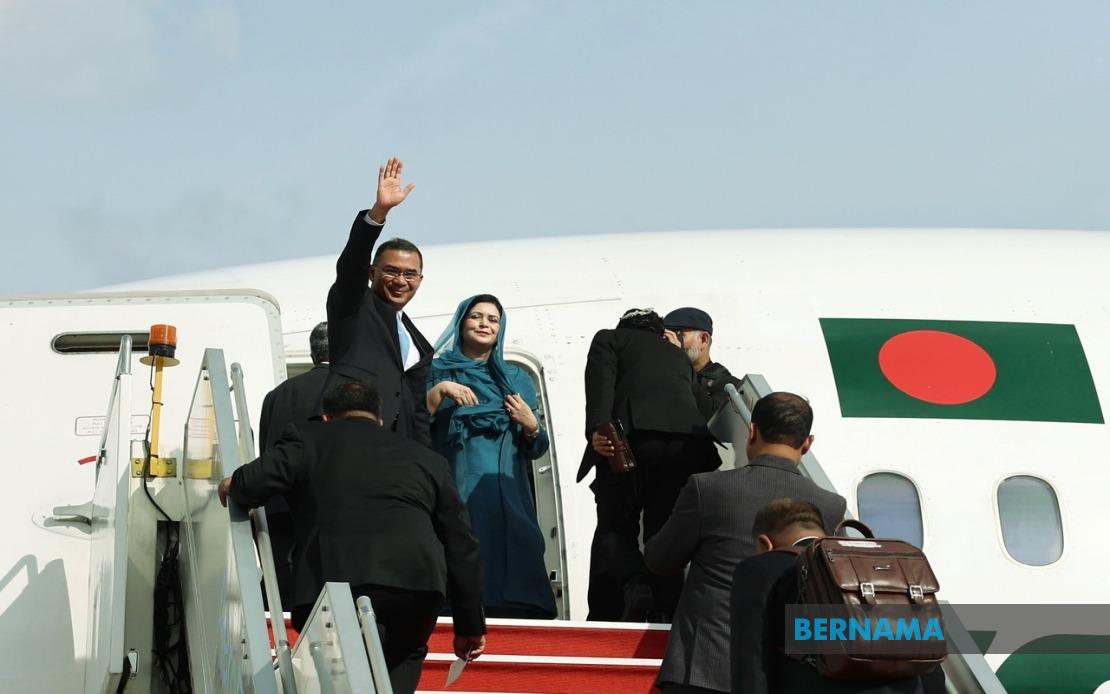
Bangladesh Prime Minister Tarique Rahman flew out of Malaysia this afternoon, concluding a two-day official visit that underscored deepening ties between Kuala Lumpur and Dhaka. The special aircraft carrying Tarique and his entourage lifted off from the Bunga Raya Complex at Kuala Lumpur International Airport at 5 pm, after a formal ceremonial send-off involving a 28-member guard of honour from the First Battalion of the Royal Ranger Regiment. Minister in the Prime Minister's Department (Religious Affairs) Dr Zulkifli Hasan attended the departure ceremony alongside Tarique, his wife Dr Zubaida Rahman and members of the Bangladeshi delegation.
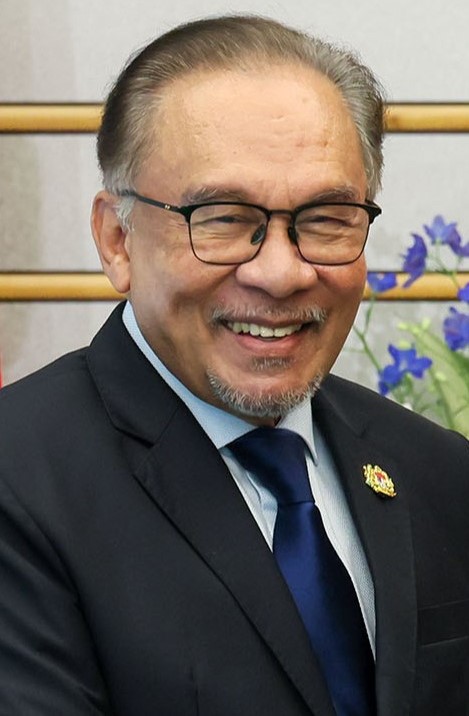
The visit, which marked Tarique's first bilateral official trip abroad since assuming office in February 2026, reflects the growing strategic importance both nations place on their relationship. This was no routine diplomatic courtesy call, but rather a carefully choreographed engagement designed to chart a new direction for South–Southeast Asian cooperation. Tarique was invited by Prime Minister Datuk Seri Anwar Ibrahim, signalling Malaysia's intent to broaden its engagement with major South Asian economies beyond traditional Indian partnerships.
During bilateral talks at the Perdana Putra Complex earlier in the day, Tarique and Anwar canvassed a broad range of mutual concerns spanning regional and global affairs. The two leaders specifically targeted opportunities to amplify cooperation in strategic sectors including semiconductors, renewable energy, agricultural development, human resources and educational exchange. These sectors represent areas where Bangladesh's growing manufacturing capabilities and Malaysia's advanced technological infrastructure can create genuine complementarities, moving beyond commodity trade.
The substantive outcomes of the visit came through a series of formal agreements that institutionalize these commitments. The two nations signed a Memorandum of Understanding on Cultural Cooperation, together with two Exchanges of Notes addressing Counter-Terrorism Research and Investment Promotion and Facilitation. These documents reflect a matured diplomatic relationship tackling both soft power dimensions and practical security concerns that resonate throughout the region.
Economic integration emerged as a centrepiece of the discussions, with both leaders pledging to accelerate a fast-track free trade agreement and deepen cooperation in energy and the halal industry. The trajectory of bilateral commerce underscores the opportunity at stake. In 2025, two-way trade reached RM12.18 billion, with Malaysian exports to Bangladesh valued at RM10.08 billion, largely comprising petroleum products. Bangladesh shipped RM2.10 billion worth of goods to Malaysia, predominantly textiles, apparel and footwear. Bangladesh ranks as Malaysia's second-largest trading partner in South Asia after India and its 28th-largest globally, suggesting room for significant expansion through preferential trade arrangements.
Bangladesh's regional aspirations featured prominently in the discussions. Tarique renewed Bangladesh's bid to become an ASEAN Sectoral Dialogue Partner, a status that would grant Dhaka closer institutional ties with the Association and greater voice in regional decision-making. Additionally, Bangladesh expressed keen interest in acceding to the Regional Comprehensive Economic Partnership, the vast Indo-Pacific trade architecture that excludes India but encompasses most major regional economies. Malaysian support for these endeavours matters significantly, given Kuala Lumpur's influential position within ASEAN.
On the geopolitical front, the two leaders demonstrated striking alignment on several contentious international issues. Both expressed strong backing for the Palestinian cause and voiced concern over the humanitarian catastrophe unfolding in Gaza. They also emphasized the importance of securing durable peace in the Persian Gulf and Iran, and committed to pursuing just, sustainable resolutions to ongoing global conflicts. These shared positions suggest a common worldview among rising regional powers seeking greater say in international affairs while advocating for a more equitable global order.
The Rohingya refugee crisis, an issue of paramount concern to Bangladesh, which hosts nearly one million displaced Myanmar nationals, figured prominently in talks. Both countries pledged to strengthen coordination through ASEAN mechanisms in pursuing a lasting solution, while maintaining engagement with Myanmar authorities. For Malaysia, which hosts over 180,000 registered Rohingya refugees, this commitment carries direct humanitarian implications. The bilateral understanding signals recognition that no single nation can resolve this protracted displacement crisis without sustained regional cooperation.
Tarique's immediate onward journey to China underscores Bangladesh's broader strategic pivot toward deepening engagement with major powers. The visit sequence itself—Malaysia followed by China—reflects Dhaka's effort to balance ties across Asia and maintain strategic flexibility. For regional observers, the Malaysia stopover carried particular significance as an opportunity to signal commitment to institutional Southeast Asian frameworks even as Bangladesh expands its great-power relationships.
The visit crystallizes a broader pattern of Malaysian diplomacy under Anwar Ibrahim's premiership: moving beyond traditional South Asian partnerships centered on India to cultivate ties with emerging powers like Bangladesh that share overlapping regional interests and development trajectories. Bangladesh's potential as both a manufacturing hub and a significant South Asian market makes it an increasingly valuable interlocutor for ASEAN economies seeking to deepen their South Asian footprint. The agreements signed and commitments made during Tarique's visit provide concrete scaffolding for realizing these possibilities in the months ahead.