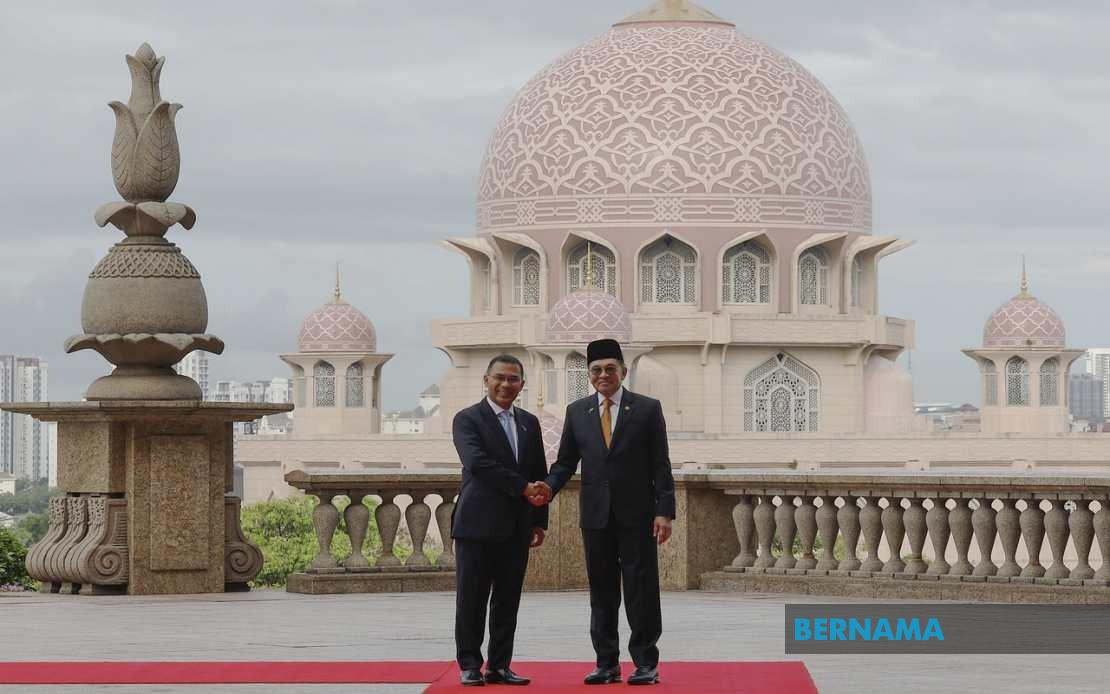
Bangladesh's Prime Minister Tarique Rahman has extended his personal prayers and best wishes for the swift recovery of Malaysia's Datuk Seri Anwar Ibrahim, underscoring the diplomatic warmth between the two neighbouring nations in South and Southeast Asia. Rahman's message, shared through the Bangladeshi Prime Minister's Office Facebook account, reflects the importance both governments place on maintaining cordial bilateral relations amid regional challenges.
In his statement, Rahman expressed hope that Anwar would make a complete and speedy recovery, invoking blessings for the Malaysian leader's continued good health and strength. The gesture carries symbolic weight in the context of South Asian and Southeast Asian diplomatic protocols, where public expressions of concern for fellow regional leaders serve to reinforce bonds between governments and demonstrate mutual respect at the highest levels of engagement.
Rahman specifically noted that the people of Bangladesh joined him in conveying warmest wishes to Malaysia's valued friend, framing Anwar not merely as a political counterpart but as an important ally to the nation. This language suggests the depth of goodwill Bangladesh's government holds toward Malaysia and its leadership, a sentiment that has been reinforced through various trade, security, and cultural cooperation frameworks established between Dhaka and Kuala Lumpur over recent years.
According to a statement released on Facebook by Datuk Dr Asri Ranga Abdullah Ramaiah, the head of Anwar's medical team, the Malaysian Prime Minister successfully underwent an elective laparoscopic surgical procedure to address a para-umbilical hernia. The procedure, which is minimally invasive in nature, represents a routine but necessary intervention that required careful medical planning and execution at a hospital facility equipped for such specialised surgery.
A para-umbilical hernia, the specific condition Anwar was treated for, occurs when tissue protrudes through a weakness in the abdominal muscles near the umbilicus. While such hernias are common and typically manageable, surgical intervention becomes advisable when the defect poses risk of complications or causes discomfort. The laparoscopic approach, which utilizes small incisions and camera-guided instruments, generally results in faster recovery times and reduced post-operative complications compared to traditional open surgical methods.
The elective nature of the procedure suggests that the decision to pursue surgery was made during a planned medical review rather than as an emergency intervention. This distinction is significant for understanding the Malaysian government's continuity planning and the coordination required to ensure state functions continue smoothly during any period when the Prime Minister requires medical attention and recovery time. Government officials typically arrange such procedures with considerable advance notice to facilitate proper transition arrangements.
Anwar Ibrahim's medical transparency, as demonstrated through the public statement from his medical team, contrasts with health secrecy often observed in some regional governments. This openness serves multiple purposes: it reassures the public and international partners about the leader's fitness for office, demonstrates accountability in government communications, and establishes clear medical facts that counter speculation or misinformation that might otherwise circulate through social media and informal channels.
The timing and nature of international responses to Anwar's medical procedure illustrate the interconnectedness of Southeast Asian political relationships. Bangladesh's prompt and warm public acknowledgement reflects not only diplomatic courtesy but also genuine interest in the well-being of a regional peer, particularly one whose government plays an active role in multilateral forums such as ASEAN Regional Forum discussions and BIMSTEC initiatives that connect South and Southeast Asia.
For Malaysian readers and observers, the Bangladeshi Prime Minister's statement provides reassurance that international partners have taken note of Anwar's medical situation and harbour confidence in his recovery. Such gestures, while seemingly ceremonial, carry practical weight in maintaining investor confidence and regional stability, particularly in financial markets and diplomatic circles that monitor leadership continuity as a marker of governmental stability.
The incident also underscores the importance of routine health management even for top government officials. Anwar's willingness to address a medical issue proactively, rather than allowing it to become a more serious complication, exemplifies preventive healthcare principles applicable across all segments of society. Public figures who prioritise such maintenance often become inadvertent advocates for regular medical check-ups and timely interventions among their populations.
As Anwar undergoes recovery from his surgical procedure, the supportive messages from regional counterparts like Tarique Rahman contribute to an environment of goodwill that may facilitate smoother diplomatic engagement going forward. Such personal dimensions of international relations, though often overlooked in favour of trade statistics and security agreements, remain important elements of how nations build and maintain productive bilateral relationships.

