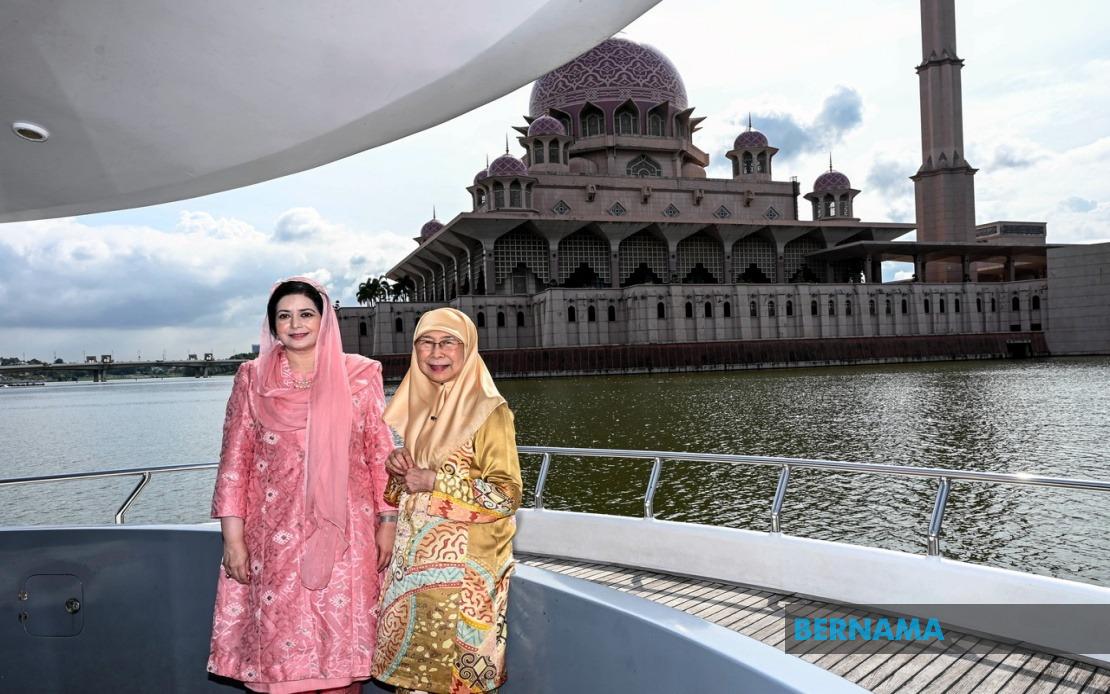
Dr Zubaida Rahman, wife of Bangladesh Prime Minister Tarique Rahman, experienced the natural and architectural splendour of Putrajaya during a leisurely lake cruise on Saturday, marking a highlight of her ongoing official visit to Malaysia. The excursion offered her a panoramic perspective of the purpose-built administrative capital's most recognizable structures, viewed from the tranquility of Putrajaya Lake's waters. The morning outing commenced at 9.30 am, with Dr Zubaida receiving a warm reception from two prominent Malaysian figures: Datin Seri Dr Wan Azizah Wan Ismail, the Prime Minister's wife, and Hannah Yeoh, who serves as Minister in the Prime Minister's Department overseeing Federal Territories.
The hour-long cruise provided more than sightseeing value—it functioned as an informal diplomatic engagement between the two delegations. Throughout the boat journey, Dr Zubaida engaged in substantive conversation with her Malaysian hosts, the relaxed waterside setting facilitating candid discussion away from the formality of official chambers. Such leisure activities during state visits often serve as opportunities for relationship-building, allowing senior officials' spouses to establish personal connections that can underpin stronger governmental ties. The scenic backdrop of Putrajaya's architectural achievements—from the distinctive Putra Mosque to the administrative complexes lining the water's edge—created an appropriate setting for showcasing Malaysia's development accomplishments to visiting dignitaries.
The lake cruise forms part of a broader two-day official visit that commenced when Prime Minister Tarique Rahman and Dr Zubaida arrived in Malaysia on Sunday evening. This journey marks a significant milestone in Bangladesh's diplomatic calendar, representing Tarique's inaugural official bilateral visit overseas since his assumption of the prime ministerial office in February 2026. The timing and destination underscore the importance Bangladesh places on its relationship with Malaysia, selecting the Southeast Asian nation as the destination for his first major international bilateral engagement. The visit comes at the invitation of Prime Minister Datuk Seri Anwar Ibrahim, reflecting both nations' commitment to deepening their strategic partnership.
Beyond the ceremonial aspects and sightseeing elements, the visit centres on substantive objectives that carry significant economic and strategic ramifications for both countries. Malaysian and Bangladeshi officials are focused on reinforcing existing bilateral ties that have been cultivated over decades, while simultaneously exploring fresh avenues for cooperation across multiple sectors of mutual benefit. These discussions likely encompass trade expansion, investment opportunities, labour mobility, cultural exchange, and regional security matters that affect both Southeast Asia and South Asia. The high-level nature of the visit—with the Prime Ministers themselves involved alongside their spouses—signals that both nations regard this relationship as a priority requiring attention at the highest governmental levels.
From an economic perspective, the relationship between Malaysia and Bangladesh carries substantial weight in regional commerce. Bangladesh currently ranks as Malaysia's 28th-largest trading partner globally, a position that reflects the two countries' significant commercial interdependencies. More tellingly, Bangladesh stands as Malaysia's second-largest trading partner within South Asia, trailing only India in that regional ranking. The combined bilateral trade reached RM12.18 billion in recent accounting, a figure that demonstrates the depth and breadth of commercial engagement between Kuala Lumpur and Dhaka. For Malaysian readers and businesses, Bangladesh represents both a significant market for Malaysian exports and a source of goods and services that feed into Malaysian supply chains and consumer demand.
The strategic geography of the two nations reinforces the value of their relationship. Malaysia's position as a major Southeast Asian economy and regional trading hub complements Bangladesh's emergence as a significant South Asian player, particularly as it develops its infrastructure and industrial capacity. Enhanced cooperation between the two countries can facilitate better regional integration, particularly as initiatives like the Bangladesh-China-India-Myanmar Economic Corridor and Malaysia's own regional strategies seek to connect South Asian and Southeast Asian markets. The visit therefore carries implications that extend beyond bilateral relations, potentially influencing broader patterns of regional trade and investment flows across Asia.
Cultural and people-to-people exchanges represent another dimension of these diplomatic engagements. The presence of Dr Zubaida alongside her husband in Malaysia, and her participation in activities showcasing Malaysian achievements like Putrajaya, reflects an understanding that modern state visits involve multiple layers of engagement. Such interactions help build mutual understanding and appreciation between populations, fostering goodwill that supports governmental relations. For Malaysian communities with historical or cultural connections to Bangladesh, such visits also affirm Malaysia's commitment to maintaining strong ties with neighbouring regions and South Asian partners.
The choice of Putrajaya as a destination for Dr Zubaida's daytime activities carries symbolic weight. As a purpose-built administrative capital representing Malaysia's vision and capabilities, showcasing Putrajaya to visiting dignitaries communicates Malaysia's development achievements and forward-looking orientation. The architectural and environmental features of Putrajaya—its blend of modern infrastructure with landscaped natural areas—present a tangible expression of Malaysian governance and planning principles. For visiting delegations, such exposure often influences their perceptions of Malaysia as a developed nation with sophisticated administrative systems and technological capabilities.
Looking ahead, the outcomes of this visit may shape bilateral relations for the coming years. Agreements on trade facilitation, investment protection, or sectoral cooperation could emerge from the discussions occurring alongside these ceremonial activities. For Malaysian businesses operating in Bangladesh or seeking to expand there, any announcements or frameworks established during this visit could present new opportunities. Similarly, Bangladeshi enterprises eyeing Malaysian markets or investment possibilities may benefit from goodwill and momentum generated through high-level engagement.
The visit also occurs against a backdrop of evolving regional dynamics in South and Southeast Asia. With geopolitical competition intensifying across the Indo-Pacific region and countries increasingly seeking to strengthen partnerships with trusted neighbours, the Malaysia-Bangladesh bilateral relationship gains added significance. Nations are increasingly seeking to diversify their external partnerships and create multiple avenues for cooperation, reducing dependence on any single partner. Within this context, the Tarique Rahman visit demonstrates Bangladesh's commitment to maintaining robust relations with Southeast Asian nations, even as it manages complex relationships with other regional and global powers.
As Dr Zubaida and Prime Minister Tarique Rahman conclude their Malaysian visit, the impressions formed and understandings reached during these two days—whether during formal meetings or informal moments like the Putrajaya Lake Cruise—will likely influence bilateral relations well beyond this specific engagement. The personal connections established between senior officials can translate into more effective governance collaboration, smoother trade interactions, and enhanced people-to-people understanding. For Malaysia, hosting such visits reinforces its position as a regional bridge between South Asia and Southeast Asia, a role that carries both diplomatic and economic advantages in an increasingly interconnected regional landscape.