Bangladesh Prime Minister Tarique Rahman departed Malaysia on Monday after concluding his first official state visit as premier, carrying with him a renewed commitment to fortify ties with his Malaysian counterpart Datuk Seri Anwar Ibrahim. The visit underscores the growing importance both nations place on their bilateral relationship, which extends far beyond trade and diplomatic protocols to encompass deeper people-to-people networks and shared regional interests in Southeast Asia.
During his stay, Tarique Rahman emphasised Bangladesh's appreciation for Malaysia's multifaceted engagement across numerous sectors, reflecting the breadth of cooperation that has developed between the two countries over decades. The reciprocal warmth displayed throughout the visit signals both governments' intention to move beyond ceremonial exchanges towards substantive collaboration that addresses contemporary challenges facing the region. His remarks, conveyed through the Bangladesh Ministry of Foreign Affairs, highlighted how interconnected the two nations have become through cultural, economic and social pathways that bind their populations together across various professions and communities.
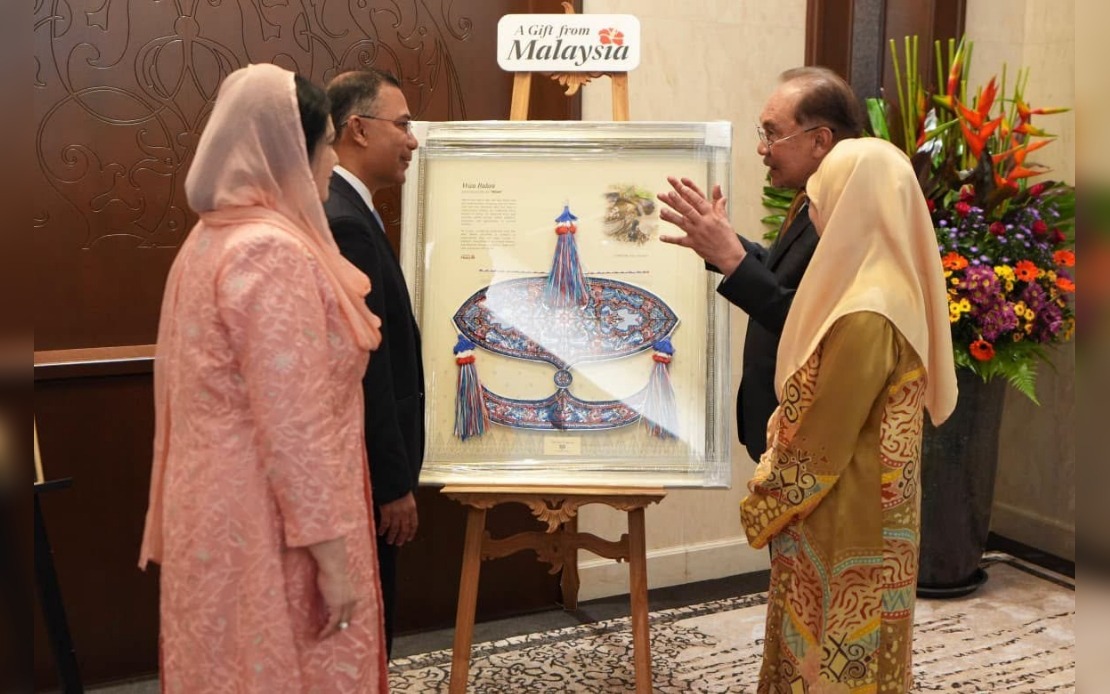
In a gracious acknowledgement of his reception, Tarique Rahman and his wife, Dr Zubaida Rahman, expressed heartfelt appreciation to Prime Minister Anwar Ibrahim and his spouse, Datuk Seri Dr Wan Azizah Wan Ismail, for the hospitality extended during the state visit. Such diplomatic courtesies, while formal in nature, carry weight in establishing the tone for sustained high-level engagement. The warmth of the welcome and the quality of discussions held demonstrate Malaysia's willingness to position Bangladesh as a key partner in regional affairs, particularly given Bangladesh's strategic location and growing economic significance in South Asia.
The Bangladesh premier also took time to recognise the hospitality and cordiality demonstrated by Malaysia's government institutions and broader population, reflecting the friendly bilateral atmosphere that characterises contemporary Malaysia-Bangladesh relations. This public acknowledgement serves multiple purposes: it validates Malaysian efforts in diplomatic engagement while signalling to domestic audiences in Bangladesh that their nation occupies an important place in Malaysia's foreign policy calculations. For Malaysian policymakers, such recognition reinforces the value of consistent engagement with neighbouring countries and regional partners.
Conversations between Tarique Rahman and Prime Minister Anwar Ibrahim reaffirmed the foundational bonds connecting the two nations, bonds that transcend mere strategic interest and encompass shared values, historical experiences and aspirations for regional stability and prosperity. The discussions appear to have moved beyond general pleasantries to address substantive areas of mutual concern and opportunity, establishing frameworks for enhanced cooperation that could manifest in trade, investment, educational exchanges and security coordination.
Tarique Rahman traced the historical roots of Bangladesh-Malaysia relations back several decades, invoking the legacies of his father, President Ziaur Rahman, and his mother, former Prime Minister Begum Khaleda Zia, whose tenures coincided with important periods of Bangladesh's nation-building. By explicitly connecting contemporary bilateral efforts to his family's historical role in shaping Bangladesh's founding decades, he anchors the current relationship in deeper historical significance. This reference carries particular weight for Malaysian audiences familiar with Southeast Asian political history and the prominent roles played by foundational leaders in establishing regional partnerships.
The mention of his parents' contributions to Bangladesh governance provides context for understanding why the current premier views Malaysia relations as particularly significant. During Ziaur Rahman's presidency and Begum Khaleda Zia's premiership, Bangladesh navigated critical phases of its post-independence development, and Malaysia emerged as an important regional ally and economic partner. These historical connections have created institutional memory and established channels of communication that facilitate smoother diplomatic engagement today compared to relationships less firmly rooted in shared history.
Tarique Rahman also conveyed sincere appreciation to His Majesty Sultan Ibrahim, King of Malaysia, for according him an audience and demonstrating personal warmth during their meeting. Royal-level engagement signals the highest levels of diplomatic importance and respect between nations. The fact that the Malaysian monarch made time to meet the visiting premier underscores Malaysia's commitment to treating Bangladesh as a significant partner rather than a peripheral concern in its foreign policy architecture. Such gestures carry symbolic weight that extends beyond the bilateral relationship, demonstrating to international observers Malaysia's positioning within broader Asian diplomacy and its capacity to attract high-level engagement from regional leaders.
For Malaysian readers and policymakers, Tarique Rahman's visit carries implications for ASEAN dynamics and broader Southeast Asian stability. Bangladesh, while not an ASEAN member, maintains significant ties with multiple association members and plays an increasingly important role in regional geopolitics, particularly regarding maritime security, counter-terrorism cooperation and economic development initiatives. The strengthening of Malaysia-Bangladesh relations could facilitate greater regional cohesion on issues ranging from Rohingya refugee management to maritime boundary demarcation in the Bay of Bengal and the Andaman Sea.
The emphasis on multifaceted partnership suggests both nations intend to expand cooperation beyond traditional bilateral channels. This could encompass engagement through multilateral organisations, coordinated positions on regional security matters and joint initiatives addressing transnational challenges including human trafficking, narcotics smuggling and irregular migration. Malaysia's experience managing complex multicultural society and its established institutional frameworks for inter-community harmony may offer valuable lessons for Bangladesh as it navigates its own diverse demographic composition and social cohesion challenges.
Looking forward, the commitments articulated during Tarique Rahman's state visit appear to lay groundwork for sustained high-level engagement and working-level coordination across government ministries and agencies. The fact that this represented his first state visit as premier suggests Bangladesh's new government under his leadership prioritises regional engagement and views Malaysia as a natural partner for advancing shared interests. For Malaysian observers, this presents opportunities for expanding trade linkages, collaborative research initiatives and people-to-people exchanges that could deepen the relationship across multiple sectors.
The visit also reflects broader regional trends wherein Southeast Asian nations increasingly seek to strengthen partnerships with South Asian countries, recognising the growing interconnectedness of the two regions. Bangladesh's strategic position as a gateway between South Asia and Southeast Asia, combined with its substantial population and emerging economic potential, makes it an attractive partner for Malaysia as it positions itself within a multipolar Asian order. The diplomatic groundwork laid during this state visit may yield tangible cooperation frameworks in months and years ahead.