%22%2F%3E%3C%2Fpattern%3E%3C%2Fdefs%3E%3Crect%20width%3D%22100%25%22%20height%3D%22100%25%22%20fill%3D%22url(%23phiu8rg)%22%2F%3E%3Crect%20width%3D%22100%25%22%20height%3D%22100%25%22%20fill%3D%22url(%23phiu8rp)%22%2F%3E%3Ctext%20x%3D%2250%25%22%20y%3D%2250%25%22%20text-anchor%3D%22middle%22%20dominant-baseline%3D%22central%22%20fill%3D%22rgba(255%2C255%2C255%2C0.95)%22%20font-family%3D%22Georgia%2C%20'Times%20New%20Roman'%2C%20serif%22%20font-weight%3D%22700%22%20font-size%3D%22136%22%20letter-spacing%3D%22-0.02em%22%3EBangladesh%3C%2Ftext%3E%3C%2Fsvg%3E)
Bangladesh is charting an ambitious course toward greater integration into the Southeast Asian economic and political landscape, with Prime Minister Tarique Rahman announcing the country's formal aspiration to achieve ASEAN Sectoral Dialogue Partner status during high-level talks in Putrajaya this week. The statement represents a strategic shift for the South Asian nation, which sits at the crossroads of regional commerce and has increasingly sought to strengthen institutional ties with ASEAN member states.
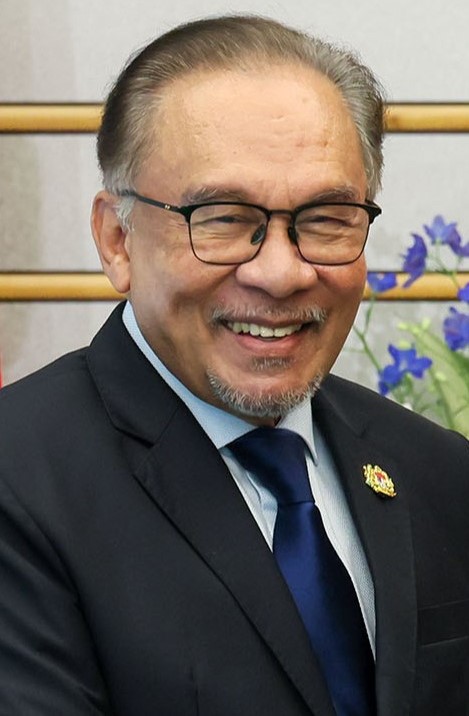
Rahman's declaration came alongside substantive progress in Bangladesh-Malaysia relations, as the two nations formalized a Memorandum of Understanding on cultural cooperation and exchanged notes covering counter-terrorism research and investment promotion. These agreements underscore the practical dimension of bilateral engagement even as Dhaka pursues its broader regional ambitions. Prime Minister Datuk Seri Anwar Ibrahim's hosting of the Bangladeshi delegation reflected Malaysia's pivotal role in facilitating such integration efforts within ASEAN structures.
Crucially, Bangladesh has also signalled its interest in acceding to the Regional Comprehensive Economic Partnership, the massive trade bloc that encompasses ASEAN nations alongside China, Japan, South Korea, Australia and New Zealand. Membership in RCEP would substantially expand Bangladesh's market access and integrate its manufacturing sector—particularly textiles and apparel—into a preferential trading framework encompassing roughly 2.3 billion people. For a nation seeking to diversify beyond traditional garment exports, such participation offers transformative potential in reducing tariffs on industrial inputs and accessing supply chains across the region.
The economic relationship between Malaysia and Bangladesh already reflects significant intertwining of commercial interests. In 2025, bilateral trade reached RM12.18 billion, positioning Bangladesh as Malaysia's 28th largest trading partner globally and second-largest partner within South Asia after India. This volume underscores both the existing depth of engagement and the untapped potential for expansion through formalized regional arrangements. Malaysia's dominant export position, valued at RM10.08 billion, centres on petroleum products—a reflection of Malaysia's energy resources and Bangladesh's growing consumption demands driven by industrial expansion.
The composition of trade flows reveals complementary economic structures that multilateral frameworks like RCEP could amplify. Bangladesh's exports to Malaysia, totalling RM2.10 billion, concentrate in textiles, apparel and footwear—sectors in which the country possesses substantial comparative advantage and has built globally competitive supply chains. These industries employ millions of Bangladeshi workers and represent the country's most significant manufacturing export base. Enhanced access through RCEP would reduce friction in servicing Malaysian and broader ASEAN markets.
Bangladesh's pursuit of ASEAN Sectoral Dialogue Partner status reflects strategic positioning rather than a path toward full membership, which remains politically and structurally complex for non-Southeast Asian nations. Sectoral dialogue partnerships enable substantive engagement on specific economic and security issues without requiring the consensus and institutional modifications that full membership demands. This intermediate status has proven attractive for India and China, allowing deep involvement in ASEAN-led frameworks while preserving independence in broader geopolitical choices.
For Malaysia and other ASEAN nations, Bangladesh's integration efforts carry both opportunities and considerations. The country's 170 million population and significant manufacturing base could strengthen regional value chains, particularly in labour-intensive sectors where ASEAN member states increasingly focus on higher-value-added activities. Simultaneously, Bangladesh's participation in RCEP would deepen the bloc's economic coherence and provide additional leverage in managing regional trade dynamics.
The Rahman administration's diplomatic overtures also reflect Bangladesh's domestic development priorities. As the country navigates post-transition governance following recent political upheaval, positioning itself within expanding regional frameworks provides both economic stimulus and diplomatic legitimacy. Access to RCEP's preferential tariff structures would offer manufacturers enhanced competitiveness against competitors in India, Vietnam and Indonesia, while ASEAN Sectoral Dialogue status would provide institutional voice in regional deliberations.
Prime Minister Anwar's receptiveness to Bangladesh's aspirations signals Malaysia's confidence in welcoming deeper South Asian engagement within ASEAN structures. Malaysia has championed inclusive regionalism and viewed India's recent elevation to ASEAN dialogue frameworks positively. Bangladesh, with its democratic credentials despite recent turbulence and its substantial economic weight, represents a logical candidate for formalized engagement. The bilateral cultural cooperation agreement acknowledges the peoples-to-people dimensions of the relationship, important for building sustained support for institutional integration.
For Malaysian businesses and investors, Bangladesh's RCEP accession and ASEAN dialogue partnership would create new opportunities across sectors. Enhanced tariff predictability would benefit companies with operations or supply chains spanning both economies. The investment promotion agreement signed during Rahman's visit specifically targets facilitating greater capital flows, recognizing that deeper economic integration requires not merely trade liberalization but active investment facilitation.
The geopolitical dimension merits attention as well. Bangladesh's location along critical sea lanes and its role in managing the Bay of Bengal make its regional positioning consequential for maritime security and energy transit. Institutional integration into ASEAN frameworks—even at the dialogue partner level—could strengthen coordination on counter-terrorism, maritime governance and disaster response, areas explicitly highlighted in the bilateral agreements signed this week.
Moving forward, Bangladesh's path toward RCEP membership will require formal application and consensus approval from existing members, a process that typically takes months to years. ASEAN Sectoral Dialogue Partner status may move more expeditiously given Malaysia and other nations' apparent openness. The trajectory depends partly on Bangladesh's ability to demonstrate institutional stability and commitment to regional standards, particularly regarding labour and environmental practices that RCEP frameworks increasingly emphasize.
The engagement between Anwar and Rahman demonstrates how South Asian nations increasingly recognize ASEAN not as a geographically exclusive club but as the institutional architecture through which regional economic cooperation, security dialogue and development objectives are advanced. Bangladesh's pursuit of deeper integration aligns with Malaysia's vision of ASEAN as an inclusive, economically dynamic and strategically relevant regional organization navigating an era of multipolar competition and complex interdependencies.