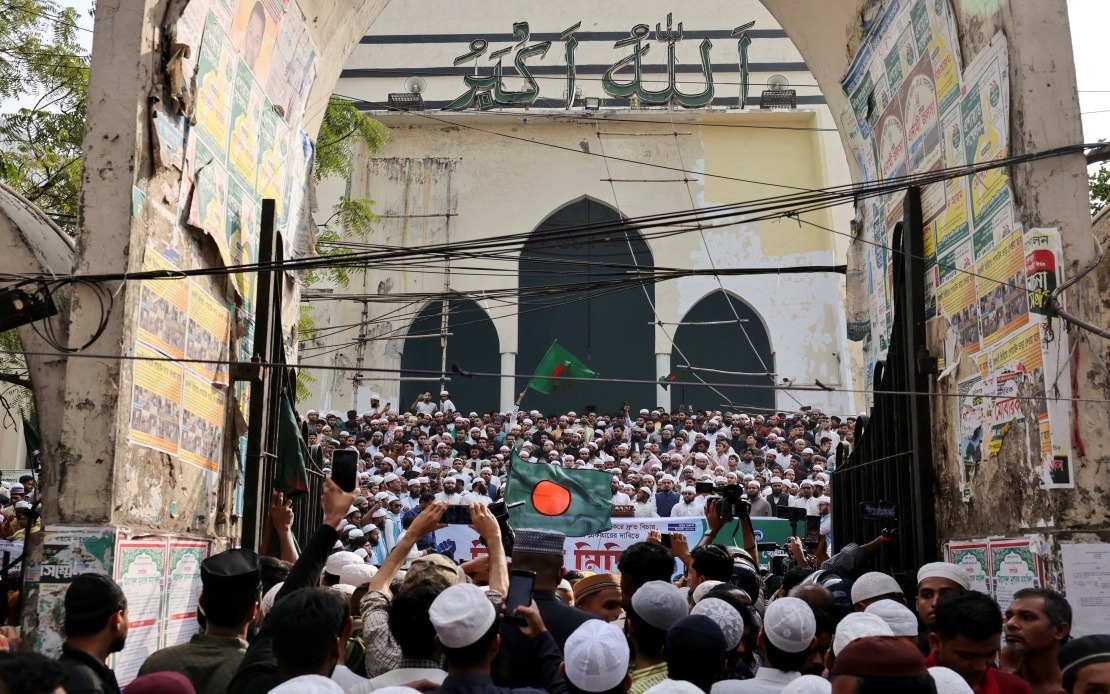
A special International Crimes Tribunal in Bangladesh has delivered death sentences in absentia against three senior police officers, including the former commissioner of the Dhaka Metropolitan Police, for their involvement in the fatal shooting of protesters during the tumultuous July 2024 uprising that ultimately destabilized the nation. The tribunal, presided over by Justice Md Golam Mortuza Mozumder and comprised of three judges, concluded on Sunday that the defendants bore criminal responsibility for crimes against humanity committed during the period of civil unrest.
The convicted officers are former Dhaka Metropolitan Police Commissioner Habibur Rahman, former Additional Deputy Commissioner Md Rashedul Islam, and former Rampura Police Chief Md Mashiur Rahman. All three remain at large, having evaded capture since the judicial proceedings commenced. Notably, Habibur Rahman had already received a death sentence in a separate legal case prior to this verdict, underscoring the gravity of allegations directed against the former police establishment. The tribunal also imposed life sentences extended by an additional twenty years upon two other officers involved in the same incidents, demonstrating the court's determination to hold multiple layers of the security apparatus accountable for their actions.
Among the separate cases examined by the tribunal were incidents that captured international attention through social media virality. One particularly disturbing case involved the fatal shooting of a young man while he was suspended from a building in Dhaka, an incident that sparked widespread outrage and amplified calls for accountability. Two additional killings in the capital were also examined and attributed to the convicted officers. The graphic nature of these deaths, combined with their documentation and rapid dissemination across digital platforms, ignited unprecedented public anger and catalyzed mass demonstrations throughout the country.
The 2024 uprising represented a pivotal moment in Bangladesh's recent political history, serving as the catalyst for the dramatic collapse of the government led by then-Prime Minister Sheikh Hasina. The movement, which gathered momentum through July 2024, ultimately forced Hasina into exile in August of the same year, ending her tenure and marking a significant political rupture. According to international sources, approximately 1,400 individuals lost their lives during this period of civil disturbance, with the overwhelming majority of casualties resulting from police gunfire directed by officers operating under Hasina's administration and her Awami League party. Thousands of additional individuals sustained injuries during the violence.
The judiciary's aggressive pursuit of accountability extends beyond the police officers directly involved in the shootings. In November of the preceding year, the same tribunal had already imposed a death sentence upon former Prime Minister Sheikh Hasina herself in connection with separate charges relating to crimes against humanity. This demonstrates a comprehensive effort by Bangladesh's legal system to pursue accountability across the political and security establishment that presided over the deadly crackdown. The courtroom activities signal a broader institutional commitment to investigating the structural factors that enabled the lethal response to public dissent.
The absence of the defendants from proceedings reflects the broader challenge facing Bangladesh's transitional justice mechanisms. All four individuals convicted in this particular case—including Tariqul Islam Bhuiyan, the former sub-inspector sentenced to life imprisonment—remain fugitives from justice. Their evasion complicates the enforcement of sentences and raises questions about potential safe havens and networks of support that may be sheltering former security officials implicated in the violence. The in absentia nature of the proceedings, while legally permissible, underscores the practical limitations confronting judicial institutions in post-conflict environments.
For Southeast Asian observers, the Bangladesh proceedings offer instructive lessons regarding institutional accountability and transitional justice frameworks. The rapid mobilization of tribunal systems and the willingness of the judiciary to pursue high-ranking officials sends a signal about the potential consequences of violent responses to civil unrest. The case simultaneously highlights vulnerabilities inherent in security sector accountability mechanisms, particularly when key figures maintain the capacity to flee and potentially evade justice indefinitely. The tribunal's work also demonstrates the importance of digital documentation in modern protest movements, as social media amplification of violent incidents accelerated public consciousness and international attention.
The broader implications for Bangladesh extend to questions about police reform and institutional restructuring. The security forces implicated in the 2024 violence operated within hierarchical command structures, yet convictions have focused primarily on individual officers rather than examining systemic failures or orders transmitted through chains of command. This approach may leave underlying institutional vulnerabilities unaddressed unless accompanied by comprehensive security sector reforms. Regional counterparts monitoring Bangladesh's transition will be observing whether accountability mechanisms evolve to address structural issues or remain confined to individual criminal responsibility.
The international dimension of these cases merits consideration, particularly regarding extradition frameworks and regional cooperation in prosecuting fugitives. Several of the convicted officers may have attempted to relocate across borders, potentially creating complications for Bangladesh's law enforcement agencies in securing their apprehension. The absence of robust mechanisms for tracking and detaining fugitives across the region underscores persistent challenges in delivering justice in transnational contexts. Whether neighboring countries will cooperate in pursuing extradition remains an open question with significant implications for the comprehensiveness of accountability.
Looking ahead, the sustainability of Bangladesh's transitional justice efforts will depend upon the capacity of the tribunal system to maintain momentum and public confidence while navigating the complexities of a transitional political environment. The death sentences and life imprisonment verdicts represent significant symbolic achievements, yet their practical effect remains limited absent the apprehension of the accused. The tribunal's work continues to unfold, with potential for additional cases and convictions as investigations progress, suggesting that Bangladesh's reckoning with the violence of 2024 remains an ongoing process rather than a concluded chapter.

