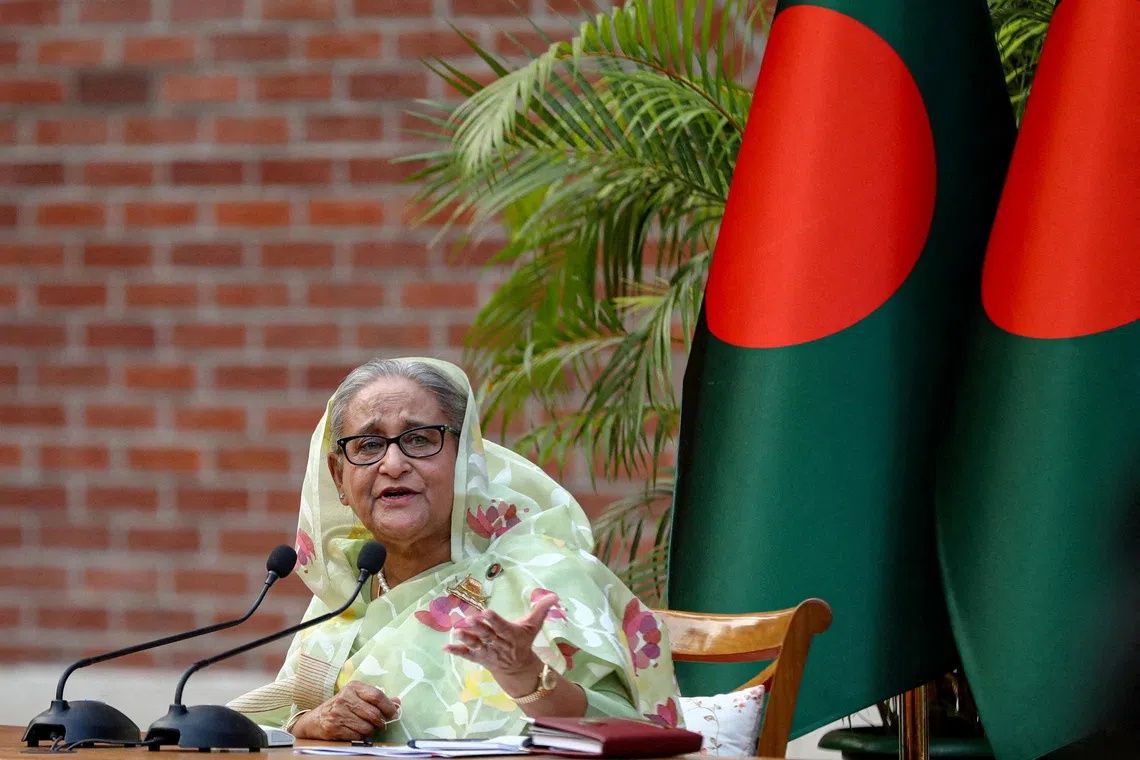
Bangladesh has raised formal concerns with India over exiled former prime minister Sheikh Hasina's planned virtual participation in a New Delhi event, arguing that permitting such political activities by a fugitive could undermine the two nations' efforts to repair their relationship. The issue highlights the delicate diplomatic balancing act both countries must perform as they attempt to normalise ties following the tumultuous period that saw Hasina's government collapse during widespread unrest in August 2024.
The controversy centres on Hasina's scheduled appearance at an August 5 gathering organised by the Foreign Correspondents' Club of South Asia in India's capital. The event will commemorate the second anniversary of the student-led uprising that toppled her administration and forced her to flee Bangladesh. Organisers have indicated that the 78-year-old former leader will participate remotely via video link, alongside her son Sajeeb Wazed Joy and other speakers, to address supporters and discuss her perspective on recent events.
This marks the first explicit diplomatic statement from Dhaka regarding Hasina's planned speech, reflecting growing anxiety within Bangladesh's government about activities undertaken by opposition figures from Indian territory. State Minister for Foreign Affairs Shama Obaed Islam articulated Dhaka's position to reporters, emphasising that while Bangladesh remains committed to constructive engagement with New Delhi, the country cannot tolerate arrangements that effectively enable political fugitives to orchestrate campaigns from abroad. She stressed that India must provide unambiguous assurances about where it stands on this matter, framing the question as essential to protecting the bilateral relationship.
The timing of these diplomatic exchanges is particularly sensitive given the broader context of India-Bangladesh relations. Since the formation of the interim government led by Tarique Rahman's Bangladesh Nationalist Party following February's elections, both nations have signalled genuine interest in restoring the partnership that had deteriorated during Hasina's final years in power. New Delhi and Dhaka have engaged in higher-level diplomatic contacts and indicated willingness to cooperate on issues ranging from trade to security. Against this backdrop, any perception that India is providing a platform for opposition political activity could complicate these fragile efforts at reconciliation.
Bangladesh's government has made clear that this is not an isolated complaint but rather reflects a sustained pattern of concern about Awami League figures, including Hasina herself, issuing political statements and conducting activities from Indian soil. Islam indicated that Dhaka has communicated these worries to New Delhi on multiple occasions through diplomatic channels. She referenced previous Indian assurances suggesting that India does not ordinarily permit fugitives to use its territory for political mobilisation, creating a potential contradiction between those stated principles and any passive allowance of Hasina's participation in the August 5 event.
The legal circumstances surrounding Hasina add further complexity to the dispute. Bangladesh has sought her extradition from India, where she has resided since her dramatic departure from Dhaka. In 2025, a Bangladeshi court sentenced her to death in absentia for crimes against humanity, based on allegations related to a 2024 government crackdown against protesters that international observers, including the United Nations, have estimated may have cost up to 1,400 lives. Hasina has categorically rejected this judgment as legally illegitimate, maintaining her position through interviews with international media outlets including Reuters, during which she has also expressed her intention to return to Bangladesh in December.
The international community's response to these developments remains muted but significant. The Foreign Correspondents' Club of South Asia has not yet issued a substantive reply to Bangladesh's diplomatic inquiries, while the Indian foreign ministry has similarly refrained from commenting publicly on the matter. This silence from official quarters underscores the sensitivity of the situation and the challenge both governments face in managing competing interests and pressures.
For Malaysian and broader Southeast Asian observers, this episode illustrates the persistent complications that arise when political transitions occur through tumultuous circumstances, particularly when key figures seek refuge in neighbouring countries. The situation demonstrates how extradition disputes, death sentences in absentia, and claims about the legitimacy of interim governments can create ongoing friction between regional partners. Bangladesh's measured but firm diplomatic approach—emphasising forward momentum while reserving the right to escalate through official channels if necessary—reflects a calculated effort to preserve the relationship while protecting national interests.
The unfolding diplomatic dance also reveals the careful positioning both India and Bangladesh must undertake. New Delhi must balance its historical role as a democratic nation respecting freedom of expression against its own foreign policy interests in maintaining stable relations with its neighbours. Bangladesh, meanwhile, must demonstrate that it can exercise sovereignty and protect national dignity without appearing destabilised or vindictive. The question of whether Hasina ultimately addresses the August 5 event may ultimately depend less on the formal legality of the matter than on the diplomatic calculations both governments make about broader regional partnerships and their respective domestic political constituencies.

