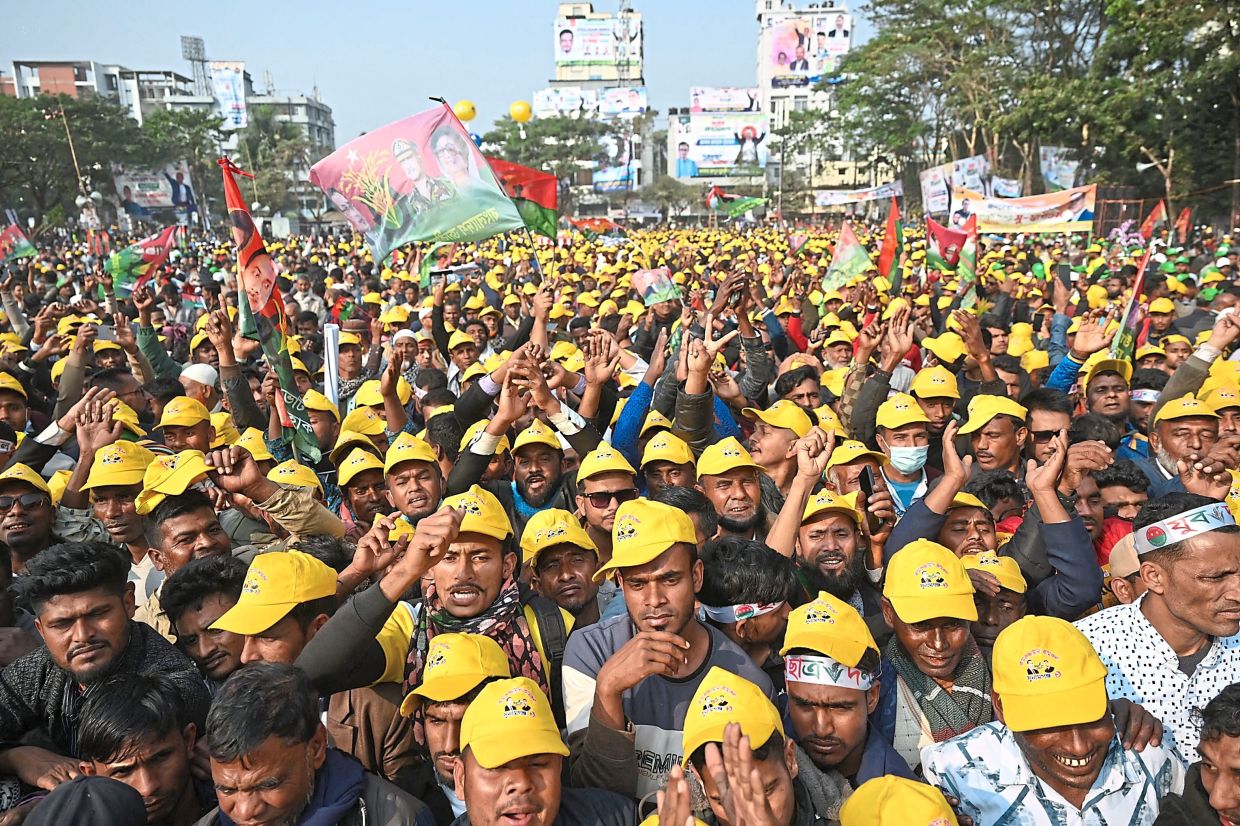
Bangladesh's parliament will elect a new president on Thursday, August 20, with Mirza Fakhrul Islam Alamgir, the secretary general of the ruling Bangladesh Nationalist Party and local government minister, widely expected to secure the position in an afternoon ballot. The 78-year-old is set to become the 23rd president of the South Asian nation of 170 million people, assuming what is predominantly a symbolic role in the country's political structure. Alamgir's elevation reflects his prominent standing within the BNP following its decisive electoral triumph in February—the first national poll since the 2024 revolution that swept away the previous government—and represents the party's consolidation of power after returning to leadership.
Almgir has expressed humility about his impending appointment, attributing the opportunity to his party's confidence and divine grace. In comments to reporters earlier this week, he emphasised his intention to remain engaged with ordinary citizens and committed to public service even from the presidential office. His measured approach stands in contrast to the political turbulence that characterised Bangladesh's governance in recent years, signalling a potential shift towards stability under the new administration. The incoming president's positioning as a servant-leader rather than a wielder of executive authority reflects the constitutionally limited nature of the presidential role in Bangladesh's parliamentary system.
Almgir faces token opposition in the form of Oli Ahmed, nominated by the 11-party opposition coalition spearheaded by Jamaat-e-Islami. The presence of a rival candidate ensures procedural formality, though the numerical advantage held by BNP lawmakers in parliament makes Alamgir's victory virtually certain. The voting process is anticipated to commence around 2 p.m. local time on Thursday, with results expected to confirm the anticipated outcome. This parliamentary election methodology, while routine in Bangladesh, contrasts sharply with direct presidential systems and underscores the importance of legislative strength in determining the nation's leadership.
The presidency itself has become vacant following the departure of Mohammed Shahabuddin, 76, who resigned in July citing health concerns. Shahabuddin, a close associate of the ousted Prime Minister Sheikh Hasina, had faced mounting pressure to step down in the aftermath of the political upheaval that transformed Bangladesh's governance landscape. Originally elected in 2023, his abbreviated tenure—cut short well before the scheduled 2028 conclusion of his five-year mandate—symbolised the broader reckoning with Hasina's administration and its institutional apparatus. The transition represents a deliberate break from the previous regime's structures and personnel.
Sheikh Hasina herself remains beyond Bangladesh's borders, having sought refuge in India and declined to return for trial proceedings. In November, she was convicted of crimes against humanity and sentenced to death in absentia by a Dhaka court, representing a dramatic reversal of fortune for someone who had dominated Bangladesh's political landscape for decades. International human rights organisations documented extensive abuses under her tenure, ranging from extrajudicial killings of political adversaries to systematic suppression of opposition movements, manipulation of judicial processes, and electoral irregularities. The legal proceedings against her underscore the depth of accountability mechanisms being pursued under the new administration.
Almgir's ascent to the presidency comes after he demonstrated considerable political fortitude during the darkest period of Hasina's rule. As BNP secretary general, he stewarded the party through a challenging phase when its nominal leader Khaleda Zia remained imprisoned and her son Rahman was living in foreign exile. Alamgir bore the burden of keeping the opposition party functional and visible in public consciousness despite relentless governmental pressure. He himself endured multiple arrests and faced numerous charges that he maintained were politically fabricated and designed to intimidate him and his colleagues. His resilience during this period earned him recognition within party circles for maintaining organisational cohesion when institutional survival itself seemed uncertain.
Almgir's personal political journey reflects broader transformations in Bangladesh's recent history. Born on January 26, 1948, he came of age as a student activist during the 1969 mass uprising against military rule imposed by Pakistan—a watershed moment that presaged Bangladesh's subsequent independence struggle. His involvement in student politics positioned him at the intersection of democratic activism and nationalist sentiment, defining characteristics that have persisted throughout his career. After completing economics studies at Dhaka University, he transitioned from academia into government service, eventually accumulating ministerial experience across diverse portfolios including agriculture, aviation, and tourism during earlier periods of democratic governance.
Almgir's portfolio expansion across multiple sectors reflects his generalist approach to public administration and suggests a leader comfortable navigating diverse policy domains. His background in economics education and subsequent governmental roles have provided exposure to technical governance challenges alongside political management. Yet his most enduring contribution to Bangladesh's contemporary history may ultimately rest on his stewardship of the BNP during its period of organisational peril and his steadfast opposition to authoritarian governance. The presidency, while constitutionally limited in executive authority, positions him as a symbolic figurehead representing a nation attempting to move beyond years of repressive rule and institutional decay.
Almgir's family circumstances are relatively modest by standards of Bangladesh's political elite. He is married to Rahat Ara Begum, a retired financial sector official, and the couple have two daughters. This conventional domestic arrangement, free from the dynastic succession patterns that characterise much of South Asian politics, may enhance his ability to project an image of accessible leadership disconnected from oligarchic pretension. Such positioning could serve the BNP government's broader efforts to position itself as a reformist force committed to democratic restoration after years of autocratic governance. The appointment of Alamgir as president thus carries symbolic weight extending beyond the ceremonial duties formally attached to the office, representing the BNP's consolidation of power and Bangladesh's tentative movement toward institutional renewal following revolutionary upheaval.

