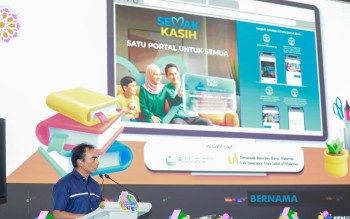
Bank Negara Malaysia has launched a new digital portal called Semak Kasih to help beneficiaries locate and claim forgotten insurance policies and takaful certificates belonging to their deceased relatives. The platform was unveiled at the Terengganu Financial Literacy Carnival in Kuala Terengganu, with Deputy Governor Adnan Zaylani Mohamad Zahid highlighting the critical importance of ensuring families receive financial protection benefits they may not even know exist.
The initiative addresses a significant gap in Malaysia's financial landscape. Industry estimates from the Life Insurance Association of Malaysia and Malaysian Takaful Association suggest approximately 50,000 insurance policies and takaful certificates carrying death benefits remain unclaimed by eligible beneficiaries. This represents substantial financial protection that families desperately need during periods of crisis, whether stemming from medical emergencies, accidents, or property damage from fires and natural disasters. The forgotten benefits underscore a troubling pattern whereby wealth intended to cushion families through hardship sits dormant in insurer records.
Adnan Zaylani emphasised that insurance and takaful protection should never be dismissed as optional financial add-ons. Rather, these instruments serve as essential safety nets that enable families to maintain stability during their most vulnerable moments. Many Malaysian families remain unaware that their deceased relatives secured coverage intended specifically to protect their dependents' welfare and living standards. The emotional and financial toll of losing a primary breadwinner becomes exponentially worse when families simultaneously forfeit benefits earmarked to ease their transition.
The Semak Kasih portal functions as a centralised checking system where beneficiaries can verify whether they hold valid insurance or takaful coverage from a deceased family member. Once individuals confirm the existence of coverage, the platform facilitates direct contact with relevant insurance and takaful providers, streamlining the administrative process for benefit claims. Insurance and takaful companies had previously undertaken independent outreach efforts, including postal communication and agent-based contact campaigns, but these scattered approaches failed to reach all eligible claimants efficiently.
Beyond addressing unclaimed benefits, the portal reflects broader efforts by Bank Negara to strengthen Malaysia's financial resilience. Adnan Zaylani stressed that households must actively build financial protection through insurance or takaful coverage whilst simultaneously elevating their financial literacy to navigate escalating economic pressures and rising living costs. The central bank recognises that reactive crisis management proves far costlier than proactive financial planning undertaken during stable periods.
Small and medium enterprises represent another priority for the central bank's support mechanisms. Bank Negara has extended various financing schemes targeting micro, small, and medium businesses, including microfinance facilities offering up to RM100,000 without requiring guarantor or collateral requirements. Additionally, the SME Stabilisation Relief Facility provides RM5 billion in working capital financing at amounts reaching RM750,000 for enterprises impacted by geopolitical disruptions, particularly the West Asia conflict that has disrupted regional supply chains and business operations.
The iTekad initiative has emerged as a particularly successful programme, reaching over 14,000 participants nationwide, including approximately 600 in Terengganu alone. This scheme has demonstrably improved participant incomes and living standards, illustrating how targeted financial development programmes can create tangible economic advancement at grassroots levels. Such programmes prove especially valuable in smaller states where economic diversification remains limited and employment opportunities concentrated.
Financial education initiatives have also expanded significantly. The Financial Education Forum initiative ensures that financial literacy resources reach all societal segments, including persons with disabilities who often face barriers accessing mainstream financial services. A new comprehensive website functions as a one-stop financial education centre designed with inclusive, user-friendly accessibility standards. These efforts acknowledge that financial capability gaps disproportionately affect vulnerable populations lacking traditional access to banking and investment guidance.
The urgency of financial education becomes apparent when examining consumer behaviour patterns. Research reveals that approximately 37 per cent of Malaysians engage in impulsive online purchasing decisions, whilst 26 per cent acknowledge carrying unsustainable debt burdens. Digital banking and e-commerce platforms, whilst expanding economic opportunities, simultaneously increase vulnerability to fraud, overspending, and poor financial decision-making. Without foundational financial literacy, digital financial tools become instruments for wealth destruction rather than accumulation.
Bank Negara has prioritised youth financial education through programmes including the MyDuitStory competition and the FEN Proaktif 2.0 Programme, developed collaboratively with Universiti Malaysia Terengganu. These initiatives prepare students for workforce entry with robust financial management foundations, recognising that habits formed during formative years persist throughout adulthood. Consistent saving beginning from youth generates substantial long-term compound returns and establishes psychological patterns favouring delayed gratification over immediate consumption.
Adnan Zaylani's closing remarks encapsulated the central bank's philosophy regarding individual financial autonomy. Whilst policymakers cannot control global economic fluctuations or technological disruptions, households possess agency over daily financial decisions. Whether to save or spend, whether to seek financial protection, whether to expand knowledge about available resources—these remain within individual control. By emphasising this personal responsibility alongside systemic support mechanisms, Bank Negara articulates a balanced approach recognising both structural constraints and individual capacity for financial improvement.
The Semak Kasih portal represents tangible manifestation of this philosophy. For Malaysian families, the platform offers practical access to resources that may determine whether they maintain financial stability following the loss of a household member. More broadly, it exemplifies how government financial authorities can leverage digital infrastructure to bridge gaps between insurance industry capacity and beneficiary awareness. As Malaysia's economic complexity increases and cost-of-living pressures intensify, such targeted interventions become increasingly essential for protecting household welfare across all income segments.

