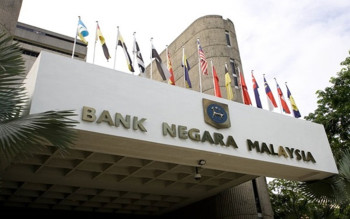
The central bank launched a sustained campaign to alert Tabung Haji's leadership to mounting financial distress through five separate warning letters, Parliament learned this week. Religious Affairs Minister Dr Zulkifli Hasan disclosed during a special sitting of the Dewan Rakyat that Bank Negara Malaysia (BNM) had directly communicated with both the pilgrimage fund's chairman and the relevant minister about the deteriorating position where liabilities were encroaching on assets—a situation that demanded urgent corrective action.
The severity of the concern cannot be understated. According to Zulkifli, BNM's assessment at the time identified the pilgrimage fund as harbouring potential systemic risks to Malaysia's broader financial stability, a designation that typically triggers heightened regulatory scrutiny and mandatory intervention protocols. Yet these urgent communications from the country's financial supervisor were apparently disregarded by Tabung Haji's management hierarchy, a troubling indication of either misunderstanding the gravity of the warnings or deliberate inaction.
The regulatory alarm bells extended beyond the central bank's purview. Following BNM's warnings, Malaysia's Auditor-General entered the fray with its own formal reprimand contained within the 2017 Financial Statements Report. The Auditor-General took particular exception to what it flagged as an "Emphasis of Matter" concern—signalling serious reservations about Tabung Haji's twice-modified impairment policy during the same calendar year, modifications that conveniently resulted in inflated profit figures for that financial year.
These successive warnings from two major oversight bodies finally spurred action when Tabung Haji's reconstituted board enlisted international accounting heavyweight PricewaterhouseCoopers (PwC) in 2018 to conduct a comprehensive forensic assessment. The external audit proved damning. PwC's investigation uncovered that of the reported RM4.6 billion in total assets, merely RM556 million—roughly 12 per cent—had undergone professional valuation. The remainder had apparently been recorded on the books without proper third-party verification, a stunning revelation that explained how the financial position had deteriorated so dramatically while remaining undetected for years.
The broader institutional dysfunction came into sharper focus when the Royal Commission of Inquiry released its comprehensive 211-page report on July 29, following a rigorous investigation spanning the 2014-2020 period. The document catalogued pervasive weaknesses across Tabung Haji's management structures, governance frameworks, and operational protocols that had enabled such extensive financial deterioration to accumulate. For Malaysian Muslims and the broader public who entrust their pilgrimage savings to this institution, the findings underscored systemic failures at multiple organisational levels.
The RCI advanced 25 distinct recommendations for institutional rehabilitation and strengthened controls. Encouragingly, by July 30—just one day after the report's public release—Tabung Haji's reformed leadership had already implemented approximately 75 per cent of these proposals, suggesting a genuine commitment to transformation rather than mere tokenistic gestures. This rapid uptake contrasts starkly with the years of inaction that characterised the institution's response to BNM and Auditor-General warnings.
Establishment of the Royal Commission itself represented a watershed moment in addressing longstanding concerns about Tabung Haji's governance. The government announced the inquiry's creation in 2021, with formal appointment of commission members occurring on January 20, 2022. The completed report was formally presented to the Yang di-Pertuan Agong on August 30, 2022, reflecting the thoroughness and proper protocol observed throughout the investigative process.
The timeline of events reveals a troubling pattern: regulatory warnings issued and disregarded, accounting manipulations discovered only through external audit, and comprehensive reform initiated only after public scandal and formal investigation. For Malaysian policymakers, the Tabung Haji case demonstrates the critical importance of enforcing regulatory compliance and ensuring that institutions respond substantively to supervisory interventions from bodies like BNM. The pilgrimage fund's experience also highlights the need for robust internal controls, independent valuation processes, and transparent financial reporting—failings that extended across multiple years despite oversight bodies' explicit warnings.
The implications extend beyond Tabung Haji itself. The episode raises questions about regulatory effectiveness and the speed with which Malaysian supervisory authorities can compel institutional change when warnings go unheeded. That five separate warnings from the central bank proved insufficient to catalyse meaningful action until external scandal forced the issue suggests possible gaps in enforcement mechanisms or institutional accountability frameworks that warrant examination across other regulated entities.

