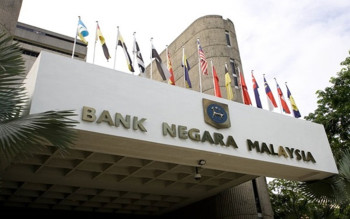
Bank Negara Malaysia has moved to clarify the rationale behind its advisory interventions with Tabung Haji, positioning them as integral to its broader institutional mandate to preserve financial system stability rather than as ad hoc interventions. The central bank's statement responds to ongoing public and parliamentary interest in its role within the Royal Commission of Inquiry into the pilgrimage fund's governance and financial position. According to BNM, its engagement with Tabung Haji flows directly from provisions embedded in the Central Bank of Malaysia Act 2009, which grants the regulator explicit authority to monitor and identify systemic risks emanating from major non-bank financial institutions with substantial connections to the wider financial ecosystem.
The architecture of this oversight role rests on BNM's establishment of the Financial Stability Executive Committee, a statutory body tasked with surveying the landscape of interconnected financial risks across Malaysia's institutional network. This committee's purview extends beyond the traditional banking system to encompass major non-bank entities capable of triggering cascading financial disruptions. Tabung Haji, as one of Malaysia's largest non-bank financial institutions managing pilgrim savings accumulated over decades, naturally falls within this surveillance framework. The scale of assets managed by the fund and its direct links to millions of Malaysian households mean that deterioration in its financial health could theoretically ripple through consumer confidence, household finances, and broader economic stability.
BNM's formal acknowledgement that Tabung Haji sits outside its direct supervisory remit—a distinction that has occasionally created regulatory grey zones in Malaysian financial governance—does not diminish its capacity or responsibility to intervene through advisory channels. The central bank emphasized that this advisory function operates as a precautionary safeguard designed to prevent situations where institutional distress at Tabung Haji could generate systemic consequences warranting official intervention. By providing guidance to both the fund's board of directors and the Minister responsible for religious affairs oversight, BNM positions itself as a stabilizing force capable of offering technical expertise and risk assessments without assuming formal regulatory control.
The substance of BNM's previous concerns about Tabung Haji gained concrete expression through five separate warning letters dispatched to the fund's chairman and the Religious Affairs Minister, each flagging growing misalignment between the institution's asset base and accumulated liabilities. These warnings represent more than routine correspondence; they signal official concern at Malaysia's highest financial authority about the fund's trajectory toward potential insolvency or capital depletion scenarios. The timing and frequency of these warnings suggest an escalating concern that became impossible to ignore as the gap widened, prompting parallel scrutiny from the Auditor-General's office, which included criticism of Tabung Haji's financial position in its 2017 audit report.
The establishment of the Royal Commission of Inquiry in 2021, with formal member appointments occurring on January 20, 2022, represented the government's decision to elevate investigation of Tabung Haji's affairs to the highest institutional level. This move underscored public and official recognition that the pilgrimage fund had encountered governance and financial management challenges warranting exhaustive examination. The subsequent presentation of the RCI report to the Yang di-Pertuan Agong on August 30, 2022, marked the culmination of months of inquiry into how such a large institution serving millions of Muslim Malaysians had accumulated such concerning liabilities.
For Malaysian readers and stakeholders invested in Tabung Haji's recovery, BNM's clarification carries several implications. First, it demonstrates that Malaysia's financial regulator has maintained active awareness of the fund's deteriorating condition for an extended period, attempting remedial guidance before the situation required public inquiry. Second, it establishes precedent for how the central bank intends to exercise informal supervisory influence over major non-bank institutions lacking formal regulatory oversight. This approach offers flexibility but also raises questions about effectiveness when advisory measures prove insufficient to arrest institutional decline. Third, BNM's emphasis on financial stability protections reflects genuine concern that Tabung Haji's problems might extend beyond the fund's own operations to affect consumer confidence, household savings patterns, and sectoral health.
The distinction between formal supervision and advisory guidance becomes particularly relevant in Southeast Asia's evolving regulatory landscape, where several jurisdictions grapple with non-bank financial institutions operating in grey zones between commercial banking and informal finance. Malaysia's approach—maintaining formal regulatory distance while exercising backstage advisory influence through central bank authority—represents one model for managing such entities. However, the Tabung Haji experience suggests potential limitations to this approach when institutional problems require decisive restructuring rather than gentle guidance.
Looking forward, BNM's clarification may signal the central bank's intent to be more proactive in exercising its financial stability mandate across non-bank institutions, particularly those with significant retail liability bases. The pilgrimage fund's challenges have arguably prompted institutional reflection within BNM about early warning systems and escalation protocols for situations where advisory measures appear insufficient. For policy observers in the region examining financial stability frameworks, the Malaysian case offers lessons about the importance of clear authority, timely intervention, and transparent communication between regulators and problem institutions.
The central bank's measured response also reflects awareness that public confidence in Tabung Haji depends partly on demonstrating that financial authorities maintained vigilant oversight throughout the institution's difficulties. By establishing that BNM's interventions flowed from statutory duty rather than ad hoc concern, the central bank seeks to reassure pilgrims and savers that their interests remained protected even when the fund faced undisclosed troubles. This framing becomes essential as Malaysia works toward resolution of the RCI's findings and implementation of corrective measures to restore Tabung Haji to stable operation.

