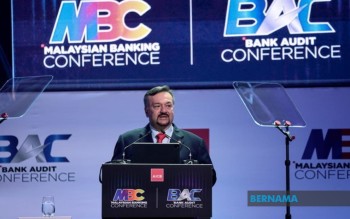
The acceleration of artificial intelligence adoption across global financial markets presents both unprecedented opportunity and significant governance challenges, according to Malaysia's Finance Minister II Datuk Seri Amir Hamzah Azizan. Speaking at the Asian Institute of Chartered Bankers Nexus 2026 Conference in Kuala Lumpur on July 8, he articulated a vision of banking's future that rejects the notion of technological determinism—the idea that more sophisticated algorithms inevitably lead to superior outcomes. Instead, he outlined a framework where machine capabilities and human discretion operate in concert, underpinned by robust ethical standards and clear lines of accountability.
The finance minister's remarks address a critical tension within the sector as banks worldwide rush to deploy machine learning systems for risk assessment, fraud detection, and customer service. While these technologies demonstrably improve operational efficiency and can process vast datasets in microseconds, they cannot independently navigate the ambiguities inherent in financial decision-making. Amir Hamzah contended that regulatory soundness, adequate capitalization, and technological sophistication—the traditional pillars of banking stability—are no longer sufficient foundations for institutional resilience. Notably absent from this conventional triumvirate is recognition of human capital as an equally essential structural element, a gap the minister sought to correct.
Institutions that will thrive in coming years, according to Amir Hamzah, will not necessarily be those possessing the most cutting-edge systems or largest AI investments. Rather, competitive advantage will accrue to organizations whose personnel demonstrate capacity to comprehend intricate systems, exercise sound professional judgment, and maintain unwavering commitment to ethical conduct. This formulation directly challenges the prevailing narrative in some quarters that technological advancement will progressively displace human workers and that banking's future belongs to firms with the most powerful computing infrastructure. The minister's position instead implies that banking remains fundamentally a people-intensive business, regardless of automation advances.
The emphasis on talent development carries profound implications for Malaysia's financial services sector, which faces stiff regional competition for skilled professionals. Singapore, Hong Kong, and other financial hubs have aggressively recruited AI specialists, data scientists, and fintech talent from across Asia. Malaysia's ability to attract and retain banking professionals capable of bridging human and machine intelligence—individuals who understand both algorithmic design and ethical decision-making—will substantially influence the sector's global competitiveness. This is particularly relevant given ongoing brain drain concerns within the Malaysian financial system and the relative youth of the nation's fintech ecosystem.
Amir Hamzah's insistence that banking cannot be future-ready if its workforce lacks adequate preparation recognizes a persistent skills gap within financial institutions. Many existing banking professionals trained in pre-AI paradigms struggle to effectively oversee algorithmic decision-making or understand the limitations of machine learning models. Conversely, AI specialists frequently lack understanding of banking regulations, customer relationships, and the historical lessons embedded in institutional practices. This complementarity suggests that the most effective banking institutions will develop integrated teams blending domain expertise with technological fluency, requiring investment in continuous professional development rather than simple workforce replacement.
The minister's framework also implicitly critiques an approach to financial regulation that relies too heavily on technological solutions to systemic risks. Increasingly, regulators worldwide have turned to algorithmic monitoring and supervisory technology to oversee complex banking operations. Yet Amir Hamzah's emphasis on human judgment and integrity suggests that mechanistic compliance approaches may create false confidence in risk management. Financial crises invariably reveal that institutions failed not because of inadequate monitoring technology but because of compromised judgment, misaligned incentives, or ethical failures among leadership. No algorithm can substitute for the principled decision-making required when systems encounter unprecedented stresses.
The Asian Institute of Chartered Bankers' role in this ecosystem, as articulated by the finance minister, extends beyond traditional credential-granting functions. Through developing professional standards, qualifications programs, and leadership curricula, AICB serves as a crucial institution for building banking workforce capability at scale. This is particularly significant in Southeast Asia, where professional banking associations historically wielded less institutional authority than counterparts in Anglo-American financial centers. Strengthening these bodies enhances the entire region's capacity to develop financial professionals capable of navigating AI-era complexities while maintaining ethical anchoring.
Amir Hamzah's call for collaborative action across government regulators, industry participants, and professional bodies reflects awareness that no single actor can address the governance challenges posed by AI in finance. Government must establish appropriate regulatory frameworks without stifling innovation. Regulators must supervise effectively while recognizing the limits of algorithmic oversight. Industry must invest in talent and ethical cultures even when immediate financial pressures suggest otherwise. Professional bodies must maintain and evolve standards relevant to contemporary practice. This multi-stakeholder approach, while demanding greater coordination, offers more resilient governance than approaches relying on any single institution or mechanism.
The thread connecting all these elements, the finance minister suggested, is an ancient principle: banking as service to people conducted with integrity. This formulation is neither sentimental nor technologically neutral. Rather, it grounds banking's purpose in human welfare and constrains technological application within ethical boundaries. As AI becomes increasingly embedded in financial decision-making—determining loan eligibility, setting interest rates, detecting fraud, and managing portfolios—this orienting principle becomes paradoxically more rather than less important. The more removed human judgment becomes from financial transactions, the more essential it becomes that underlying systems remain anchored to this fundamental purpose.

