The financial sector across Malaysia is fundamentally shifting its lending practices, with banks and other financial institutions now routinely requesting sustainability documentation from businesses seeking loans. This transformation represents a significant departure from traditional credit assessment methods and signals a broader realignment in how capital flows through the Malaysian economy. According to sustainability consultants and industry stakeholders, the move reflects global recognition that environmental, social and governance performance has become integral to long-term financial viability and risk management.
Prathab V, principal consultant at ESGright Sdn Bhd, a Malaysia-based consulting firm specialising in sustainability matters, explains that companies across all sizes stand to gain substantially from formalising their sustainability reporting practices. The advantage extends beyond merely satisfying lender requirements; it opens pathways to capital markets and international opportunities that would otherwise remain closed. For both large corporations and smaller enterprises, the ability to demonstrate credible sustainability performance has shifted from being a competitive advantage to becoming a basic requirement for business survival in the modern economy.
Currently, Malaysia's regulatory framework creates a two-tiered landscape. Listed companies face mandatory requirements to publish sustainability statements through Bursa Malaysia regulations, ensuring consistent disclosure across the public market. Unlisted companies, including most small and medium enterprises, operate under voluntary guidelines. However, the emergence of bank lending requirements effectively bypasses this regulatory distinction. Financial institutions, responding to their own risk assessments and investor pressures, are independently implementing sustainability screening protocols that apply equally to listed and unlisted borrowers. This market-driven enforcement mechanism is proving more powerful than regulation in many cases.
The strategic advantage of early compliance cannot be overstated for Malaysian businesses operating in competitive regional and global markets. Companies with comprehensive sustainability frameworks gain preferential access to "smart capital"—investment from institutional investors who integrate sustainability metrics into their decision-making processes. Conversely, businesses that neglect sustainability reporting face an escalating competitive penalty. As their peers establish stronger environmental and social credentials, laggards find themselves disadvantaged not only in accessing finance but also in attracting talent, retaining customers, and securing supply chain partnerships. The pressure operates across multiple dimensions simultaneously, making avoidance increasingly costly.
Recognising this shift, Malaysia's government and regulatory bodies have positioned the country as a regional sustainability leadership centre. The country has cultivated one of the highest concentrations of Global Reporting Initiative trained professionals within ASEAN, reflecting deliberate capacity-building efforts. ESGright's recent appointment as Malaysia's first approved education partner by the International Financial Reporting Standards Foundation further demonstrates institutional commitment to building local expertise in sustainability-related financial disclosures. These investments signal that Malaysian policymakers view sustainability reporting infrastructure as essential economic infrastructure comparable to traditional financial systems.
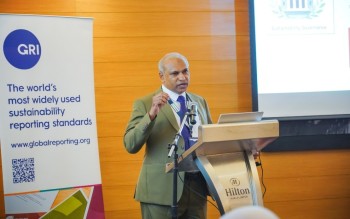
A recent convening of approximately forty corporate sustainability leaders and financial stakeholders, organised jointly by ESGright and the Global Reporting Initiative, illustrated the scale of Malaysian market engagement. The participating companies collectively commanded market capitalisation exceeding RM380 billion, indicating that the country's largest enterprises are actively grappling with sustainability reporting frameworks and standards. This concentration of economic power behind sustainability initiatives creates multiplicative effects throughout supply chains, as large companies implement disclosure requirements that cascade to their smaller suppliers and service providers.
Robin Hodess, chief executive officer of the Global Reporting Initiative, emphasises that effective sustainability frameworks must account for the significantly different operating environments faced by small and medium enterprises compared with large corporations. SMEs typically operate with constrained resources, limited specialist capacity, and competing operational pressures that make comprehensive sustainability reporting particularly challenging. Rather than imposing identical disclosure burdens, Hodess advocates for proportionate frameworks that extract meaningful information relevant to SMEs' business contexts and stakeholder relationships. Such "right-sized" approaches would enable smaller companies to progress on sustainability journeys without becoming overwhelmed by compliance complexity.
The practical benefit for SMEs extends notably to supply chain participation. As large multinational corporations and major Malaysian exporters embed ESG requirements into their procurement processes, supplier sustainability credentials become determinative for contract awards and long-term relationships. SMEs that develop credible sustainability reporting capabilities position themselves to access lucrative supply chain opportunities in sectors ranging from manufacturing to technology services. For export-oriented SMEs, sustainability documentation increasingly functions as an implicit passport for participation in global value chains, particularly for companies operating in industries with active environmental or ethical purchasing preferences.
Many of Malaysia's largest listed companies recognised this trajectory years before mandatory regulation arrived. These corporate pioneers voluntarily adopted Global Reporting Initiative Standards and began publishing comprehensive sustainability reports, understanding that international market access required demonstrable environmental and social commitment. Their early adoption created a competitive premium—facilitating export market entry, institutional investor interest, and premium valuation multiples. This historical precedent demonstrates that proactive sustainability reporting generates tangible financial benefits beyond mere regulatory compliance, offering strategic positioning advantages that persist long after initial implementation.
However, the proliferation of reporting frameworks and disclosure standards has created a new challenge: compliance complexity. Companies now navigate an increasingly fragmented landscape encompassing GRI Standards, ISSB standards, Bursa Malaysia requirements, banking institution expectations, and industry-specific frameworks. This multiplicity generates what consultants term "compliance fatigue," where organisations expend considerable resources simply determining which disclosure obligations apply to their specific circumstances. The administrative burden can divert management attention and financial resources away from substantive sustainability improvements, creating a situation where companies become preoccupied with reporting formats rather than operational improvements.
Industry consultants recommend a strategic reframing of this challenge. Rather than attempting to excel uniformly across all sustainability dimensions, companies should identify their most material environmental and social impacts, focusing organisational efforts where they can generate the greatest positive contribution. This concentrated approach yields several advantages: it produces authentic rather than superficial improvements, creates more compelling sustainability narratives for stakeholders, and reduces internal implementation complexity. A manufacturer prioritising water efficiency rather than attempting comprehensive environmental excellence across dozens of dimensions would likely generate more credible and impactful reporting while requiring fewer resources.
The convergence of banking sector practices, regulatory evolution, and market pressures is fundamentally reshaping Malaysian corporate behaviour. Companies that view sustainability reporting as a burdensome compliance checkbox risk falling behind competitors who recognise it as essential infrastructure for accessing capital, retaining markets, and building long-term resilience. The transition from voluntary to effectively mandatory sustainability reporting represents a permanent shift in how Malaysian businesses must operate and compete. For companies still developing their sustainability capabilities, the window for gradual transition remains open, but is rapidly narrowing as financial institutions, major customers, and investors implement more stringent screening mechanisms.

