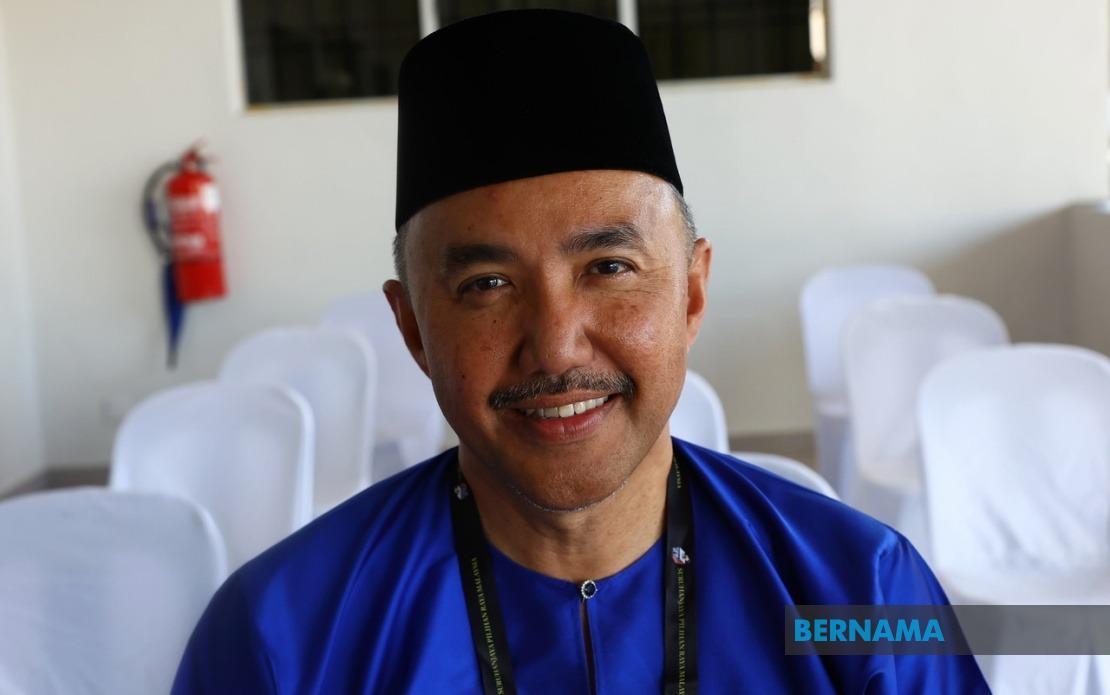
Barisan Nasional is banking heavily on backing from Federal Land Development Authority settlements to bolster its performance in the Kulai parliamentary constituency during the 16th Johor state election scheduled for July 11. The coalition's optimism stems from organising FELDA voters strategically across multiple state seats, with Datuk Mohd Jafni Md Shukor, the Kulai BN chairman, highlighting the approximately 7,000 registered voters spread across four distinct settlements within the region.
The four FELDA settlements—Taib Andak, Inas, and Bukit Permai in the Bukit Permai state constituency, along with Bukit Batu in the Bukit Batu state seat—represent a substantial and concentrated voter base that could prove decisive in what is expected to be a closely contested election. For Jafni, who is defending his own seat in Bukit Permai against a four-cornered contest, these communities hold particular significance given their historical voting patterns and the internal dynamics of FELDA political allegiances.
The coalition's renewed confidence in FELDA areas marks a notable shift from recent electoral history. The 2018 state election proved disastrous for BN among FELDA voters, reflecting broader national discontent that saw the coalition lose federal power. However, Jafni points to measurable recovery in the 2022 state election as evidence that targeted engagement and concrete policy action can reverse electoral losses. This trajectory suggests that FELDA voters, while traditionally aligned with BN, remain responsive to governance performance rather than voting reflexively along established lines.
A cornerstone of BN's renewed appeal to FELDA communities has been the Menteri Besar Datuk Onn Hafiz Ghazi administration's policy interventions over the past four years. Jafni emphasises that the state government has channelled educational support through the Johor Education Foundation to assist FELDA children, a practical initiative that directly addresses household concerns. Education funding proves particularly resonant in FELDA areas, where family incomes are often modest and school costs represent genuine financial burdens.
Perhaps more significantly, the state government claims to have largely resolved a prolonged land title dispute affecting FELDA settlers, with ownership applications reaching 99.9 per cent settlement. This accomplishment carries symbolic and material weight—land security underpins agricultural livelihoods and generational asset transfer within FELDA communities. By framing this resolution as evidence of commitment to settler welfare, Jafni provides tangible proof that the state administration prioritises FELDA interests in policy implementation.
Jafni's messaging strategically positions BN's electoral campaign around developmental continuity and unfinished work. His appeal for voters to renew BN's mandate operates on the premise that one term has proved insufficient to deliver all promised benefits to Johor residents. This framing acknowledges modest accomplishments while projecting forward momentum—a delicate balance required when seeking re-election on a record of incremental progress rather than transformative change.
The competition for the Bukit Permai seat where Jafni contests reflects broader fragmentation in Malaysian electoral politics. His four opponents span the political spectrum: Muhammad Aidil Riduan Mohd Yusof representing Parti Bersama Malaysia, Mohamad Shafwan Ani of Pakatan Harapan, and M. Lina Manoh of Perikatan Nasional. This multi-sided contest complicates BN's path to victory, particularly if opposition votes divide efficiently among challengers while BN consolidates its base. FELDA voter concentration becomes proportionally more important in such fragmented contests, where traditional strongholds can determine outcomes.
Within the broader Kulai parliamentary constituency, BN faces the challenge of defending not only Bukit Permai but also competing effectively in Bukit Batu and Senai state seats. The coalition's emphasis on FELDA support reflects strategic recognition that these settlements provide reliable voter cores worth intensive engagement. Jafni's confidence in multiple seats suggests BN expects to leverage FELDA consolidation into performance across the wider Kulai region.
For Malaysian observers, the FELDA electoral trajectory offers insight into how rural constituencies respond to governance quality and targeted policy delivery. FELDA communities represent neither monolithic voting blocs nor unthinking party loyalists; instead, their political behaviour reflects pragmatic assessment of which parties deliver concrete benefits. The 2018 rejection of BN and subsequent partial recovery by 2022 demonstrates this calculus operating in real time. Whether such trends indicate deeper structural shifts or temporary fluctuations remains a central question for Malaysian electoral analysis.
The timing of the Johor election—with early voting scheduled for July 7 and main polling on July 11—affords limited time for either BN or opposition parties to substantially reshape FELDA voter preferences. This compressed campaign period amplifies the importance of pre-existing relationships and recent policy memories. For BN, this argues toward intensive local engagement rather than high-profile national campaigning. The specificity of Jafni's claims about education support and land title resolution suggests this localised campaign strategy is already operational at constituency level.
Larger implications for Malaysian politics extend beyond Johor's borders. FELDA settlements exist nationwide, and their electoral behaviour influences outcomes across multiple states. Should BN successfully consolidate FELDA support in Johor, it may signal broader recovery among rural constituencies that abandoned the coalition in 2018. Conversely, if opposition parties successfully challenge FELDA strongholds, it could indicate that rural voters' patience with incremental improvements has limits. The Johor election thus serves as a microcosm for assessing whether Malaysian rural constituencies are returning to BN or have fundamentally reoriented their political allegiances.
For FELDA communities themselves, the heightened electoral attention creates opportunity to press both major coalitions on specific grievances. Whether land titles, commodity prices, education quality, or healthcare access—FELDA voters hold leverage in competitive electoral contexts. The election outcome will reveal whether this leverage translates into sustained policy attention or fades once votes are counted. For BN's credibility in FELDA areas, following through on development promises will matter more than pre-election rhetoric.

