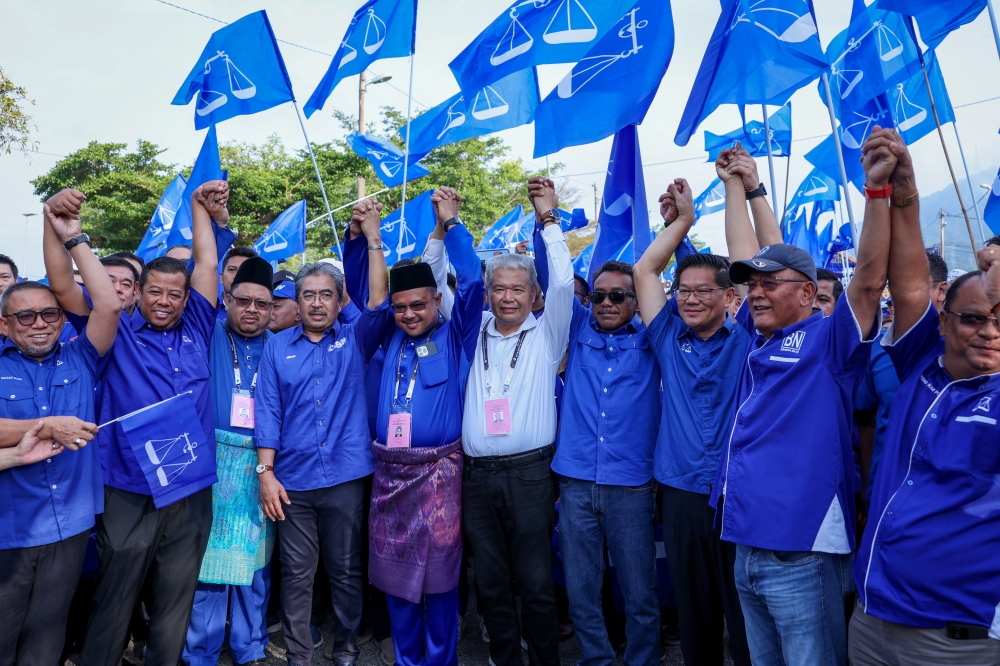
The Barisan Nasional coalition has committed itself to maintaining high standards of political conduct during the Negeri Sembilan state election campaign, signalling an intention to prioritise substantive policy debate over personal attacks and inflammatory rhetoric. Speaking in Tampin, the Umno deputy president underscored the coalition's determination to keep the electoral contest focused on matters of genuine public concern and the parties' visions for developing the state.
This pledge represents an important positioning move for BN as it prepares for a competitive electoral contest in Negeri Sembilan, a state where political dynamics have shifted considerably in recent years. The commitment to civil discourse reflects broader recognition within Malaysia's political establishment that voters increasingly expect campaigns that elevate public discussion rather than descend into personal recriminations. For a coalition that has historically dominated Malaysian politics, setting a tone of respectfulness can serve as a strategic advantage, particularly when competing against opposition parties that may adopt more aggressive tactics.
The emphasis on civilised campaign conduct carries particular significance in Negeri Sembilan's context. The state has experienced notable political volatility, with shifting voter preferences and changing coalition alignments reshaping its political landscape. By explicitly committing to respectful engagement, BN signals confidence in its ability to win voter support through the strength of its policies and track record rather than through character assassination or divisive messaging. This approach also allows the coalition to occupy what many voters perceive as the more responsible and statesmanlike position in political competition.
Within Malaysia's broader political ecosystem, the quality of campaign discourse remains a matter of genuine concern. Election cycles have occasionally been marred by misinformation, personal attacks, and rhetoric that deepens societal divisions rather than bridging them. A commitment from a major political force to elevate standards potentially influences the overall tenor of the election season, setting expectations for other parties and contestants that they too should prioritise substantive engagement with voters.
For Malaysian voters in Negeri Sembilan and observers across Southeast Asia watching Malaysian electoral politics, such pledges merit close scrutiny. The gap between rhetorical commitments to civil conduct and actual campaign behaviour often proves significant. Voters will inevitably judge Barisan Nasional not merely on statements made by party leaders but on how campaign workers, affiliated media, and individual candidates actually conduct themselves during the election period.
The Umno deputy president's statement also reflects internal party calculations about what messaging will most effectively mobilise BN's core support base while appealing to swing voters who may be undecided about which coalition deserves their vote. In Negeri Sembilan, where electoral fortunes have proven unpredictable, every segment of the voting population matters. Positioning the coalition as the party of elevated discourse potentially attracts middle-class voters and those fatigued by aggressive political competition.
From a regional perspective, Malaysia's election campaigns increasingly influence political discourse across Southeast Asia. Neighbouring countries and observers internationally pay attention to how Malaysian parties conduct themselves electorally. A commitment to civil campaign standards reflects and reinforces broader regional trends toward more professional, policy-focused political competition, even as polarisation remains a challenge across the region.
The Negeri Sembilan state election will ultimately test whether BN's commitment to civilised conduct translates into actual campaign behaviour. Campaign fieldwork, candidate statements, digital messaging, and party communications in the coming weeks will demonstrate whether this pledge represents genuine organisational culture or primarily serves public relations purposes. The coalition's traditional media reach and organisational machinery will be crucial factors in determining whether civil standards are maintained throughout the campaign period.
For Negeri Sembilan residents preparing to cast their votes, the focus on policy-based rather than personality-driven campaigns potentially benefits the electorate by encouraging substantive discussion of development priorities, economic management, social services, and governance standards. When campaigns centre on such issues rather than inflammatory personal attacks, voters gain clearer information for making informed electoral choices.
BN's pledge also carries implications for how opposition parties frame their own campaigns. If the coalition successfully maintains standards of civil discourse, opposition parties must decide whether to follow suit or risk appearing disruptive and irresponsible by contrast. This dynamic can gradually raise overall campaign standards, though political incentives sometimes work against such improvements.
As Negeri Sembilan moves toward its state election, the Barisan Nasional coalition has positioned itself as the voice of responsible, issue-focused politics. Whether this stance proves durable under the pressures and provocations that typically emerge during intense electoral competition will reveal much about contemporary Malaysian political culture and the coalition's commitment to the standards its leaders have publicly endorsed.

