Barisan Nasional has consolidated its grip on Johor with a decisive election victory, securing 48 seats in the 56-seat state assembly and establishing the commanding supermajority needed to govern without reliance on independent support or opposition cooperation. The outcome represents a significant strengthening of the coalition's position compared to the 2022 contest, when it captured 40 seats, marking an eight-seat swing in BN's favour and underlining deepening electoral momentum in Malaysia's southern industrial heartland.
Packatan Harapan managed to retain only eight seats from the election held on July 11, a substantial retreat from its earlier campaign expectations and a reflection of broader challenges facing the opposition alliance. Within BN's winning coalition, Umno emerged as the dominant force with 36 seats, while its Chinese-majority partner MCA claimed eight seats and the Malaysian Indian Congress added four, showcasing the traditional ethnic-based power-sharing arrangement that continues to characterise Malaysian electoral politics. This distribution preserves MCA's historic role as intermediary between BN and non-Malay constituencies, though the party's performance gains suggest it recovered ground lost in previous electoral cycles.
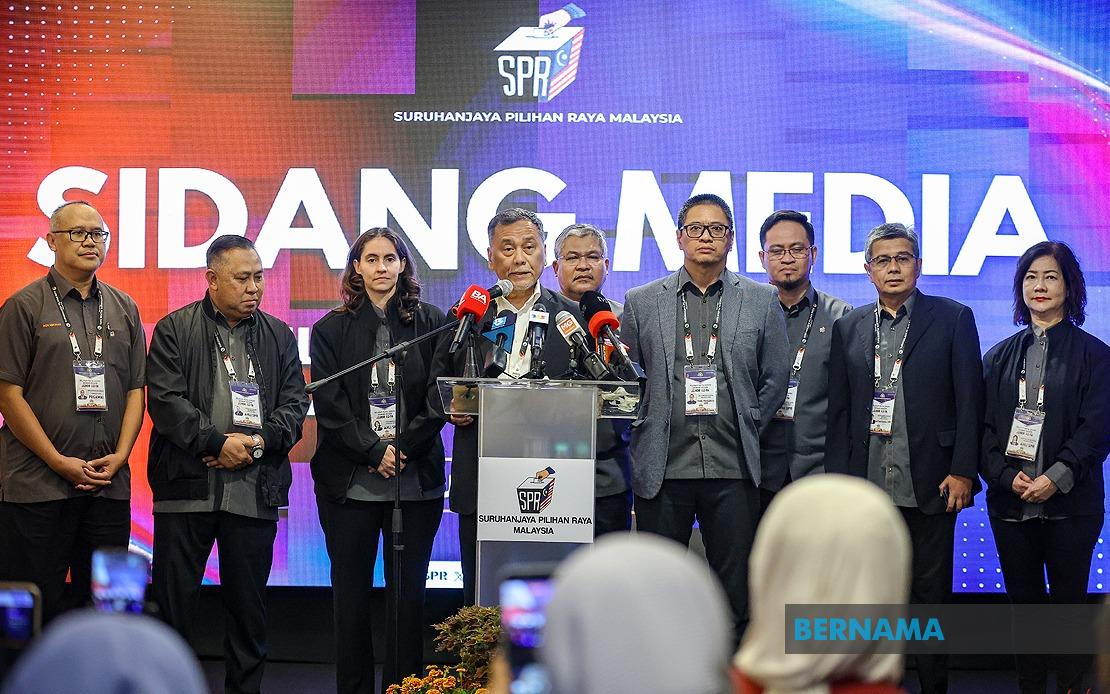
The Election Commission announced final results in the early hours of July 12, with the Puteri Wangsa constituency determination completing the official tally. PH's eight-seat haul split among three parties: the Democratic Action Party captured six seats, while Pakatan Keadilan Rakyat and Amanah each secured one. This fragmentation within the opposition alliance contrasts sharply with BN's unified electoral machinery and highlights structural disadvantages facing PH in translating popular support into parliamentary representation. The outcome leaves Perikatan Nasional—which had unexpectedly won three seats in 2022—entirely shut out of the assembly, with former Johor Menteri Besar Dr Sahruddin Jamal losing his personal seat at Bukit Kepong despite contesting.
Johor BN chairman Datuk Onn Hafiz Ghazi characterised the mandate as endorsement of the coalition's development agenda and service delivery record, framing the enlarged majority as testimony to public confidence in BN's governance approach. The victory carries particular significance for Umno, which has worked to rebuild credibility following years of internal division and legal challenges affecting senior party figures. The sweeping nature of the result suggests that Malaysian voters in Johor—the country's industrial manufacturing centre and a crucial economic engine—have tilted decisively toward continuity and establishment representation.
Beyond aggregate numbers, significant individual contests shaped the narrative. Onn Hafiz retained his personal Machap seat with commanding authority, securing 20,382 votes and defeating his Pakatan challenger by a 15,375-vote margin. Meanwhile, former Education Minister Dr Maszlee Malik captured Puteri Wangsa for Pakatan Keadilan Rakyat, one of the opposition's few bright spots, narrowly winning in a five-candidate contest. Conversely, two sitting Members of Parliament suffered defeat when contesting state-level seats: Onn Abu Bakar lost Senggarang while Suhaizan Kayat fell at Larkin, suggesting that federal parliamentary standing provides limited electoral coattails at state level.
MCA's resurgence proved particularly noteworthy, capturing all eight seats it contested and reclaiming several constituencies it had previously lost to DAP. The party succeeded in Yong Peng, Paloh, Bekok, Pekan Nanas, Layang-Layang, Tangkak, Jementah and Johor Jaya through candidates Ling Tiang Soon, Lee Ting Han, Tan Chong, Tan Eng Meng, Chua Jian Boon, Haw Chin Teck, See Ann Giap and Chan San San respectively. This clean sweep suggests that non-Malay voters—particularly the Chinese community—returned to BN, potentially responding to economic messaging or concerns about opposition direction and viability.
DAP suffered a severe contraction, losing eleven of seventeen seats it contested and surrendering four previously held constituencies to MCA and MIC partners. The party retained representation in Skudai, Mengkibol, Bentayan, Senai, Penggaram and Stulang, but the dramatic erosion indicates that DAP's opposition to BN governance and development policies has generated limited electoral traction in Johor's mixed urban-industrial environment. Meanwhile, Bersama, which fielded fifteen candidates, lost all deposits, signalling spectacular rejection of that breakaway faction of Azmin Ali's political vehicles. Independent and smaller party candidates similarly failed to secure representation.
MIC's perfect four-from-four performance—with K. Raven Kumar, V. Rugendran, P. Pannir Selvam and R. Kumaran each winning their respective constituencies—reaffirms that Indian community voting continues to flow predominantly toward BN's established communal representative. This outcome contrasts with contemporary discourse suggesting Indian voter alienation, though scholars might note that Johor's specific demographic composition and labour market dynamics differ from national patterns. Notably, Datuk Samsolbari Jamali of UMNO's Ayer Hitam division successfully defended the Semarang seat for an unprecedented sixth consecutive term, epitomising entrenched incumbency advantage within rural constituencies.
Packatan Harapan's leadership responded with formal dignity to defeat, with PKR election director Datuk Seri Amirudin Shari acknowledging voter mandates while asserting the opposition's commitment to constructive scrutiny and raising public concerns. Johor PAS, whose state branch representation evaporated after three 2022 seats, issued a statement accepting the democratic verdict and pledging to remain available to communities regardless of electoral success. These measured responses suggest opposition leaders recognise the scale of defeat while seeking to avoid demoralisation within party machinery.
The election drew 2.7 million registered voters across 56 constituencies, with 172 total candidates representing diverse political forces. Beyond BN and PH's unified campaigns, Perikatan Nasional fielded 33 candidates, Bersama Malaysia contributed 15, MUDA sponsored four, with independent and minor party candidates supplementing the ballot. The participation rate and candidate diversity reflect Malaysia's transition toward more competitive subnational politics, though BN's comprehensive victory in Johor suggests that structural advantages—including administrative machinery, media access and established community networks—continue to substantially favour the ruling coalition across most Malaysian states.
For Malaysia's broader political trajectory, the Johor result signals that BN has successfully arrested the electoral decline that characterised 2018-2020 and reasserted its traditional dominance in its heartland states. The supermajority provides Putrajaya-level confidence to pursue state-development agenda unencumbered by minority government constraints. Simultaneously, opposition forces face the challenge of regrouping after setbacks, particularly in non-Malay constituencies where DAP's messaging appears insufficient to overcome voting patterns favouring establishment stability. The outcome underscores that Malaysian electoral competition remains geographically and ethnically segmented, with consequences for national coalition-building and governance trajectories for years ahead.

