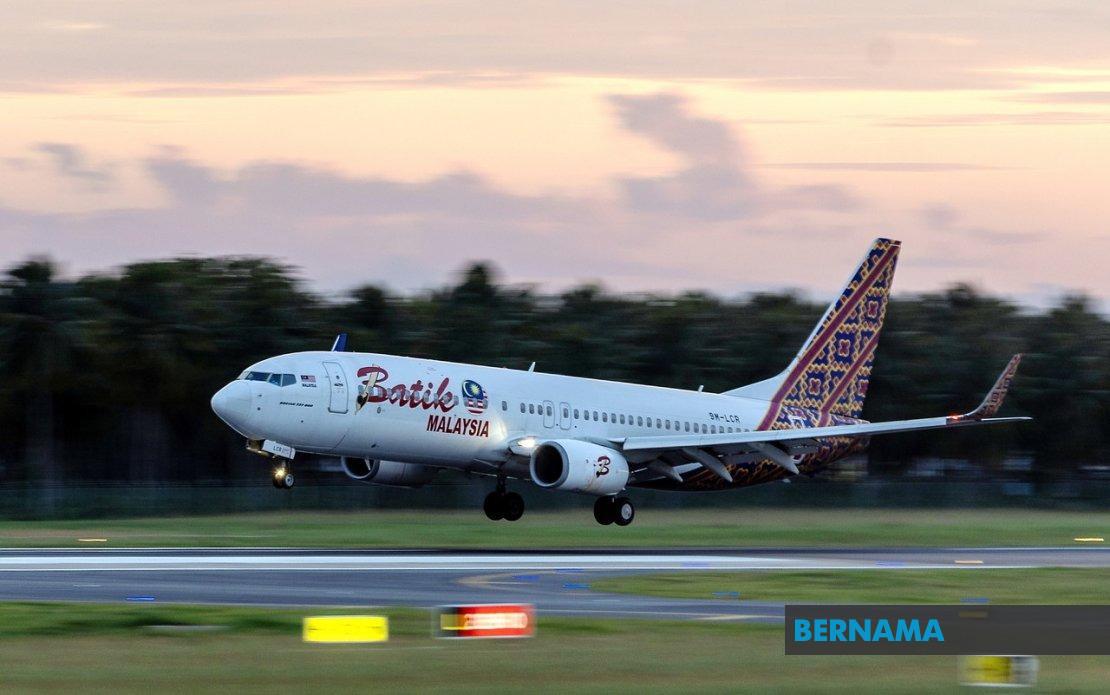
Batik Air is expanding its operations on the Bintulu-Kuala Lumpur corridor by introducing a second daily flight from July 20, marking a significant development for the Sarawak region's air connectivity. The decision comes after sustained pressure from government officials and the travelling public regarding the availability and cost of flights on this increasingly important route. Tourism, Arts and Culture Minister Datuk Seri Tiong King Sing announced the expansion, framing it as a direct response to community feedback about recent service disruptions and fare escalations that had constrained travel options for residents in both locations.
The expansion represents a partial outcome of negotiations between the government and Batik Air management. Tiong disclosed that initial discussions had explored the possibility of three daily flights, but the airline ultimately committed to a more measured approach by adding one additional service in the first instance. This phased strategy allows the carrier to assess market response and operational capacity before considering further increases. The Minister signalled that the door remains open for a third daily flight should passenger volumes continue their upward trajectory, suggesting that demand dynamics rather than operational constraints may determine future frequency decisions on this route.
Under the new timetable, flights departing Kuala Lumpur to Bintulu are scheduled for 10 am and 2:30 pm, while the return services from Bintulu to Kuala Lumpur will leave at 1:10 pm and 5:40 pm. These timings have been carefully selected to accommodate both business travellers requiring same-day return options and leisure passengers seeking convenient departure windows. The spacing between flights provides passengers with flexibility in planning their journeys while allowing Batik Air to optimise aircraft utilisation across its network.
Bintulu's economic trajectory has been central to the justification for increased air service. The town, which has emerged as a significant industrial and commercial hub in Sarawak, has experienced sustained growth driven by liquefied natural gas operations, petrochemical manufacturing, and downstream industries. This economic dynamism has generated a confluence of travel demands encompassing corporate executives conducting business operations, students pursuing higher education in Kuala Lumpur and other peninsular cities, patients seeking specialist medical treatment, and tourists exploring Sarawak's natural attractions. The existing flight capacity had become inadequate to accommodate these diverse passenger segments, creating bottlenecks that elevated fares and frustrated travellers.
Public concern over airfare pricing has been particularly acute. Tiong emphasised that sudden reductions in flight frequency had coincided with sharp increases in ticket prices, creating a compounding burden on frequent travellers. He urged Batik Air to maintain competitive pricing aligned with market conditions, arguing that affordability is essential to sustaining demand and preventing high fares from becoming a structural impediment to travel between Bintulu and the peninsula. This positioning reflects broader government concerns about ensuring that aviation services remain accessible to ordinary citizens rather than becoming a luxury available only to affluent passengers.
The Minister's advocacy reveals the intersection of economic development policy and consumer protection. As regional centres like Bintulu contribute increasingly to Malaysia's economic output, ensuring adequate air connections at reasonable cost becomes a matter of national interest. Restricted flight availability and elevated fares could deter investment, complicate business operations, and reduce the attractiveness of the region to both domestic and international companies seeking to establish operations. From this perspective, the government's intervention in airline scheduling decisions reflects recognition that air transport represents critical infrastructure supporting broader development objectives.
Service reliability emerged as a secondary concern in Tiong's discussions with Batik Air. He specifically urged the airline to maintain consistent operations and avoid the last-minute schedule changes and cancellations that have characterised some routes in recent years. Such disruptions cause disproportionate inconvenience to passengers whose travel decisions are often driven by fixed commitments such as medical appointments, business meetings, or academic schedules. The Minister's emphasis on operational stability signals government expectations that frequency increases must be accompanied by corresponding improvements in service dependability.
The expansion reflects a broader Southeast Asian pattern of intensifying air travel demand as middle-class populations grow and regional economic integration deepens. Malaysia's position as a regional hub is partly contingent on maintaining efficient domestic connections that allow passengers to efficiently reach secondary cities before connecting to international services. Bintulu's case exemplifies how improving domestic aviation infrastructure can unlock economic potential in regions that might otherwise experience relative decline due to geographic remoteness from major commercial centres. The twice-daily service represents a calculated effort to position the town as an attractive destination for both business and leisure visitors.
Government officials across Southeast Asia have increasingly recognised that airline capacity and pricing decisions warrant policy attention, particularly on routes connecting resource-rich regions to major metropolitan centres. The Bintulu-Kuala Lumpur route occupies an intermediate position in this hierarchy—significant enough to justify multiple daily flights, yet not yet commanding the frequency levels found on trunk routes. Tiong's negotiation with Batik Air demonstrates how sustained political engagement can influence carrier scheduling decisions even absent regulatory compulsion. This approach requires alignment between political representatives, airline management, and consumers regarding mutual benefits of expanded service.
The phased expansion strategy adopted by Batik Air incorporates flexibility that acknowledges demand uncertainty. By committing to an additional daily flight while retaining options for further expansion, the airline hedges against the risk that passenger volumes may not justify three daily services. Simultaneously, this approach preserves optionality should market conditions prove more buoyant than anticipated. For Malaysian policymakers, the arrangement demonstrates how negotiated solutions can sometimes achieve policy objectives more efficiently than regulatory mandates, provided that underlying commercial interests align with public objectives.
For Bintulu residents and business users of this route, the practical impact of twice-daily service extends beyond mere convenience. The ability to complete day trips to Kuala Lumpur for medical consultations, government business, or commercial meetings becomes feasible when return flights are available in late afternoon. Educational institutions in the peninsula become more accessible to Bintulu students when flexible travel schedules reduce the logistical burden of long-distance study. These subtle but consequential improvements in accessibility can influence location decisions by skilled workers, investors, and institutions considering whether to establish operations in smaller regional centres. From this perspective, aviation service expansion represents not merely a consumer amenity but an instrument of regional economic development policy.

