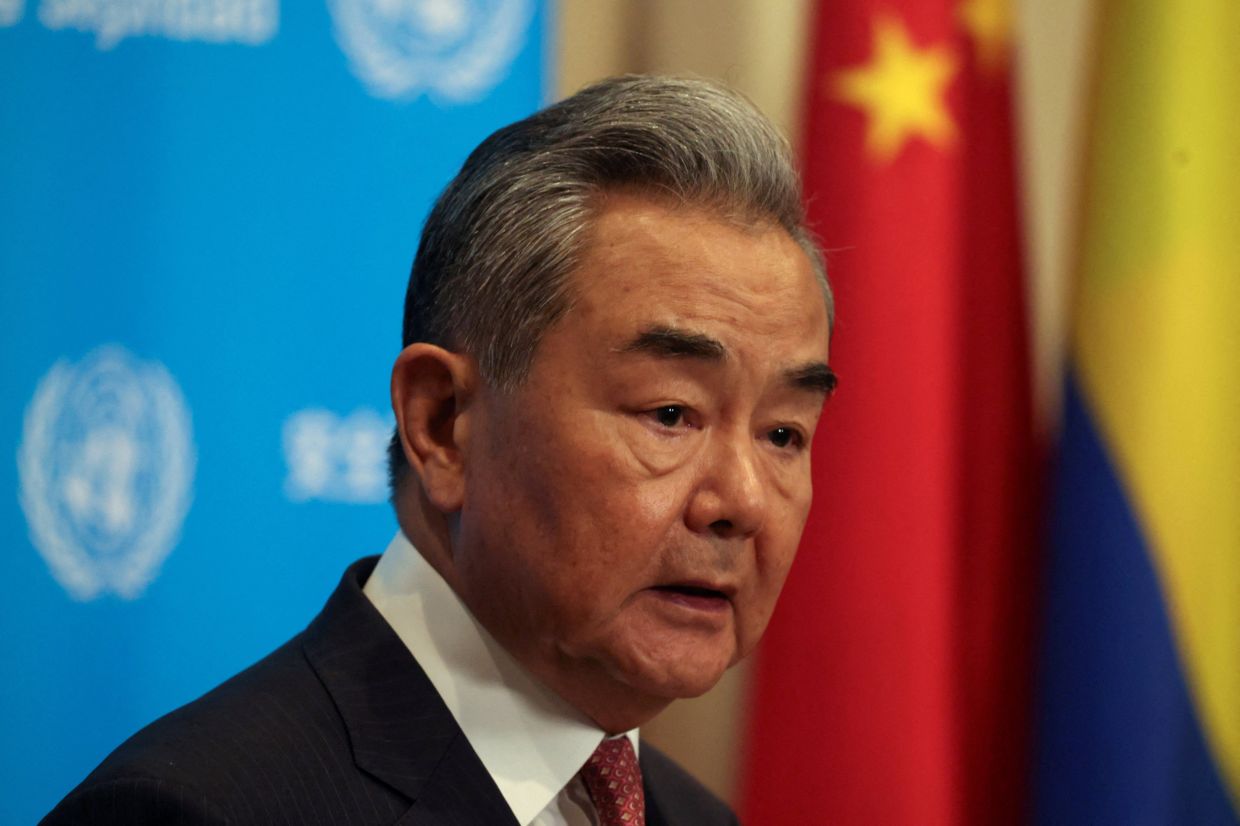
China's Foreign Minister Wang Yi has cautioned incoming US Secretary of State Marco Rubio to exercise extreme care when dealing with Taiwan-related matters, signalling Beijing's determination to protect what it considers a core sovereignty issue even as Washington and Beijing attempt to stabilise their fractious relationship. The warning came during a telephone conversation between the two diplomats on Tuesday, underlining the delicate balancing act both capitals must perform to prevent the dispute over the self-governing island from destabilising the broader relationship between the world's two largest economies.
Wang emphasised that maintaining constructive and strategically stable relations between the United States and China serves the fundamental interests of both countries and the broader international community. He outlined a framework for advancing the bilateral relationship that hinges on mutual restraint and reciprocal engagement, calling for both Washington and Beijing to move past existing grievances and work methodically towards common ground. The remarks suggest that Beijing views the transition in American leadership as an opportunity to reset expectations and establish clearer parameters for how the two nations should interact on sensitive matters.
The Foreign Minister articulated a vision of deepening cooperation across multiple domains while simultaneously managing the inherent tensions and potential friction points that characterise contemporary US-China relations. Wang stressed that building such a relationship requires more than rhetorical commitment; it demands concrete actions, genuine efforts to close widening gaps, and sustained diplomatic engagement from both sides. This formulation reflects Beijing's frustration with what it perceives as Washington's inconsistent approach to their relationship, oscillating between confrontation and cooperation without clear strategic direction.
Under Wang's proposed framework, the two countries should expand their areas of agreement and identify new platforms for productive collaboration whilst simultaneously narrowing the scope of bilateral disputes and implementing robust mechanisms to mitigate emerging risks. This approach mirrors language used by both capitals during earlier diplomatic encounters, particularly following President Trump's summit with Chinese President Xi Jinping weeks prior. The emphasis on lengthening cooperation lists whilst shortening problem lists suggests Beijing's preference for a transactional approach that prioritises concrete gains over ideological positioning.
The timing of Wang's intervention carries particular significance given that Xi specifically raised Taiwan during his direct engagement with Trump, warning that mismanagement of the issue could precipitate military confrontation and push bilateral relations into catastrophically dangerous territory. Beijing's consistent messaging on this point reflects its assessment that Taiwan represents the most volatile potential flashpoint in US-China relations, capable of overwhelming all other areas of cooperation and fundamentally reshaping regional stability. For Malaysia and other Southeast Asian nations, such warnings underscore the precarious balance that regional powers must maintain between great power competition.
The diplomatic exchange also reflects broader preparations for a potential state visit by Xi to the United States, an event that both administrations have signalled could become a marquee moment in their renewed engagement. Trump had previously indicated openness to hosting the Chinese leader, presenting such a summit as a potential breakthrough moment in stabilising ties that have frayed considerably over trade disputes, technology competition, and regional tensions. For Southeast Asian observers, any high-level summit offers both opportunities and risks, as it may either consolidate great power cooperation at the expense of smaller nations' interests or create new competitive dynamics that pull the region into strategic positioning.
Washington has characterised the May summit between Trump and Xi as a triumphant achievement that delivered tangible benefits for American interests, issuing formal documentation emphasising Beijing's commitments to address Washington's concerns regarding supply chain vulnerabilities, particularly regarding critical materials and manufacturing capacity. This framing reflects the Trump administration's emphasis on measurable economic gains and reciprocal agreements rather than the multilateral, values-based approach that characterised recent years of US foreign policy. For Malaysian businesses and manufacturers integrated into regional supply chains, such negotiations carry immediate practical implications regarding sourcing, pricing, and trade relationships.
However, despite apparent stabilisation in bilateral relations following the summit, recent developments have exposed lingering vulnerabilities and unresolved tensions beneath the surface of renewed engagement. These fault lines suggest that the foundation of US-China cooperation, while stronger than during the acute confrontational periods of recent years, remains susceptible to disruption from unexpected incidents or policy shifts. The careful language deployed by Wang Yi reflects Beijing's recognition that the relationship remains fragile and requires sustained diplomatic attention to prevent regression into the confrontational patterns that previously characterised it.
For Malaysia and the broader Southeast Asian region, the trajectory of US-China relations holds profound implications for regional security architecture, economic integration patterns, and the space available for smaller nations to pursue independent foreign policy agendas. The ongoing emphasis on Taiwan as a red-line issue underscores Beijing's refusal to deprioritise sovereignty concerns even in the context of improved bilateral relations with Washington. This consistency in messaging suggests that any regional conflicts involving Taiwan could rapidly consume the diplomatic capital that has been rebuilt, potentially drawing other powers into confrontation despite their preference for stability.
Wang Yi's careful framing of the need for both countries to approach Taiwan affairs with deliberation rather than impulse reflects Beijing's concern that personnel transitions in American government could introduce unpredictability into China's most sensitive bilateral relationship. The explicit warning to Rubio serves multiple audiences simultaneously—reassuring Chinese domestic constituencies that Beijing will firmly defend its interests, signalling to Washington that Xi will not tolerate what Beijing deems inadequate respect for its sovereignty positions, and communicating to regional powers that Taiwan remains the central issue around which all other bilateral considerations must pivot.
The diplomatic architecture that Wang outlined—emphasizing cooperation expansion, problem reduction, and risk management—provides a template that both capitals can reference in future negotiations, though success depends on whether genuine policy shifts accompany rhetorical commitments. For regional stakeholders including Malaysia, close monitoring of how effectively the US and China implement this framework remains essential, as slippage or backtracking could signal renewed competitive intensity that would ripple across Southeast Asia's security and economic environment.

