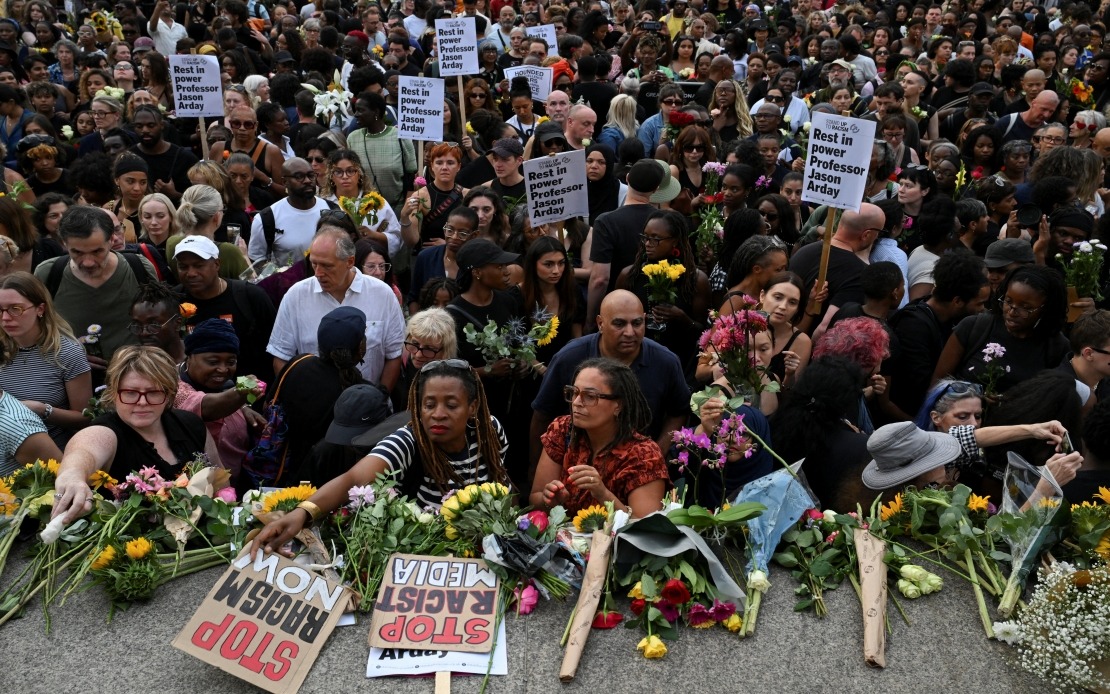
A Belgian academic institution has taken action against a postdoctoral researcher who levelled plagiarism charges against a Cambridge University professor, marking another twist in a controversy that culminated in the professor's death last month. Nathan Cofnas, affiliated with Ghent University's department of philosophy and moral sciences, faced suspension following his accusations directed at Jason Arday, who resigned from his Cambridge position in early August before dying unexpectedly days later.
The sequence of events reveals the escalating tensions surrounding Arday's academic career and personal circumstances. Arday, who had achieved prominence as the University of Cambridge's youngest Black professor when appointed to a sociology of education role in 2023, encountered mounting scrutiny in July when plagiarism allegations emerged alongside broader questions about aspects of his scholarly work and biographical narrative. The accusations precipitated his resignation on August 5, followed by Cambridge's announcement that it would examine the conditions and processes surrounding his original appointment. On August 14, authorities discovered Arday dead at his south London residence, classifying the death as unexpected but not suspicious.
Ghent University's decision to suspend Cofnas reflects an institutional response to what administrators perceive as problematic conduct extending beyond the plagiarism dispute itself. In public statements, Cofnas has described himself as an advocate for "race realism" and asserted that he faces investigation for allegedly discriminating against Arday. The university's leadership, through rector Petra De Sutter and vice-rector Herwig Reynaert, acknowledged the sensitivity of the situation while articulating the institution's position on fundamental principles. Their statement emphasised Ghent's commitment to both academic freedom and the responsibility accompanying such freedom, noting that institutional protections exist to safeguard individual rights against unrestricted expression.
Cofnas's history demonstrates the contentious nature of his intellectual contributions to public discourse. In 2024, he relinquished a research associate position at Emmanuel College, Cambridge, following publication of a blog post that advanced arguments about racial differences in intelligence, contending that a genuine meritocracy would produce virtually no Black professors at institutions like Harvard University. Such positions place him within broader debates about science, identity politics, and the legitimacy of certain lines of inquiry within academic settings across the English-speaking world.
The institutional response from Ghent University carefully navigates between competing commitments to scholarly freedom and protection against discrimination. The university explicitly opposed what it characterised as discrimination, hatred, and racism whilst simultaneously reaffirming dedication to open academic debate, even when contentious. This formulation reflects the genuine tension many universities face when managing researchers whose public statements generate controversy and potential harm to colleagues or institutional reputation. Administrators indicated they regarded Cofnas's recent public statements with sufficient seriousness to warrant suspension, though they declined to specify whether additional measures had been implemented, citing reluctance to prejudge potential future disciplinary proceedings.
Arday's trajectory from south London's working-class environment to Cambridge's prestigious ranks presented a compelling narrative of academic achievement against adversity. Born to Ghanaian immigrant parents, he had publicly disclosed his autism diagnosis and learning difficulties, noting that he remained nonverbal until age eleven and did not acquire literacy skills until eighteen. His appointment to Cambridge's sociology of education faculty in 2023 generated significant recognition, positioning him as a symbol of institutional progress toward diversity and inclusion. The subsequent unravelling of his career within weeks created substantial institutional and personal consequences that extended well beyond standard academic disputes.
The timing and circumstances surrounding Arday's death intensify scrutiny of how universities manage allegations, support embattled faculty members, and balance accountability with pastoral responsibility. His resignation statement indicated he rejected interpretations suggesting capitulation to criticism, yet the psychological weight of intense professional and public scrutiny during an investigation period cannot be discounted. Universities worldwide have begun examining their procedures for managing plagiarism allegations and institutional investigations, seeking to ensure processes remain rigorous whilst protecting the wellbeing of those implicated.
For Southeast Asian academic institutions observing this case, several dimensions warrant consideration. Questions about how universities investigate and communicate about academic misconduct allegations, the role of social media in amplifying disputes, and institutional obligations to support vulnerable researchers remain pertinent globally. Malaysian universities, themselves navigating questions about research integrity and international academic standards, might reflect on procedural safeguards and support mechanisms for researchers facing serious allegations.
The broader context involves ongoing debates about what constitutes legitimate academic inquiry versus research that may perpetuate discrimination or pseudoscientific claims about human differences. Different academic communities and jurisdictions maintain varying thresholds for distinguishing protected controversial speech from unacceptable discrimination. Ghent University's position suggests that even within frameworks emphasising academic freedom, institutions retain authority to restrict expression when they determine it violates fundamental commitments to protecting members from harm or discrimination.
The case also illuminates tensions between individual researchers' rights and institutional responsibilities to multiple constituencies. Cofnas's contentions about his own treatment must be weighed against Cambridge and Ghent's obligations toward creating inclusive scholarly environments and maintaining public trust in academic integrity. As higher education increasingly operates within public scrutiny and social media amplification, how institutions adjudicate disputes between academic freedom and anti-discrimination commitments will continue shaping their reputational standing and internal culture.
Moving forward, Ghent University's approach may establish precedents for how other institutions address researchers whose public statements fall outside protected academic discourse. The university's emphasis on responsibility accompanying freedom suggests an emerging consensus that academic freedom, whilst valuable, does not constitute an absolute shield against institutional consequences when speech causes demonstrable harm. This framing reflects evolving international understandings of how academic institutions balance scholarly inquiry with commitments to equality and dignity.

