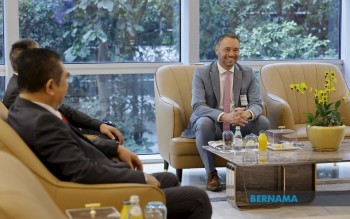
Belgium's Deputy Prime Minister and Minister of Foreign Affairs Maxime Prévot has underscored the European Union's determination to finalise the Malaysia-EU Free Trade Agreement (MEUFTA), describing it as instrumental in catalysing fresh trade pathways and fostering robust economic expansion across both blocs. Speaking during an official visit to Kuala Lumpur, Prévot emphasised that the bilateral free trade accord remains a central pillar of EU strategy and holds particular importance for Belgium's own economic interests in Southeast Asia.
The completion of MEUFTA is expected to transform the commercial landscape between Malaysia and the European Union by dismantling existing tariff barriers and facilitating smoother movement of goods and services. Prévot stressed that the agreement would create a broader platform for commercial exchanges whilst simultaneously generating fresh investment possibilities and employment opportunities across multiple sectors. The deal is also anticipated to strengthen regional development initiatives and contribute meaningfully to sustained economic growth on both sides of the equation.
Belgium, despite its relatively modest population of 11.77 million inhabitants, operates as one of Europe's most trade-dependent economies, with exports representing approximately 85 per cent of its gross domestic product. This orientation towards international commerce makes Malaysia and the broader Southeast Asian market particularly attractive to Belgian businesses seeking expansion opportunities beyond traditional European markets. The MEUFTA framework would provide these enterprises with preferential access to Malaysian supply chains and consumer markets.
Negotiations surrounding the comprehensive trade pact are projected to reach completion within several months or potentially by the end of the coming year, according to recent statements from EU officials. This timeline indicates that discussions have advanced considerably, though substantial work remains to harmonise regulatory standards, intellectual property protections, and sectoral trade provisions between the two parties. The accelerated pace reflects both sides' political commitment to delivering tangible commercial benefits.
PreVot's two-day visit to Malaysia, his maiden trip since assuming office in February of the previous year, signals Belgium's elevation of Southeast Asian engagement. The visit encompasses meetings with Deputy Prime Minister Datuk Seri Fadillah Yusof, who simultaneously holds the Energy Transition and Water Transformation portfolio. These discussions will encompass critical infrastructure sectors including renewable energy development, rare earth element sourcing and processing, and the rapidly expanding halal industry—sectors where Belgian technological expertise and Malaysian resources could achieve productive synergies.
Current bilateral trade dynamics already demonstrate the depth of commercial interaction between the two nations. During 2025, Malaysia-Belgium trade reached RM9.74 billion, with Malaysian exports constituting RM6.85 billion and Belgian imports accounting for RM2.89 billion. This trade composition reflects Malaysia's role as a primary supplier of raw materials and manufactured goods whilst Belgium serves as a gateway to European markets and a source of specialised technology and services.
Investment flows further illustrate the strength of bilateral commercial ties. As of 2025, approved projects incorporating Belgian capital investment totalled 67 ventures, representing an aggregate investment commitment of RM5.1 billion and projected job creation of 4,605 positions across Malaysia's economy. These figures underscore how European investment, particularly from smaller but highly capitalised economies like Belgium, contributes meaningfully to Malaysian employment and industrial diversification.
The anticipated MEUFTA framework assumes particular significance for Malaysia's broader strategic positioning within global commerce. The agreement would position Malaysia as a preferred trading partner within the European Union's expanding vision of diversified, rules-based trade relationships across Indo-Pacific economies. This development aligns with Malaysia's own efforts to deepen economic partnerships beyond traditional Asian markets whilst strengthening supply chain resilience in an increasingly fragmented global economy.
For Belgian manufacturers and service providers, the deal offers substantial advantages in accessing Malaysian markets whilst leveraging the nation's established position within ASEAN trade networks. Belgian enterprises in sectors ranging from chemical production and engineering to logistics and financial services would benefit from reduced trade barriers and enhanced regulatory clarity. Similarly, Malaysian exporters would gain preferential conditions for accessing European consumers and industrial buyers, potentially driving significant growth in high-value exports.
The broader implications for Southeast Asian trade architecture merit consideration. MEUFTA would represent the EU's deepening commitment to bilateral trade relationships throughout the region, complementing existing and prospective pacts with Vietnam, Indonesia, and Thailand. This expansion of European commercial engagement reflects Brussels' strategic pivot towards Indo-Pacific economies as critical components of diversified, democratic-aligned supply chains resistant to geopolitical disruptions.
Renewable energy cooperation assumes particular prominence within the Malaysia-Belgium discussion framework. As both nations accelerate decarbonisation efforts—Belgium through advancing offshore wind and hydrogen technologies, Malaysia through solar and hydroelectric expansion—opportunities exist for Belgian renewable engineering firms and investment platforms to support Malaysia's energy transition objectives. Such collaboration could position Malaysian enterprises as regional renewable technology hubs whilst attracting Belgian capital into Southeast Asian green infrastructure.
The halal industry dimension reflects Malaysia's unique competitive advantages and Belgium's emerging recognition of Islamic economy opportunities. Malaysia commands global leadership across halal certification, product development, and supply chain management. Belgian involvement in this sector could facilitate European market penetration for Malaysian halal products and encourage Belgian companies to adopt halal standards for diverse consumer constituencies within Belgium and broader European markets.

