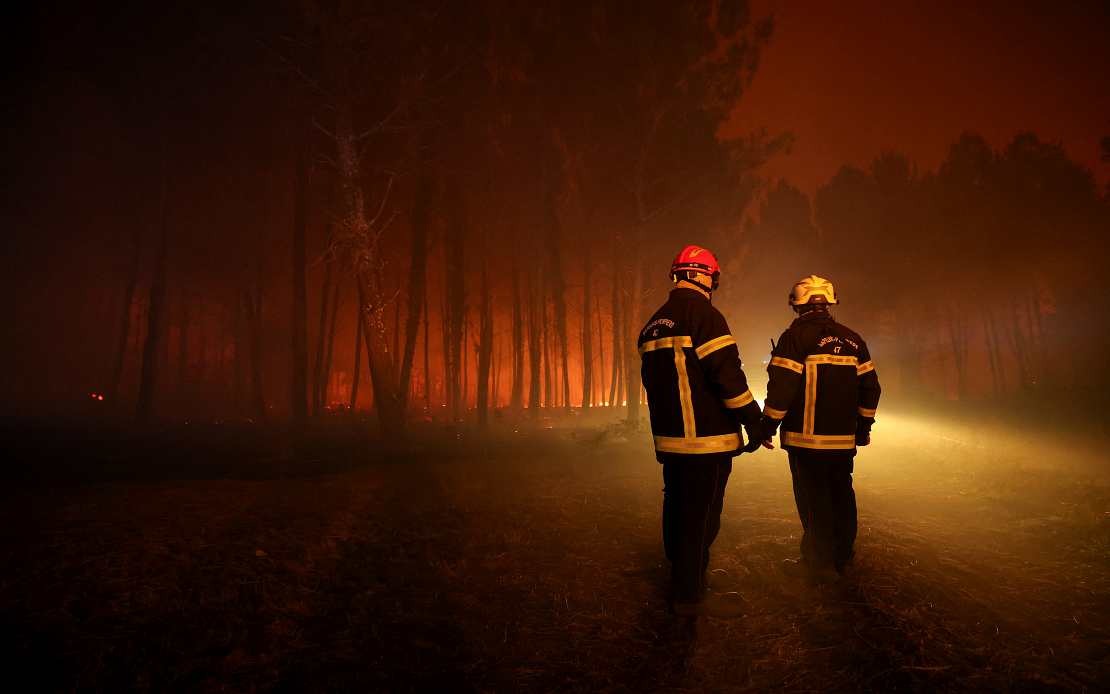
Belgium is confronting an environmental crisis of historic proportions as a sprawling wildfire in the High Fens region of eastern Belgium continues to rage out of control. By Saturday evening, the inferno had charred approximately 2,700 hectares of landscape, marking the most extensive forest fire in the nation's recorded history. The scale of destruction has already surpassed the previous benchmark set by a major 2011 wildfire that consumed nearly 1,400 hectares, underscoring the severity of the current emergency. Around 600 people have been compelled to abandon their homes and communities as the flames encroach ever closer, with authorities still assessing the full scope of the evacuation requirement.
The fire emerged on Friday afternoon at approximately 2 pm, igniting in the High Fens nature reserve, a biodiverse protected area situated near Belgium's border with Germany. What started as a contained incident rapidly transformed into an uncontrollable conflagration, with the burned perimeter expanding dramatically throughout the day. The office of the governor of Liege reported that the affected area more than doubled from roughly 1,600 hectares recorded earlier on Saturday, indicating the fire's capacity to spread with terrifying speed. Emergency operations extended well into Saturday as firefighters struggled to contain the advancing flames across terrain that spans both Belgium and into adjacent regions.
The geographical and meteorological conditions have conspired to make firefighting efforts extraordinarily challenging. The High Fens nature reserve's rugged topography, characterized by dense vegetation and uneven ground, prevents conventional firefighting crews from approaching the blaze closely enough to deploy standard suppression techniques. Simultaneously, the region has been buffeted by shifting winds that constantly alter the fire's trajectory and intensity, complicating tactical decisions for incident commanders. The combination of difficult terrain and unpredictable wind patterns has effectively transformed the fire into a nearly autonomous force, resistant to traditional ground-based interventions.
Beyond the physical obstacles, meteorological conditions have created an extraordinarily volatile environment for fire propagation. Belgium experienced an intense heat wave during the week preceding the fire, with Friday witnessing temperatures climb to 37 degrees Celsius in various parts of the country. These scorching conditions have rendered vegetation exceptionally desiccated, transforming the landscape into an ideal fuel source for rapid fire advancement. The confluence of extreme heat, low humidity, and gusty winds has essentially created textbook conditions for wildfire proliferation, allowing flames to advance with minimal resistance across the parched terrain.
The emergency response has transcended national boundaries as Belgium mobilized its disaster management apparatus and simultaneously appealed to international partners for assistance. The European Union Civil Protection Mechanism was formally activated, triggering a coordinated multinational response to the escalating crisis. Firefighting aircraft arrived from three member states—the Czech Republic, Sweden, and the Netherlands—demonstrating the gravity with which European authorities regard the situation. This aerial reinforcement represents a critical tactical asset, enabling water and retardant drops across areas inaccessible to ground crews.
The operational coordination extends across multiple countries and governmental levels within the region. Firefighting personnel have been mobilized from across Belgium's provinces, while specialized units from neighboring Germany and Luxembourg have also entered Belgian territory to assist containment efforts. The Belgian military has been activated for support operations, and local farming communities have contributed their equipment and manpower to the struggle. This comprehensive mobilization illustrates the unprecedented nature of the crisis and the recognition among authorities that conventional domestic resources are insufficient to address the emergency's magnitude.
Community disruptions ripple far beyond those directly affected by evacuation orders. Tourists vacationing in the High Fens area have been advised to depart immediately, effectively terminating what should have been recreational stays. A children's summer camp operating in the vicinity was evacuated as a precautionary measure, displacing young residents and potentially causing significant disruption to families with enrollments at the facility. Local infrastructure faces potential threats, with the possibility that essential services, roads, and utilities in affected areas could sustain damage or require closure for safety reasons.
The economic and environmental consequences of this catastrophic fire extend well beyond the immediate emergency response phase. The High Fens region, as a protected nature reserve, holds ecological significance for Belgium and the broader European landscape. The destruction of 2,700 hectares of habitat represents an incalculable loss to biodiversity, affecting plant species, wildlife populations, and ecosystem services that depend upon forest coverage. Restoration of such extensive burned areas requires years or even decades of intensive conservation work, straining environmental budgets and scientific resources.
From a broader perspective, Belgium's experience exemplifies a pattern increasingly evident across Europe: climate change is fundamentally altering the frequency and severity of wildfire events that were historically rare in temperate regions. While Mediterranean nations have long contended with seasonal fire risks, the extension of dangerous fire conditions into traditionally cooler regions signals a troubling shift in continental climate patterns. For Southeast Asian observers, particularly in Malaysia where tropical forest fires occasionally threaten communities, the Belgian crisis offers a cautionary illustration of how environmental conditions can overwhelm preparedness systems, even in wealthy, well-organized nations with sophisticated emergency infrastructure. The incident underscores the universal vulnerability to climate-driven extremes and the imperative for all regions to continuously enhance their resilience and adaptive capacity.

