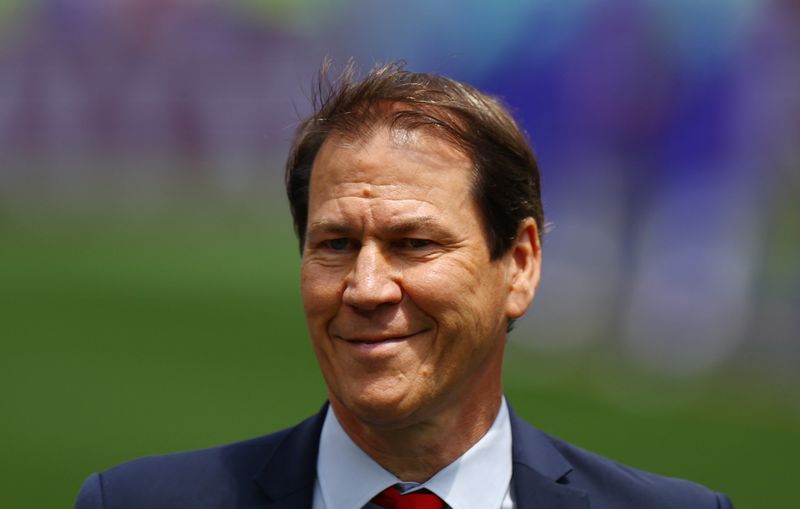
Rudi Garcia's tenure as Belgium's national football coach will conclude on July 31 following an agreement with the Belgian Football Association to not renew his contract. The decision, announced on Monday, comes after Garcia guided the squad through a tumultuous World Cup campaign marked by inconsistent performances and intense media scrutiny, culminating in a quarter-final loss to eventual tournament winners Spain.
Garcia's appointment in April 2022 had arrived during a particularly challenging period for Belgian football, both in sporting terms and financially. The federation credited the French coach's expertise and commitment with helping restore squad cohesion during his 18-month tenure. Sports Director Vincent Mannaert acknowledged Garcia's contribution in stabilizing the team during this transitional phase, emphasizing his role in managing the generational shift within the national setup.
The World Cup campaign itself proved deeply divisive, testing Garcia's standing with both the media and supporters. Belgium's group stage performances raised serious questions about tactical clarity, with the team drawing against Egypt and Iran before eventually topping their group with a commanding 5-1 victory over New Zealand. The unconvincing nature of these early matches prompted widespread criticism, compelling Garcia to hold a media meeting to defend and explain his strategic approach to silencing the growing chorus of doubts.
Belgium's knockout stage run demonstrated remarkable resilience but also exposed defensive vulnerabilities and reliance on fortunate circumstances. Against Senegal in the Round of 16, the Belgians mounted an improbable comeback from two goals down, aided significantly by a goalkeeping error and a controversial VAR-assisted penalty decision deep into extra time that sealed a 3-2 victory. This narrow escape masked underlying concerns about the team's structural fragility.
The subsequent round-of-eight encounter against the United States proved to be Garcia's finest moment, with Belgium delivering a crisp, convincing 4-1 performance that demonstrated tactical superiority and earned widespread praise for the coach's team selections and in-game management. This commanding display suggested the critics might have been premature in their judgments, raising expectations for the Spanish quarter-final clash.
However, Belgium's elimination by Spain reignited the controversy surrounding Garcia's decision-making, particularly his controversial substitution of goalkeeper Thibaut Courtois. This tactical choice became symbolically associated with the team's downfall, intensifying speculation about the coach's future and creating an impression that dismissal appeared imminent. Both Garcia and the federation maintained that their separation was entirely mutual and conducted without acrimony, though the timing and circumstances suggested considerable tension underlying the official narrative.
In his statement, Garcia expressed gratitude toward the players he had worked with, particularly highlighting the squad's professionalism and the pleasure he derived from guiding the country's young talent through a crucial rebuilding period. His acknowledgment of initiating a generational transition underscores how significant personnel changes shaped his tenure, positioning him as a bridge figure rather than a long-term architect of Belgian football's future.
The federation now faces the urgent task of identifying Garcia's successor, with Vincent Mannaert assuming primary responsibility for this crucial appointment. Belgium's next competitive fixtures arrive in September when the Nations League resumes, requiring the team to visit Italy in Rome before hosting France immediately thereafter. These high-profile encounters will provide an early test of new leadership and continuity following the managerial transition.
Garcia's departure aligns with a broader trend of World Cup coaching changes, as numerous national teams have undergone managerial transitions during or immediately after the tournament. The list of departing coaches extends across the competitive spectrum, including established programs such as France, Germany, and the Netherlands, alongside lesser football nations. This phenomenon reflects the intense pressure surrounding World Cup performance and the rapidly evolving expectations of national football associations regarding tactical innovation and results.
Belgium's situation carries particular significance for Southeast Asian football observers, given the region's increasing engagement with European coaching expertise and tactical development. The Belgian federation's experience demonstrates the challenges inherent in balancing generational transition with immediate competitive demands, a struggle many developing football nations understand intimately. Garcia's departure also illustrates how high-profile international appointments, regardless of objective achievements like reaching the quarter-finals, remain vulnerable to cyclical media criticism and shifting federation priorities.

