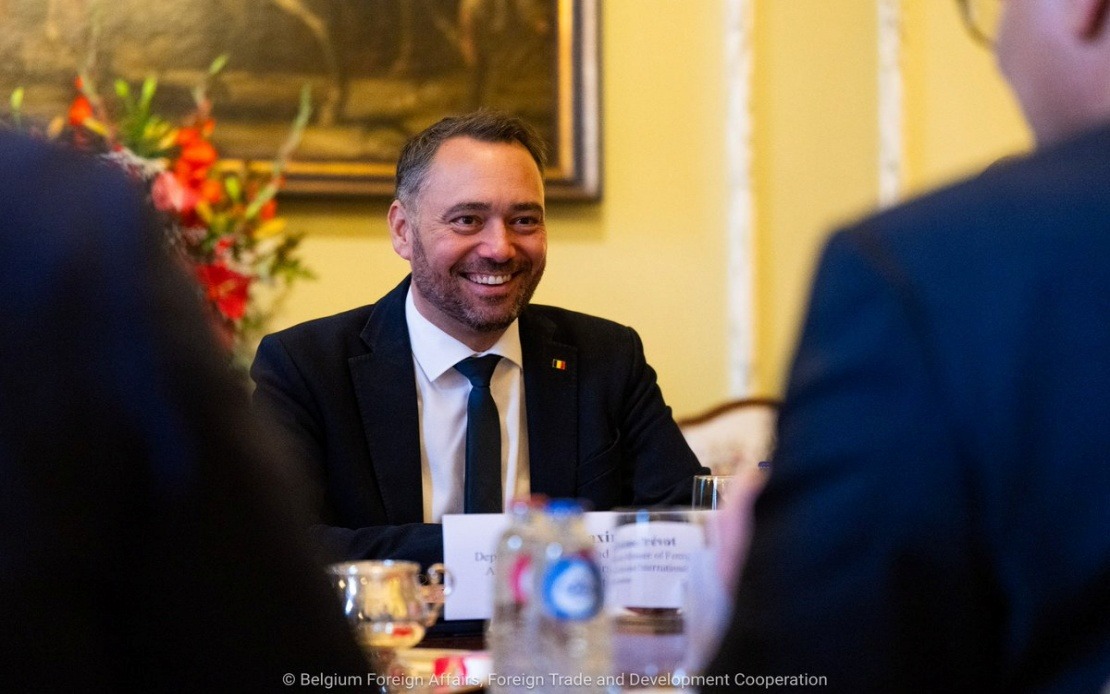
Belgium's Deputy Prime Minister and Foreign, European Affairs and Development Cooperation Minister Maxime Prévot is set to begin a two-day working visit to Malaysia this Thursday, with renewable energy cooperation forming the centrepiece of bilateral discussions. The visit represents Prévot's inaugural trip to Malaysia since he assumed his ministerial portfolio in February 2025, signalling renewed momentum in Europe-Malaysia relations at a time when both regions are prioritising the clean energy transition.
The Malaysian Foreign Ministry confirmed the visit through a statement released on Wednesday, indicating that substantive talks will unfold across multiple sectors critical to both nations' strategic interests. Chief among these is renewable energy, an area of growing strategic importance as Malaysia seeks to diversify its energy mix while Belgium, as a densely populated European nation with limited natural resources, looks to secure sustainable energy partnerships and supply chain advantages across Asia.
On July 2, Prévot will hold formal discussions with Deputy Prime Minister Datuk Seri Fadillah Yusof, who concurrently serves as Energy Transition and Water Transformation Minister. This pairing of interlocutors underscores the technical and policy-focused nature of the engagement. Both officials are positioned to explore concrete mechanisms for deepening cooperation, moving beyond diplomatic pleasantries to identify specific project pipelines and investment opportunities that align with each country's energy transition objectives.
Beyond renewable energy, the two nations will examine possibilities in rare earth elements—a domain where Malaysia possesses significant competitive advantages. Malaysia's established rare earth processing industry and its experience managing this complex value chain makes it an attractive partner for European nations seeking to reduce dependence on traditional suppliers. For Malaysia, Belgian intermediation could facilitate deeper engagement with the broader European Union market and standards framework.
The halal industry represents another pillar of discussion, reflecting Malaysia's position as a global halal hub and standard-setter. Belgium, as a major European consumer market with substantial Muslim populations, offers opportunities for Malaysian halal-certified products and expertise. This sector also carries cultural and diplomatic weight, signalling respect for religious and ethical dimensions of trade that resonate with Malaysian stakeholders.
The bilateral agenda extends beyond these three thematic areas. Officials will review the overall trajectory of Malaysia-Belgium relations and assess the health of Malaysia's broader partnership with the European Union. Discussions on regional and international developments of mutual concern will provide an opportunity for both sides to exchange perspectives on Indo-Pacific stability, multilateral governance, and global challenges ranging from climate action to supply chain resilience.
Prévot's schedule includes a ministerial address at the 39th Asia-Pacific Roundtable, an annual forum organised by the Institute of Strategic and International Studies (ISIS) Malaysia that attracts policymakers, academics, and strategic thinkers from across the region. This platform offers the Belgian minister an opportunity to articulate European positions on regional security and cooperation challenges to an influential audience.
The visit also includes a ceremonial dimension. Prévot is expected to have an audience with Sultan Nazrin Muizzuddin Shah, the Sultan of Perak, reflecting protocol courtesies that accompany high-level diplomatic visits and acknowledging Malaysia's constitutional monarchy framework. Such engagements, though often formal, carry symbolic weight in cementing bilateral goodwill.
Bilateral trade between Malaysia and Belgium has demonstrated robust growth, reaching RM9.74 billion in 2025. This figure comprises RM6.85 billion in Malaysian exports—largely reflecting Malaysia's strength in manufacturing, commodities, and processed products—and RM2.89 billion in Belgian imports into Malaysia, predominantly higher-value technical and consumer goods. This trade relationship, while significant, suggests considerable untapped potential for expansion, particularly if renewable energy investments and rare earth cooperation generate new commercial linkages.
Belgian investment in Malaysia reflects the country's confidence in the Malaysian market and regulatory environment. As of 2025, 67 projects involving Belgian investors had secured approval, collectively representing RM5.1 billion in committed capital and promising the creation of 4,605 jobs across various sectors. These figures indicate Belgium's role as a meaningful contributor to Malaysia's foreign direct investment inflows and employment generation, even as they underscore opportunities for growth in investment volume and sectoral diversification.
The timing of Prévot's visit coincides with Malaysia's intensifying focus on energy transition and economic diversification. As the country navigates the dual imperatives of reducing carbon emissions and maintaining competitive industrial capacity, partnerships with technologically advanced European nations offer pathways to acquire cutting-edge renewable technologies, green financing mechanisms, and expertise in sustainable industrial practices. Belgium, with its experience managing congested geography and dense populations through efficient energy systems, brings relevant technical knowledge.
For the broader Southeast Asian region, this bilateral engagement carries signal value. A deepening Malaysia-Belgium partnership in renewable energy and rare earth elements potentially creates ripple effects across ASEAN, demonstrating viable models for transregional clean technology cooperation and responsible resource management. Such partnerships also reinforce the region's importance to European strategic calculations, particularly as Brussels seeks to strengthen ties with Indo-Pacific nations amid evolving geopolitical dynamics.

