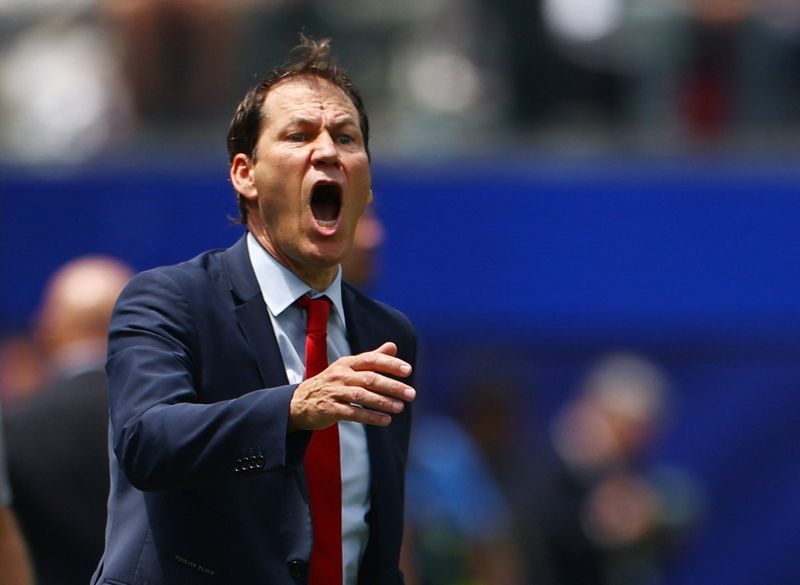
Belgium's World Cup campaign ended in disappointment on Friday when the team fell to Spain 2-1 in the quarter-finals, but the sporting defeat has been overshadowed by fierce controversy over coach Rudi Garcia's substitution decisions in the closing stages of the match. With contract renewal discussions looming before month's end, Garcia now confronts uncomfortable questions about whether he retains the confidence of the Belgian football federation to lead the national side toward the 2028 European Championship.
At the centre of the storm stands Garcia's decision to withdraw goalkeeper Thibaut Courtois in the 71st minute, replacing him with Senne Lammens despite Courtois's insistence that he could continue playing despite minor discomfort. The swap proved calamitous when Lammens failed to collect a low drive from Pau Cubarsi in the 86th minute, enabling Mikel Merino to capitalise and secure Spain's victory. The incident immediately drew withering criticism from influential Belgian media figures, who questioned whether such a dramatic change in the crucial final stages had fundamentally altered the match's trajectory.
Belgian commentator Peter Vandenbempt articulated the popular frustration with particular force, describing the substitution as baffling and indefensible. Vandenbempt suggested that removing what many regard as the world's premier goalkeeper because he could not deliver long passes to the required standard during a World Cup knockout fixture defied logical explanation. His comments reflected widespread scepticism about whether Garcia's uncompromising approach to player fitness had crossed from prudent management into rigid dogmatism that ultimately harmed Belgium's interests when the stakes were highest.
Garcia defended his decision by invoking a principle he has consistently applied throughout the tournament: only players functioning at full physical capacity would receive playing time. The coach argued that withdrawing Courtois was protective rather than punitive, intended to prevent a minor leg complaint from developing into serious injury. He emphasised that Belgium's tactical approach relied heavily on Courtois's distribution ability, particularly his capacity to launch long passes toward strikers Charles De Ketelaere and Romelu Lukaku, roles that an underperforming goalkeeper could not fulfil effectively. From this perspective, Garcia viewed substitution as the responsible choice when Courtois's condition fell short of optimal.
Yet the broader context of Garcia's appointment and the federation's expectations adds complexity to assessments of his decision-making. Hired at the start of 2025 to revitalise a squad demoralised by Domenico Tedesco's tenure—characterised by observers as toxic and soulless—Garcia was tasked with restoring competitive credibility across multiple fronts. Retaining Belgium's position in the top tier of the Nations League, securing World Cup qualification, and reaching the last eight emerged as the immediate targets. All three objectives have been achieved, with Garcia's record across twenty international matches standing at twelve victories, six draws, and only two defeats, a respectable return by most measures.
However, Belgium's path through the World Cup proved considerably more arduous than comfortable qualification records might have suggested. The team stumbled repeatedly during the group stage, managing only draws against Egypt and Iran before defeating New Zealand to secure top spot. Their knockout progression against Senegal required dramatic comeback football after falling two goals behind, a recovery that raised legitimate questions about whether tactical acumen or defensive fragility from the opposition best explained the turnaround. This pattern of inconsistency—alternating between commanding displays, such as the 4-1 demolition of co-hosts the United States, and anxious scrambles to advance—provided little confidence that Garcia had successfully rebuilt Belgium into a genuinely formidable force.
The substitution controversy has crystallised pre-existing concerns about Garcia's tactical approach and his broader management philosophy. Belgian football observers have questioned several of his in-match decisions throughout the tournament, suggesting that his substitution patterns sometimes appeared divorced from genuine match circumstances. The introduction of emerging talent like Nathan Ngoy and Nicolas Raskin, both of whom contributed meaningfully to Belgium's campaign, demonstrates Garcia's willingness to refresh the squad. Yet this innovation stands offset against doubts about whether he has truly solved Belgium's underlying competitive problems or merely papered over cracks with marginal tactical adjustments.
Federation officials now face a delicate evaluation as they contemplate contract renewal discussions scheduled for late July. Beyond Garcia's record of achievement against stated targets lies a broader assessment of whether he represents the right long-term leader for a nation harbouring ambitions to compete seriously at the 2028 European Championship in Italy. The quarter-final exit to Spain, itself a respectable outcome in an increasingly competitive international environment, might have been absorbed relatively quietly had it resulted from straightforward tactical defeat. Instead, the controversy surrounding substitution decisions provides critics with tangible evidence of questionable judgment at precisely the moment when clear-headedness mattered most.
Garcia's French background and pedigree—including Ligue 1 title success with Lille in 2011—initially appeared to offer Belgium the experienced leadership required to restore institutional credibility following Tedesco's chaotic period. Yet European club success does not automatically translate to international football competency, where squad depth limitations, fewer training opportunities, and the psychological burden of national expectation create fundamentally different challenges. Belgium's performance trajectory across multiple competitions suggests Garcia has made incremental progress rather than achieving transformative results, leaving federation decision-makers uncertain whether continued investment in his tenure represents a sound strategic choice for a programme with increasingly limited time to prepare for flagship continental competition.

