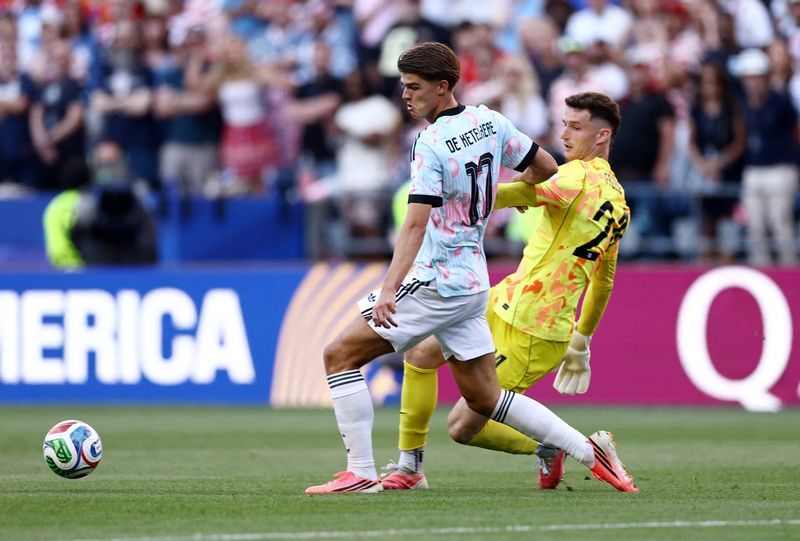
Rudi Garcia's bold midfield overhaul produced Belgium's most commanding performance of the World Cup campaign when his side dismantled co-host USA 4-1 on Monday in Atlanta, offering redemption to a coach whose tactical decisions had drawn fierce scrutiny during an unconvincing group stage. The victory represented a striking vindication of Garcia's willingness to depart from conventional Belgian football, built for years around the creative brilliance of Kevin De Bruyne and the physical presence of Romelu Lukaku, both of whom found themselves benched as the continental powerhouse moved into the knockout rounds.
The path to this stylistic revolution had been paved with considerable anxiety. Belgium came desperately close to elimination against Senegal in the round of 16, conceding twice before mounting a dramatic comeback with just five minutes remaining in normal time, ultimately advancing only through a late extra-time penalty. That narrow escape provided Garcia with the catalyst to reimagine his approach entirely. Rather than persisting with the familiar blueprint that had served Belgium during their European dominance, the coach recognised that fresh personnel and a restructured formation might unlock greater attacking fluidity and midfield control.
Garcia's personnel decisions were audacious by any measure. De Bruyne, long the creative fulcrum around which Belgian football revolved, was not merely benched but excluded from the Seattle match entirely, a decision that would have seemed heretical just weeks earlier. Jeremy Doku, the dynamic left-winger who had offered Belgium width and directness, was also relegated to the bench alongside Lukaku, the striker whose international record and muscular presence had been central to the team's identity. In their place, Garcia introduced Nicolas Raskin, Amadou Onana, and Dodi Lukebakio to the starting eleven, while pushing Charles De Ketelaere into a central forward role that would become unexpectedly prolific.
The reshuffled midfield produced an intensity that overwhelmed the American defence from the opening moments. Captain Youri Tielemans, operating from an advanced position, repeatedly won contested second balls and orchestrated rapid possession recovery, denying the hosts the time to build cohesion. The more aggressive pressing and spatial control created opportunities for Belgium to exploit the width of the pitch against what emerged as a brittle and tactically inflexible USA defensive unit. De Ketelaere capitalised immediately on this tactical superiority, scoring twice in the first half to establish commanding control of the encounter before the interval had been reached.
Garcia's preparation for this tactical departure had been meticulous, though his final decisions came remarkably late. The Belgian coach revealed that his line-up remained unsettled until mere hours before kickoff, suggesting an intensity of deliberation befitting such a significant departure from established patterns. Yet his strategic vision was crystallised: Belgium would dominate possession through higher pressing intensity, utilising the aggressive positioning of their reconstituted midfield to suffocate American distribution and create attacking opportunities through controlled transitions. The plan incorporated contingencies for deploying De Bruyne if circumstances dictated, but the unfolding dominance rendered such adjustments unnecessary.
The early loss of Amadou Onana to a knee injury tested the flexibility of Garcia's system, forcing an immediate tactical adjustment that substituted Hans Vanaken into the midfielder's role. Rather than destabilising the Belgian performance, the adaptation demonstrated the resilience of Garcia's approach. Vanaken, at 33 years old and having experienced periods of uncertainty regarding his international selection, responded by scoring himself—a redemptive moment that underscored Garcia's faith in experience and positional understanding over youthful exuberance. Garcia's post-match satisfaction with this particular goal seemed to reflect broader validation of his willingness to trust unconventional selections.
Garcia's vindication extended beyond the single match. His tenure had been marked by considerable criticism throughout the group stage, as Belgium's opening two matches yielded only draws, performances that had prompted questions about tactical coherence and squad preparation. Only a comprehensive 5-1 demolition of New Zealand secured group progression, leaving Belgium atop their section but with reputational damage and internal doubts that required addressing. The dramatic escape against Senegal might have deepened anxieties, yet Garcia instead utilised that pressure to catalyse transformation rather than retreat into defensive conservatism.
The implications of this tactical recalibration extend beyond tournament mechanics to suggest fundamental reassessment of how Belgium's considerable talent might be orchestrated most effectively. The performance against USA indicated that the team's depth of quality extended beyond the celebrated names frequently dominating headlines and transfer market discussions. By demonstrating that alternative configurations could produce superior attacking cohesion and defensive solidity, Garcia opened possibilities for future international squad construction that might prioritise systemic fit over individual reputation. For Malaysian and Southeast Asian football observers accustomed to European dominance through traditional star-studded approaches, Belgium's demonstration that tactical flexibility and intelligent personnel rotation could outperform familiar formulae offered instructive lessons.
Belgium's progression into the quarter-finals now positioned them as legitimate tournament contenders, particularly given the organisational clarity Garcia's squad displayed against the USA. The upcoming clash against Spain in Los Angeles on Friday would present a more formidable examination of whether the tactical innovations could withstand pressure from technically superior opponents operating within a more structured framework. Yet the foundation established in Atlanta suggested Garcia's squad possessed both the flexibility and the collective capability to navigate the tournament's latter stages successfully. The coach's gamble—benching world-class players and fundamentally restructuring team shape—had not merely produced victory but demonstrated something more significant: a team rediscovering tactical identity when institutional confidence appeared most fragile.

