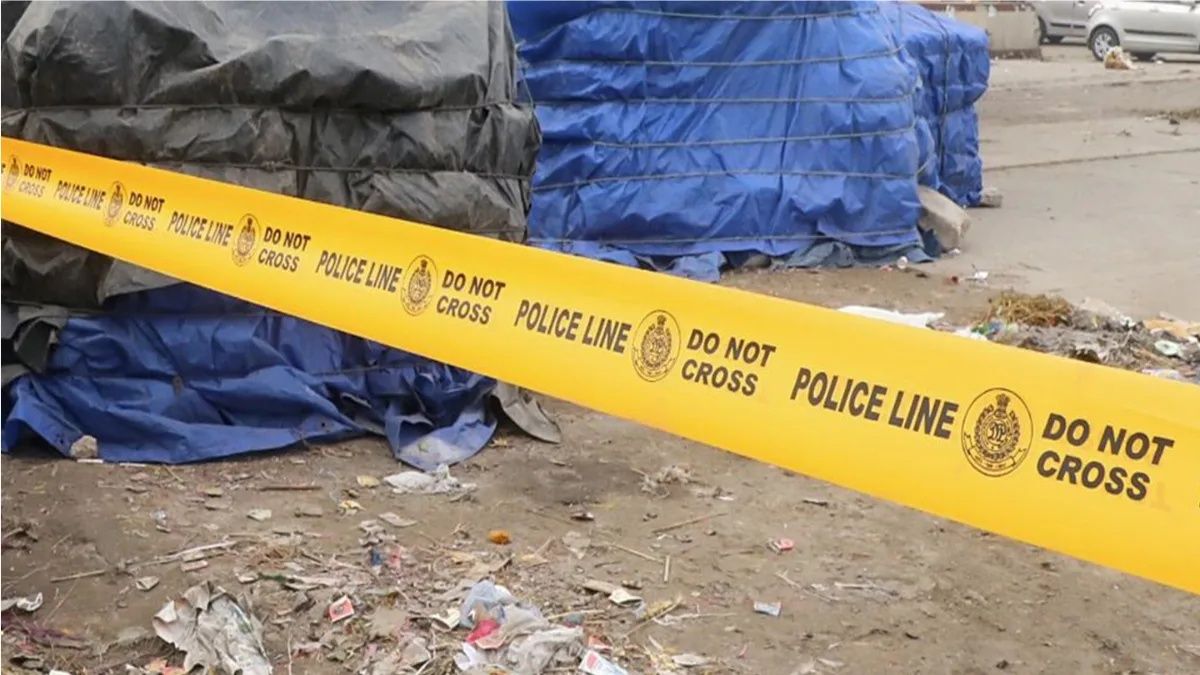
A tragic discovery in West Bengal's Baruipur neighbourhood has unleashed a wave of communal anger that authorities are now struggling to contain. On Sunday, residents of Suryapur discovered the lifeless body of a 12-year-old girl in a pond near her home, wrapped in a sack. The apparent circumstances surrounding her death—allegations of gang rape preceding murder—triggered an eruption of vigilante violence that saw at least one suspected assailant beaten to death by an enraged mob, and left police personnel nursing injuries sustained during frenzied clashes.
The incident began when the child disappeared on Saturday evening after leaving home to purchase food from a nearby shop. Her family reported that four individuals had forcibly taken her away, but no immediate action could locate her that night. The discovery of her body the following morning transformed private family tragedy into public rage. Hundreds of villagers converged on the pond site, refusing police access to retrieve the remains for several hours as emotions reached a boiling point.
This volatile situation rapidly escalated into sustained disruption of essential services. Residents barricaded roads around Suryapur for approximately five hours, while railway tracks at Suryapur station on the Sealdah-Namkhana line were blocked, causing train service interruptions lasting roughly an hour. Protesters torched vehicle tyres, vandalised cars, and demanded the immediate apprehension of all suspected perpetrators. The blockade persisted until police deployed additional personnel and persuaded the crowd to stand down, though tension remained palpable throughout the afternoon.
The most disturbing manifestation of community fury involved a local youth who villagers suspected of complicity in the crime. Residents claimed to have seen him in association with some of the primary suspects. As crowds grew increasingly volatile, this young man became the target of mob violence. Police arrived attempting a rescue operation but encountered fierce resistance from protesters, some of whom hurled stones and other projectiles at officers. The youth was ultimately beaten to death before authorities could intervene effectively. At least one police officer suffered injuries severe enough to require nursing home admission, with multiple others sustaining wounds during the chaotic clashes.
The investigation has proceeded on two parallel tracks. Police have formally arrested two individuals in connection with the girl's murder, while a third suspect was apprehended by residents and subsequently handed over to authorities. These detentions represent the initial phase of what investigators acknowledge will be a complex inquiry into both the circumstances of the child's death and the subsequent mob violence that claimed at least one life. Senior officers have indicated that the role of those who attacked law enforcement during the protests is also under examination.
Responses from official channels have emphasised swift justice while attempting to de-escalate community tensions. Inspector General of Police Kankar Prasad Barui visited the area and made public assurances that none of the accused would escape accountability. He committed police resources to seeking the strongest possible punishment available under law and pledged that no investigative avenue would remain unexplored. These statements were delivered partly through a public address system, recognising that direct communication with agitated crowds was essential to restoring order.
The state administration has similarly mobilised at the highest level. West Bengal Chief Minister Suvendu Adhikari personally telephoned the victim's father on Sunday, offering assurances of maximum legal consequences for the accused and inviting the bereaved parent to meet with her at government headquarters Nabanna on Tuesday to discuss the case and explore available support mechanisms. Such high-level engagement reflects official recognition that community trust in the justice system requires visible and substantive commitment from leadership.
The post-mortem examination has been scheduled to occur at Baruipur Sub-Divisional Hospital under properly documented legal procedures, with authorities promising to complete this process without unnecessary delay. The body's transfer to the hospital marked a symbolic turning point in the crisis, indicating that investigators could now proceed with their work and that immediate crisis management had achieved its objective of preventing further uncontrolled escalation.
Enhanced security measures have been implemented across the affected region. Police have established a substantial permanent picket in the vicinity and intensified surveillance to forestall renewed violence. Officials acknowledge that the underlying anger within the community remains substantial and that continued vigilance will be necessary during the coming weeks as the investigation unfolds and the judicial process advances.
This incident exemplifies a troubling pattern in South Asia where deeply felt community outrage at crimes against children intersects with systemic challenges in law enforcement and public confidence in institutional justice mechanisms. The speed with which civilian anger transformed into mob violence—culminating in a lynching—underscores the vacuum that emerges when communities lose faith that official channels will deliver adequate response. While the violence itself cannot be condoned, the trigger demonstrates why addressing both the immediate crime and the underlying institutional failures is essential for restoring social cohesion and preventing similar eruptions in the future.
For readers across Southeast Asia, particularly in Malaysia, the episode offers troubling parallels to domestic concerns about child safety and community responses to violent crime. The incident raises questions about how societies maintain rule of law while acknowledging the profound emotional stakes involved when children's lives are at risk, and how government institutions can rebuild public confidence through transparency, competence, and genuine commitment to accountability.

