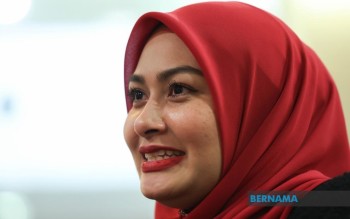
The financial stability of Lembaga Tabung Haji (TH), Malaysia's pilgrimage fund, has come under renewed scrutiny after a senior parliamentarian highlighted the institution's dangerous dependency on a single revenue stream. Speaking during a special sitting of the Dewan Rakyat to discuss the Royal Commission of Inquiry (RCI) report, Bentong MP Young Syefura Othman raised alarm at the fund's reliance on income from Urusharta Jamaah Sdn Bhd's (UJSB) sukuk, which contributes approximately 26 per cent of TH's annual income according to the inquiry's findings.
The concentration of income from one investment vehicle represents a significant structural vulnerability that compromises TH's financial resilience, according to Young Syefura's assessment. During her speech at the special parliamentary sitting held to address the RCI report and recovery efforts, she emphasised that diversifying revenue sources would strengthen the institution's long-term viability. The government, she argued, must articulate a detailed roadmap demonstrating how TH will progressively reduce this dependency and ultimately achieve financial independence through a broader portfolio of income-generating activities.
Particularly pressing is the question of what timeline and mechanisms the government envisages for the early redemption of the UJSB sukuk. Young Syefura pressed for clarity on this matter, as premature or poorly-structured redemption could create liquidity challenges or lock TH into unfavourable terms. The sukuk arrangement, which appears to have become a structural crutch for the fund, demands transparent governance and a systematic exit strategy that protects member interests while maintaining TH's operational capacity.
The RCI inquiry identified fourteen previous investment decisions that warrant forensic auditing due to substantial asset depreciation. Young Syefura specifically named several major holdings including TH Plantations Bhd, TH Properties, and FGV Holdings as investments requiring detailed forensic examination. She demanded that the government publicly disclose the total quantum of losses or depreciation attributable to these problematic decisions, enabling parliament and the public to understand the true scale of financial mismanagement that occurred under previous administrations.
Equally important, according to Young Syefura, is establishing what portion of these losses can realistically be recovered. The forensic audit process represents more than a historical accounting exercise; it establishes accountability and determines whether remaining assets can be salvaged or restructured. She pressed for a transparent update on the status of these audits, indicating that parliament requires concrete timelines and preliminary findings rather than vague assurances of ongoing investigation.
The question of responsibility looms large over the RCI findings. Should the forensic audits uncover evidence of negligence, misuse of authority, or breach of fiduciary duty in these investment decisions, the individuals and institutions involved must face consequences proportionate to their culpability. Young Syefura's insistence on identifying culpable parties reflects broader concerns about institutional accountability within Malaysia's government-linked entities, where investment failures sometimes escape without corresponding personal or professional consequences.
To prevent future recurrence of such financial losses, Young Syefura advocated for significant institutional strengthening of TH's governance architecture. She specifically proposed greater oversight involvement from Bank Negara Malaysia, the nation's central bank, alongside the Securities Commission Malaysia. Both institutions bring regulatory expertise and independence that could provide valuable counterbalance to investment decisions, particularly when sums of significant magnitude are at stake. This supervisory expansion would align TH's governance practices with international best practices for managing large institutional asset portfolios.
Further safeguards should include mandatory independent risk assessment for all major investment proposals and a rigorous due diligence framework that requires systematic evaluation of counterparty risk, market conditions, and exit scenarios. Young Syefura's advocacy for these measures reflects lessons learned from previous failures, where inadequate pre-investment scrutiny apparently enabled major capital allocations to deteriorate substantially. A comprehensive due diligence culture would encourage institutional discipline and reduce the likelihood of repeating similar patterns.
The appointment of TH's board members and senior management requires fundamental reform according to Young Syefura's parliamentary intervention. She championed adoption of the "fit and proper" principle as the binding standard for all executive and board-level appointments, a criterion that Bank Negara Malaysia and other regulators already apply to financial sector appointments. Such standards would ensure that TH's leadership possesses appropriate qualifications, ethical standing, and relevant experience rather than positions being allocated through patronage or political considerations.
Th's recovery extends beyond financial restructuring or forensic accounting—it demands institutional transformation that addresses governance culture. Minister in the Prime Minister's Department (Religious Affairs) Dr Zulkifli Hasan, who presented the government's briefing on the RCI report and recovery measures, must now translate Young Syefura's parliamentary concerns into concrete policy proposals. The government's response will signal whether it views TH's misfortunes as isolated incidents requiring technical corrections or as symptoms of deeper governance deficiencies demanding systemic reform.
For TH's 12 million members, predominantly Malaysians of modest means saving for pilgrimage, these institutional questions carry profound importance. The fund's reputation and financial security directly affect the retirement and religious aspirations of ordinary Malaysians. Parliamentary scrutiny of TH's governance, such as Young Syefura's intervention, serves the critical function of maintaining public pressure for accountability and reform, ensuring that this vital national institution regains the trust and stability its members deserve.

