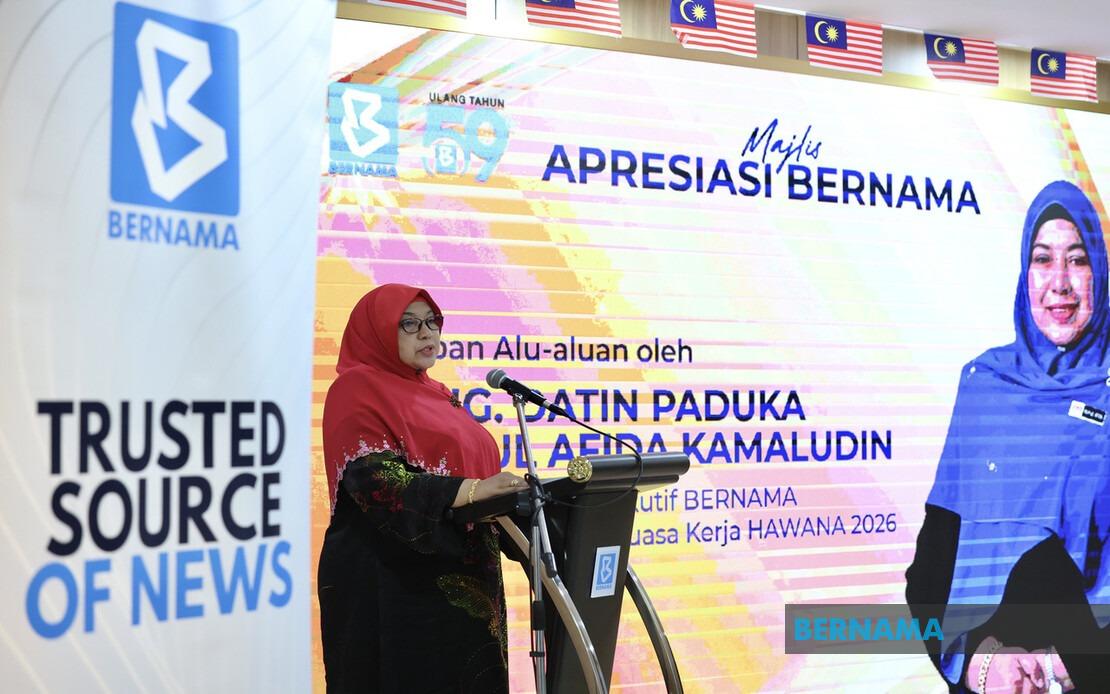
Malaysia's national news agency is making a concerted push to deepen patriotic sentiment among the public as the country approaches its annual National Day festivities. Bernama, operating under the Ministry of Communications, has positioned itself as a strategic vehicle for spreading the nationalist message through various coordinated campaigns and symbolic gestures designed to resonate with both staff and the broader population.
Datin Paduka Nur-ul Afida Kamaludin, chief executive officer of Bernama, articulated the agency's expanded mandate during remarks at an internal appreciation ceremony held at the organisation's headquarters in Kuala Lumpur. She characterised the news agency's responsibilities as extending well beyond conventional journalism into the realm of civic engagement and patriotic mobilisation, particularly during significant national observances like the month leading up to August 31.
As the Communications Ministry's principal information dissemination arm, Bernama operates at the intersection of state communications strategy and public messaging. Nur-ul Afida emphasised that this structural positioning creates both an obligation and an opportunity to actively promote government programmes and ensure their successful implementation in public consciousness. This dual function—serving simultaneously as a news organisation and a ministry extension—reflects how Malaysian state agencies often blend journalistic functions with broader policy advocacy roles.
A cornerstone of the current initiative revolves around the "Satu Rumah, Satu Jalur Gemilang" campaign, which translates to "One Home, One Jalur Gemilang." This programme encourages Bernama employees to display Malaysia's national flag at both their workplace and private residences throughout National Month. The campaign represents a deliberate effort to extend patriotic symbolism beyond official government buildings into the domestic sphere, creating visible manifestations of national pride in everyday neighbourhoods across the country.
The physical rollout of this initiative gained momentum immediately following the Prime Minister's formal launch of National Month celebrations in Ipoh. Bernama's own premises became early adopters, with the agency decorating its facilities with abundant flag displays as a demonstration of institutional commitment. This top-down approach, originating from leadership and cascading through organisational hierarchy, aims to establish the flag campaign as a workplace norm that employees would naturally extend to their personal settings.
Beyond symbolic gestures, Bernama's broader communications strategy incorporates cultural elements intended to deepen emotional resonance with the patriotic message. The agency introduced a newly composed National Day theme song created by prominent Malaysian singer Faizal Tahir during the appreciation ceremony. Music, as a medium, carries particular power in transcending linguistic and demographic boundaries, potentially reaching audiences who might not engage with traditional news formats or written communications.
For Southeast Asian context, Bernama's approach reflects patterns seen across the region where state-affiliated news agencies play active roles in promoting national narratives and patriotic messaging. Countries including Indonesia, Thailand, and Vietnam similarly utilise their official news services as instruments for fostering nationalist sentiment during significant national commemorations. However, Malaysia's particular emphasis on private household flag displays demonstrates an interesting variation in strategy, targeting the intimate domestic space rather than limiting patriotic expression to public or institutional domains.
The coordination of multiple initiatives—flag distributions, workplace celebrations, musical performances, and employee appreciation activities—within a single event underscores a strategic recognition that Bernama staff themselves function as grassroots multipliers of patriotic messaging. By creating memorable internal experiences that celebrate national pride, the agency assumes that employees will become more enthusiastic ambassadors for these messages within their families and social circles, exponentially extending the campaign's reach beyond formal organisational channels.
Nur-ul Afida acknowledged the logistical challenges inherent in mobilising a dispersed workforce across Malaysia's various geographic regions and time zones. The deliberate consolidation of multiple programmes into singular events addresses this practical constraint while maximising attendance and engagement. This efficiency-focused approach demonstrates how contemporary government agencies must balance ideological objectives with operational realities.
The timing of these initiatives carries particular significance within Malaysia's political calendar. National Day celebrations represent moments when diverse communities across the multiethnic nation converge around shared civic identity, transcending religious, ethnic, and regional differences. Government agencies like Bernama capitalise on this calendar moment to reinforce unifying national narratives and strengthen collective identification with Malaysian statehood.
Looking forward, Bernama's expanded focus on patriotic messaging reflects broader Malaysian government priorities around social cohesion and national identity. In an era characterised by fragmented media ecosystems and competing narratives, state-controlled news agencies assume particular importance as institutional guarantors of authorised national messaging. Whether such top-down patriotic campaigns effectively generate genuine sentiment or simply produce performative displays remains an open question for observers of Malaysian political culture.
The emphasis on employee participation in these initiatives suggests recognition that sustainable patriotic messaging requires internalisation among institutional actors themselves. Rather than treating staff as mere conduits for disseminating official narratives, Bernama's leadership appears to invest in creating spaces where employees themselves experience and celebrate national identity, theoretically generating more authentic subsequent communications.

