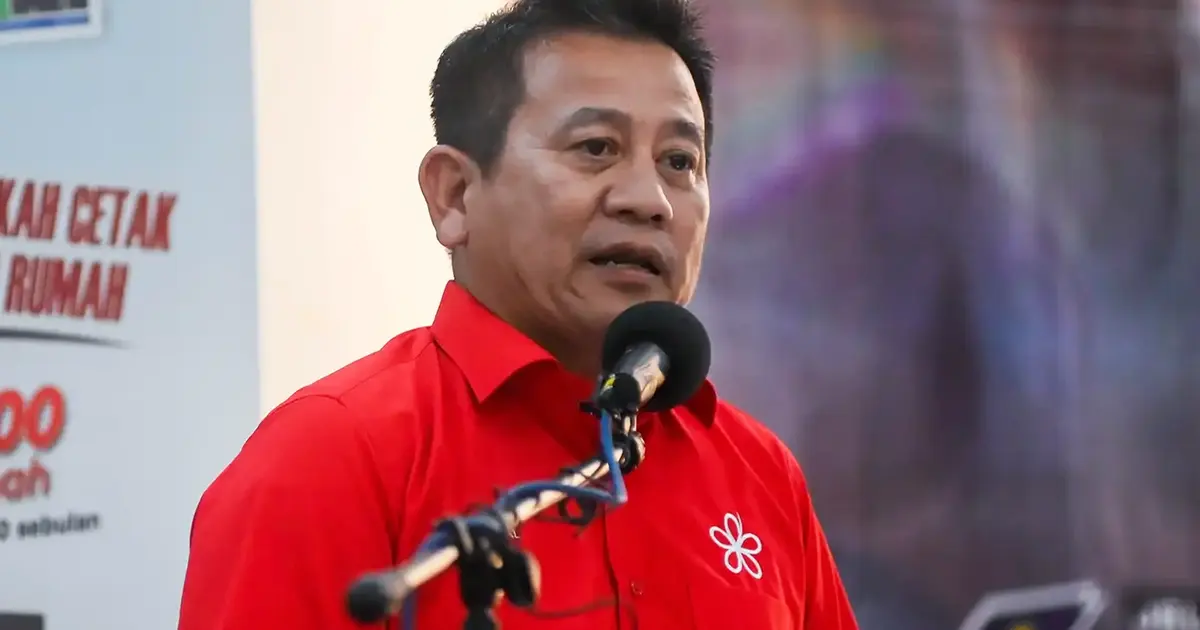
Tensions within Malaysia's Perikatan Nasional coalition have surfaced anew, with Bersatu's information chief Tun Faisal Ismail Aziz launching a pointed critique of PAS's growing dominance. The accusation, emerging in the aftermath of recent coalition reshuffles, suggests deeper fractures in a political alliance that has served as the foundation of the current federal government since 2023. Tun Faisal's statement brings into sharp focus the inherent contradictions within a multi-party bloc that has repeatedly struggled to reconcile competing interests and ideological positions.
Tun Faisal's core allegation centres on what he characterises as PAS's authoritarian approach to exercising influence within the PN framework. Rather than attributing this to isolated policy disagreements, the Bersatu official has framed the Islamist party's conduct as a pattern of behaviour reflecting a fundamental unwillingness to share power equitably. This interpretation, whether strategically calculated or genuinely felt, signals that internal governance disputes have evolved beyond procedural matters into questions about the coalition's foundational principles and decision-making structures.
The timing of these remarks carries particular significance given the precarious balance that underpins Malaysian coalition politics. Since the formation of PN as the governing bloc, multiple observers have warned that the absence of a clear dominant partner could generate perpetual jockeying for position. PAS, as the largest component by parliamentary seats, has consistently maintained leverage within coalition deliberations. This structural advantage becomes more pronounced whenever the PN executive requires consensus on major decisions, creating scenarios where smaller partners like Bersatu must either accommodate PAS preferences or risk destabilisation.
Bersatu's public complaint represents a departure from the informal channels through which such disputes are traditionally managed in Malaysian politics. By allowing grievances to surface in media statements rather than confining discussion to closed-door meetings, party leadership has signalled that internal mechanisms for resolving coalition tensions may be deteriorating. This trajectory mirrors patterns observed in previous Malaysian coalition arrangements, where public accusation often precedes more serious ruptures in partnership arrangements.
The substance of PAS's alleged consolidation strategy becomes clearer when examining recent personnel and structural changes within PN. Any reshuffle in coalition portfolios inevitably triggers recalibration of resource distribution and influence networks. If these changes have systematically favoured PAS members or reflected PAS preferences disproportionately, then Bersatu's concerns about imbalanced power accumulation gain credibility. Conversely, PAS would likely argue that its larger parliamentary contingent justifies more prominent representation in revised PN structures.
For Malaysian political observers, this episode illustrates why multi-party coalitions governing singular nations remain inherently unstable without strong institutional safeguards and explicit power-sharing agreements. The absence of binding frameworks specifying how major decisions should be made, how resources should be allocated, and how disputes should be arbitrated leaves coalitions vulnerable to the very consolidation patterns Tun Faisal now describes. Unlike formal constitutional arrangements, coalition protocols rely heavily on voluntary compliance and evolving relationships between party leaders.
The implications extend beyond internal PN dynamics. Should tensions between Bersatu and PAS continue escalating, the broader stability of Malaysia's federal government becomes indirectly threatened. Either partner possessing parliamentary independence from the coalition would theoretically retain leverage to disrupt government formation, though such leverage carries enormous political costs and social consequences. Malaysia's experience with coalition instability in recent years has demonstrated the disruption such scenarios can generate, from legislative gridlock to policy paralysis.
Regional considerations also warrant attention. Within Southeast Asia's broader political landscape, Malaysia's domestic coalition politics possess secondary importance, yet the region's major economies benefit from policy continuity and governance predictability. Extended periods of government instability generate uncertainty in foreign policy implementation, investment frameworks, and trade relationships. Other ASEAN states maintaining extensive Malaysian economic linkages thus possess indirect interest in whether PN can stabilise its internal arrangements.
Bersatu's strategic position remains complicated by its historical trajectory. The party emerged partly from internal divisions within Umno and has consistently struggled to establish independent political identity. Accusations of being insufficiently ideologically committed—lacking the Islamist conviction PAS explicitly champions—may underlie the broader struggle for coalition prominence. If Bersatu leadership perceives that PN's direction increasingly reflects PAS's Islamist framework at the expense of other coalition partners' priorities, such tensions become almost inevitable regardless of specific reshuffle details.
Moving forward, PN's cohesion will likely depend on whether the coalition develops more transparent mechanisms for balancing component interests. Current arrangements, relying substantially on personal relationships between party leaders, have demonstrated vulnerability to accumulated grievances and shifting calculations. Formal agreements specifying portfolio distributions, decision-making procedures, and dispute resolution mechanisms might mitigate the pattern of periodic accusations that currently characterises coalition relations.
Tun Faisal's public statement ultimately reflects a coalition experiencing the ordinary pressures that affect all multi-party political arrangements, amplified by Malaysia's particularly polarised electoral environment. The question now becomes whether PN leadership can address underlying structural imbalances before rhetorical tensions translate into concrete political separations. The coming weeks will reveal whether this episode represents contained friction within an otherwise functional coalition or merely the opening phase of more fundamental realignment.