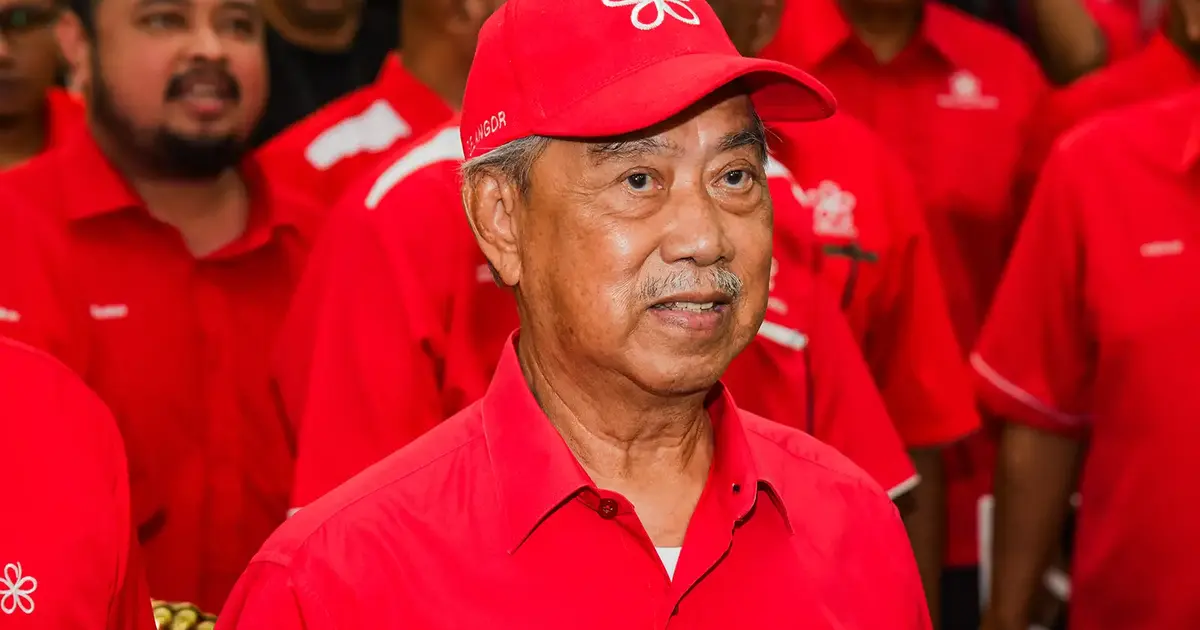
Bersatu president Muhyiddin Yassin has expressed confidence that his party can broaden its appeal among non-Malay communities without relying on its former coalition partner PAS, signalling a strategic shift in the party's electoral positioning as Malaysia approaches upcoming political realignments.
The assertion reflects a deeper assessment of why Bersatu struggled to penetrate non-Malay voting blocs during previous electoral contests. Rather than attributing the shortfall to inherent limitations within the party itself, Muhyiddin has framed the problem as one of voter perception shaped by association. He argues that the combination of Bersatu's identity and PAS's distinctive political style created a barrier that deterred significant non-Malay voter engagement, regardless of the individual merits either party might have offered.
This diagnosis carries important implications for Malaysian electoral mathematics. The non-Malay vote—comprising Chinese, Indian, and other minority communities—represents a crucial swing factor in parliamentary contests, particularly in urban and mixed constituencies that often determine overall parliamentary composition. Political formations that can assemble coalitions spanning both Malay-Muslim and non-Malay blocs typically command stronger negotiating positions than those confined to a single demographic base. Muhyiddin's confidence suggests Bersatu leadership believes the party can diversify its support profile through repositioning and targeted outreach.
The Bersatu-PAS partnership, which formed a significant bloc in recent Malaysian politics, has undergone considerable strain. The two parties had attempted to create a formidable Malay-Muslim political force, yet the collaboration appeared to have created complications rather than synergies when reaching beyond their traditional base. Muhyiddin's current framing suggests party strategists view separation as potentially liberating rather than constraining, provided Bersatu can demonstrate policy positions and governance approaches that resonate with non-Malay constituencies.
Historically, Malaysian political parties seeking cross-communal support have needed to navigate careful messaging around identity politics, governance priorities, and economic policy. Bersatu's previous alignment with PAS may have inadvertently signalled certain policy directions regarding religious matters and constitutional interpretation that unsettled non-Malay voters concerned with secular governance, minority rights protections, and pluralistic policymaking frameworks. By operating independently, Bersatu would have greater flexibility in emphasizing competence, anti-corruption commitments, and economic management—themes with broader appeal across communities.
The statement also reflects internal Bersatu calculations regarding party sustainability and electoral viability. Without significant non-Malay support, Bersatu's parliamentary presence depends almost entirely on capturing Malay-Muslim constituencies, a crowded field that includes UMNO, PAS, PKR, and other competitors. Expanding the party's footprint into constituencies with substantial non-Malay populations would strengthen its negotiating leverage in coalition-building exercises and reduce dependence on any single political partner.
For non-Malay voters themselves, the political landscape implications warrant consideration. Competition among Malay-based parties for non-Malay support could theoretically increase attention to minority community concerns, as politicians bid for crucial votes. Conversely, it might fragment the non-Malay vote across multiple formations, weakening their collective bargaining power. The Malaysian Chinese Association and Democratic Action Party have traditionally served as primary vehicles for Chinese political representation, while the Indian community has engaged through MIC and various smaller formations. A Bersatu campaign targeting non-Malay constituencies would add a new variable to these established dynamics.
Regional observers note that Malaysia's political ecology continues evolving rapidly. The 2022 political upheaval that brought Anwar Ibrahim to the premiership, combined with ongoing tensions between coalition partners in the current Madani government, suggests the electorate remains volatile and reconfiguration-prone. Muhyiddin's ambitions for Bersatu must be assessed within this fluid context, where yesterday's partners become today's competitors and electoral coalitions shift with remarkable speed.
Bersatu's track record in attracting non-Malay voters, however, remains limited. The party emerged relatively recently in Malaysian politics and has not yet demonstrated sustained capacity to translate policy proposals into cross-communal support. Whether Muhyiddin's confidence reflects genuine strategic assets or aspirational thinking remains unclear. Success would require not merely distancing from PAS but actively cultivating relationships with community leaders, addressing specific policy concerns, and building organizational capacity in non-Malay-majority areas—substantial undertakings requiring resources and sustained commitment.
The broader political significance extends to coalition possibilities ahead of the next general election. If Bersatu genuinely positions itself as a multi-ethnic formation capable of attracting non-Malay support, it might become attractive to opposition or reform-minded coalitions seeking to broaden their demographic reach. Conversely, if the party's non-Malay outreach proves superficial, Bersatu risks being perceived as opportunistic, potentially alienating both its traditional base and target audiences.
Muhyiddin's statement serves partly as trial positioning, testing both internal party acceptance and public reception for a rebranded Bersatu less tethered to PAS. Whether this strategic recalibration translates into genuine electoral gains or represents simply repositioning rhetoric will become evident through concrete policy articulation, candidate selection in diverse constituencies, and actual voter response in upcoming contests.

