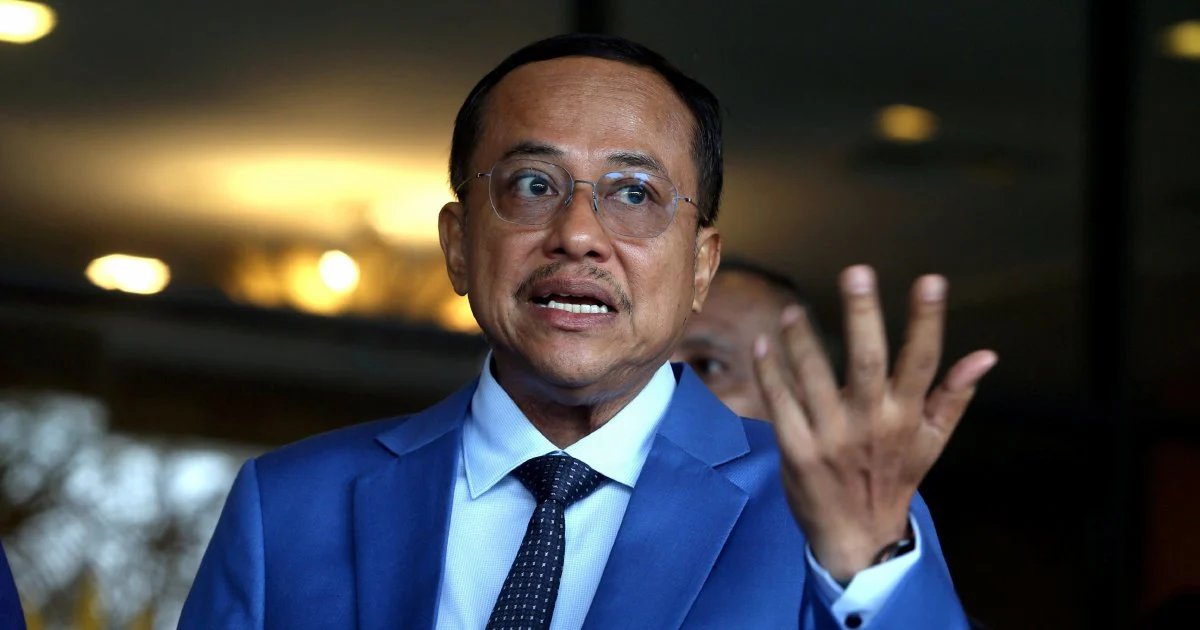
The escalating friction within Malaysia's main opposition alliance surfaced anew when Bersatu's information chief Datuk Tun Faisal Ismail Aziz levelled sharp criticism at Perikatan Nasional chairman Datuk Seri Dr Ahmad Samsuri Mokhtar, accusing him of abdicating his leadership duties during a pivotal moment of coalition strain. The rebuke underscores growing frustrations among senior figures within PN over what some perceive as an absence of decisive action from the coalition's top leadership.
Faisal's assertion that Samsuri appeared to have conflated his dual roles—confusing his responsibilities as PN chairman with his position as Pas chairman—represents a pointed diagnosis of the coalition's structural problem. This confusion of authority, whether deliberate or inadvertent, speaks to fundamental questions about how PN's leadership functions and whether its chairman possesses the political capital to enforce coalition discipline across member parties. The observation carries particular weight because Bersatu, as one of PN's three major components alongside Pas and Gerakan, has legitimate standing to demand clarity about the coalition's power structure.
The timing of this public criticism reflects deeper anxieties within the opposition alliance. Since PN's formation, tensions between its constituent parties have periodically erupted into disputes over resource allocation, candidate selection, and strategic direction. These tensions are not merely institutional squabbles; they represent competing visions of how the opposition should position itself relative to the government and other political blocs. When the coalition's nominal leader appears passive during such disputes, it risks appearing leaderless to both its members and the electorate.
Samsuri's elevation to the PN chairmanship was itself a compromise designed to balance interests within the coalition. His background in Pas, however, may create perceptions—fair or not—that he prioritises Pas concerns over the broader coalition's interests. For Bersatu, which has carved out space as a nationalist-Malay alternative to Pas, such perceived favouritism threatens its status within the opposition hierarchy and its ability to influence PN's platform and electoral strategy. Faisal's criticism should be read partly as Bersatu reasserting its claim to equal standing within the alliance.
The characterisation of Samsuri's approach as "very irresponsible" escalates the rhetoric beyond mere technical disagreement about procedural matters. In Malaysian political culture, such language signals that respected party figures view the current situation as genuinely untenable and unsustainable. It suggests that Bersatu believes the coalition risks fracturing unless leadership dynamics change. For observers tracking PN's stability, this kind of open challenge from a senior coalition member warrants close attention as a barometer of how much longer the alliance can hold together without institutional reform.
For Malaysian voters and political analysts, the controversy illuminates a structural weakness in PN's governance. Unlike the Barisan Nasional coalition, which evolved hierarchical decision-making structures over decades, PN was hastily assembled from parties with divergent ideologies and organisational cultures. It lacks established conventions for mediating disputes between equals or for constraining the power of dominant member parties. This organisational immaturity becomes glaringly visible when major decisions require coalition-wide consensus but the chairman lacks either the formal authority or informal influence to forge one.
The substance of the specific dispute triggering Faisal's outburst remains important context. Coalition crises do not emerge in vacuums; they reflect genuine disagreements over policy, strategy, or resource distribution. If Bersatu feels squeezed by decisions perceived to favour Pas, those grievances possess concrete substance. The question then becomes whether Samsuri can function as a neutral arbiter or whether his Pas roots inevitably compromise his impartiality. This asymmetry of perception, even if Samsuri himself acts fairly, undermines confidence in his ability to lead the coalition.
Regional observers across Southeast Asia have watched PN's development with interest, particularly given how coalition dynamics in Malaysia influence broader regional opposition movements. A fractious opposition alliance weakens the overall political challenge to the governing coalition, potentially affecting how Malaysia's democracy functions. Conversely, instability within opposition ranks can sometimes strengthen ruling parties that might otherwise face more unified challenges. The stakes attached to PN's cohesion therefore extend beyond the parties themselves to encompass Malaysia's broader political equilibrium.
Bersatu's public criticism also reflects generational and ideological shifts within Malay-Muslim politics. The party positioned itself as offering a modernised nationalism compared to Pas's more orthodox Islamic approach, and it joined PN partly to present itself as a serious governmental alternative. When the coalition chairman appears ineffectual, Bersatu's positioning suffers because the electorate may judge that the opposition cannot manage its own internal affairs, much less govern the nation. This calculus explains why Bersatu would risk further inflaming internal tensions by criticising Samsuri—silence might appear as passive acceptance of coalition dysfunction.
Moving forward, the challenge confronting PN involves either reforming its decision-making structures to prevent such disputes or enabling its chairman to exercise genuine leadership authority. Neither path proves easy. Institutional reform requires consensus among parties with competing interests, while empowering Samsuri beyond his current capacity might provoke resistance from Pas. The resolution to this impasse will likely determine whether PN emerges as a credible governing alternative or continues fragmenting into its constituent parts.