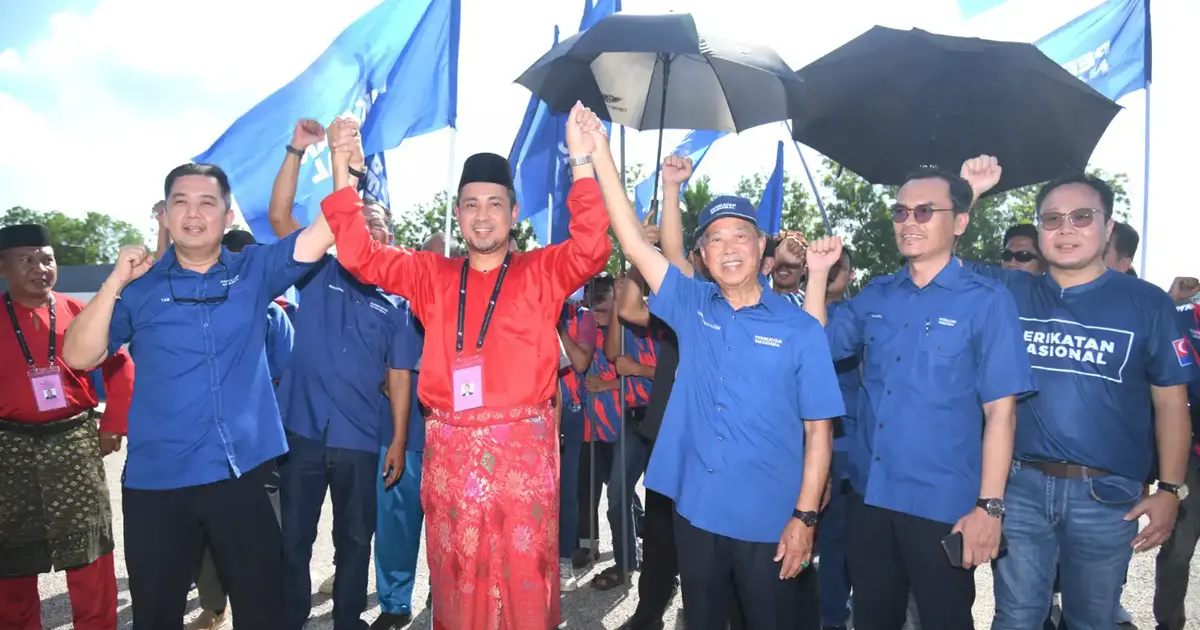
Bersatu has chosen to downplay tensions with coalition partner PAS over the withdrawal of party machinery support, with party president Muhyiddin Yassin signalling that the broader Perikatan Nasional alliance will not fracture over such disputes. In remarks reflecting a pragmatic coalition management style, Muhyiddin indicated that while mutual assistance and coordinated action form essential pillars of the PN framework, his party recognises that other members cannot be forced to contribute resources or logistics to Bersatu's political endeavours.
The statement comes after PAS, the Islamic party that serves as a major component of the ruling PN coalition, indicated it would not deploy its organisational infrastructure to support Bersatu's political activities. The machinery—which encompasses everything from ground-level volunteers to campaign coordination networks—represents a crucial asset in Malaysian electoral politics, particularly in rural and semi-urban constituencies where traditional party structures retain considerable influence. Such resources typically translate into significant campaign advantages, making their withholding a notable decision in coalition politics.
Muhyiddin's characterisation of the situation as manageable reflects broader calculations within the Perikatan Nasional framework. Since its formation as an alternative governing coalition, PN has struggled with internal cohesion, marked by competing interests between Bersatu, PAS, and other smaller partners. The coalition's unexpected ascent to federal power following the February 2020 political realignment created structural pressures that persist today. Rather than treating PAS's stance as a fundamental breach, the Bersatu leadership appears to be anchoring its response in the principle that coalition participation should remain voluntary, with members retaining autonomy over their resource deployment.
This diplomatic handling carries implications for how Malaysian coalition politics may evolve. Unlike dominant coalitions of previous decades, the current PN administration operates with narrower parliamentary margins and faces persistent internal friction. The balance between collective action and member autonomy has become a critical operational question. Muhyiddin's articulation of this principle—that parties should not be compelled to provide assistance—effectively establishes boundaries around what can be demanded within a coalition framework, potentially reducing future tensions by managing expectations.
The machinery support issue reflects deeper questions about PAS's strategic positioning. As the coalition's largest component in terms of parliamentary representation, particularly in rural constituencies, PAS wields considerable leverage. The party's decision to withhold machinery support may signal its intention to maintain independent political manoeuvrability, protecting its capacity to distance itself from Bersatu decisions when necessary. This protective stance could reflect PAS's awareness that electoral fortunes may diverge, requiring it to preserve its organisational integrity for potential separate campaigns.
From a regional perspective, Malaysian coalition dynamics offer lessons relevant to other Southeast Asian multi-party systems. Indonesia's broader coalitions similarly navigate tensions between centralising pressure and member autonomy, while Thailand's coalition governments have frequently fractured over resource allocation disputes. Malaysia's current experience—where the party president explicitly acknowledges he cannot compel allies—represents an interesting institutional development within the region's democratic frameworks. The question of how coalitions balance mutual obligation against member sovereignty remains unresolved in most regional democracies.
For Bersatu specifically, the machinery question touches on the party's ongoing challenge of building ground-level organisational capacity. Established in 2016, Bersatu remains significantly younger than PAS, which has built grassroots networks over decades. Bersatu's reliance on federal government resources and, crucially, assistance from coalition partners like PAS, underscores its relative organisational weakness. Muhyiddin's acceptance of PAS's refusal implicitly acknowledges this structural reality—the party lacks the independent capacity to substitute for lost machinery support through internal resources alone.
The timing of this machinery issue also matters contextually. With Malaysia approaching the next general election cycle, coalition partners are increasingly calculating their individual electoral prospects. PAS's caution about committing machinery resources may reflect preparatory thinking about potential scenarios where the PN coalition faces electoral challenges or where individual parties might benefit from maintaining organisational flexibility. Coalition partners often become more defensive about their core assets as electoral horizons approach, and PAS's stance fits this pattern.
Muhyiddin's measured response potentially serves multiple strategic purposes. First, it defuses immediate tension that could trigger wider coalition instability. Second, by framing the situation around principles of voluntary cooperation, he establishes reasonable ground for future coalition negotiations without appearing weak. Third, the statement subtly positions Bersatu as the more reasonable actor, willing to accept coalition realities rather than making demanding claims on partners. This rhetorical positioning may prove valuable in future coalition bargaining, particularly if government formation negotiations become necessary in subsequent election cycles.
Looking ahead, the machinery question exemplifies broader challenges facing the Perikatan Nasional coalition. Maintaining unity while respecting member autonomy requires constant calibration and careful communication. Muhyiddin's approach suggests he recognises that attempting to coerce coalition partners into providing resources would ultimately prove counterproductive, potentially triggering the defections or withdrawals that have plagued Malaysian coalitions historically. By accepting PAS's decision gracefully, Bersatu may be making a calculated investment in coalition preservation over short-term tactical advantage.
The machinery dispute ultimately reveals that Malaysian coalition governance operates within genuine constraints. Partners cannot simply demand what other members are unwilling to provide without risking fundamental rupture. Muhyiddin's acknowledgment of this reality, while maintaining coalition solidarity rhetoric, demonstrates mature coalition management in a highly fragmented political system. Whether this pragmatic approach proves sufficient to sustain PN's unity through coming electoral cycles remains an open question that will significantly influence Malaysian politics' trajectory.

