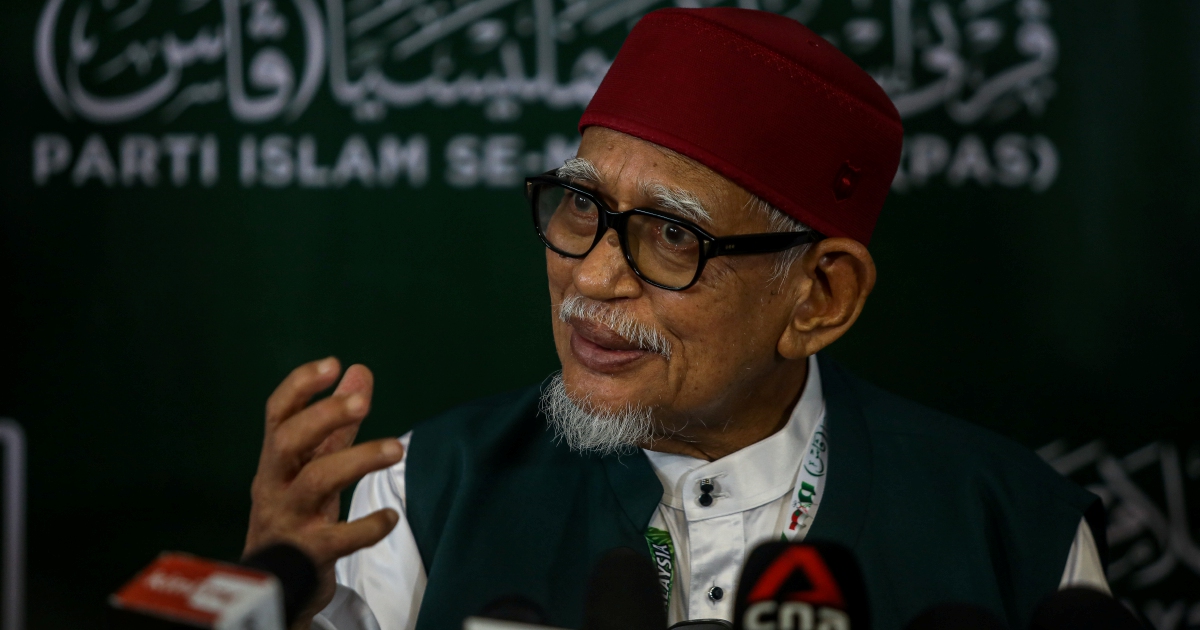
Bersatu's status as a member of Perikatan Nasional has been terminated following Tan Sri Muhyiddin Yassin's public declaration that the party intends to establish a separate coalition arrangement, according to PAS president Tan Sri Abdul Hadi Awang. The automatic revocation reflects a constitutional provision within the opposition pact that triggers automatic expulsion once a member party formally announces intentions to pursue alternative political alliances.
Muhyiddin's announcement represents a dramatic recalibration of Malaysia's already fragmented opposition politics. The former Prime Minister's move to chart an independent coalition path signals deepening fissures within Perikatan Nasional, which has struggled to maintain unity since its formation as an alternative to the ruling coalition. For Malaysian political observers, this development underscores the persistent instability that has characterised the opposition camp following the 2022 general election.
The Perikatan Nasional alliance, which previously comprised Bersatu, PAS, and other smaller parties, has faced mounting pressures from internal disagreements over strategy, electoral arrangements, and leadership direction. Bersatu's departure effectively weakens the coalition's numerical strength in Parliament and eliminates one of its three major component parties. This departure raises immediate questions about the viability of Perikatan Nasional as a coherent political force capable of challenging the current government in future electoral contests.
Muhyiddin's decision to form a new coalition appears motivated by frustrations within Bersatu regarding the party's positioning and influence within the existing alliance structure. The party, which emerged from an internal upheaval within UMNO in 2016, has oscillated between different coalitional arrangements since its founding. Bersatu's repeated shifts in alignment reflect both the party's strategic flexibility and the broader volatility affecting Malaysian politics as multiple factions compete for influence and resources.
For PAS, Bersatu's exit removes a crucial ally that had provided essential parliamentary support and organisational capacity. The Islamic party must now contemplate its coalition arrangements in an increasingly crowded political marketplace where multiple opposition blocs compete for relevance. PAS itself must balance its Islamic-based political platform with pragmatic coalitional mathematics, particularly as it seeks to consolidate influence within Malaysia's Muslim-majority electorate.
Malaysian voters confronting yet another realignment in opposition politics face renewed uncertainty about the long-term viability of any single opposition bloc. The repeated dissolution and reformation of coalitions has contributed to public cynicism regarding opposition effectiveness and commitment to policy platforms beyond immediate power-seeking objectives. This pattern of instability contrasts sharply with the ruling coalition's greater organisational coherence, potentially providing an inadvertent advantage to incumbent governments.
The timing of Muhyiddin's coalition announcement carries regional significance within Southeast Asia's broader political context. Malaysia's opposition movements, despite their numerical strength, have repeatedly struggled to overcome internal divisions that fragment their challenge to established power structures. Analysts observing democratic governance across the region view Malaysia's fractious opposition dynamics as emblematic of challenges facing multi-ethnic democracies attempting to forge durable political coalitions across communal and ideological fault lines.
Bersatu's specific role within any new coalition that Muhyiddin establishes remains uncertain. The party's relatively modest parliamentary representation limits its independent leverage, suggesting that successful coalition-building will require either attracting additional partners or securing advantageous arrangement with larger existing blocs. Whether Muhyiddin can construct a viable alternative coalition capable of attracting defectors from other parties or convincing independent parliamentarians to join remains to be determined.
The broader implications for Malaysian governance extend beyond simple numerical calculations of parliamentary seats. Coalition instability has historically contributed to unexpected political shifts, including sudden changes in government composition when parliamentarians switch allegiances or coalitions realign. This structural instability introduces an element of unpredictability into Malaysian politics that has occasionally surprised both domestic observers and international analysts tracking regional democratic developments.
Going forward, the opposition landscape will likely become even more fragmented, with multiple competing blocs pursuing distinct strategic objectives. This fragmentation potentially benefits ruling coalition members by dividing opposition resources and preventing consolidated challenges to government policies. For Malaysian voters seeking genuine policy alternatives or institutional reform, the persistent failure of opposition elements to maintain stable, principled coalitions represents a substantial democratic cost that extends well beyond internal party mechanics.

