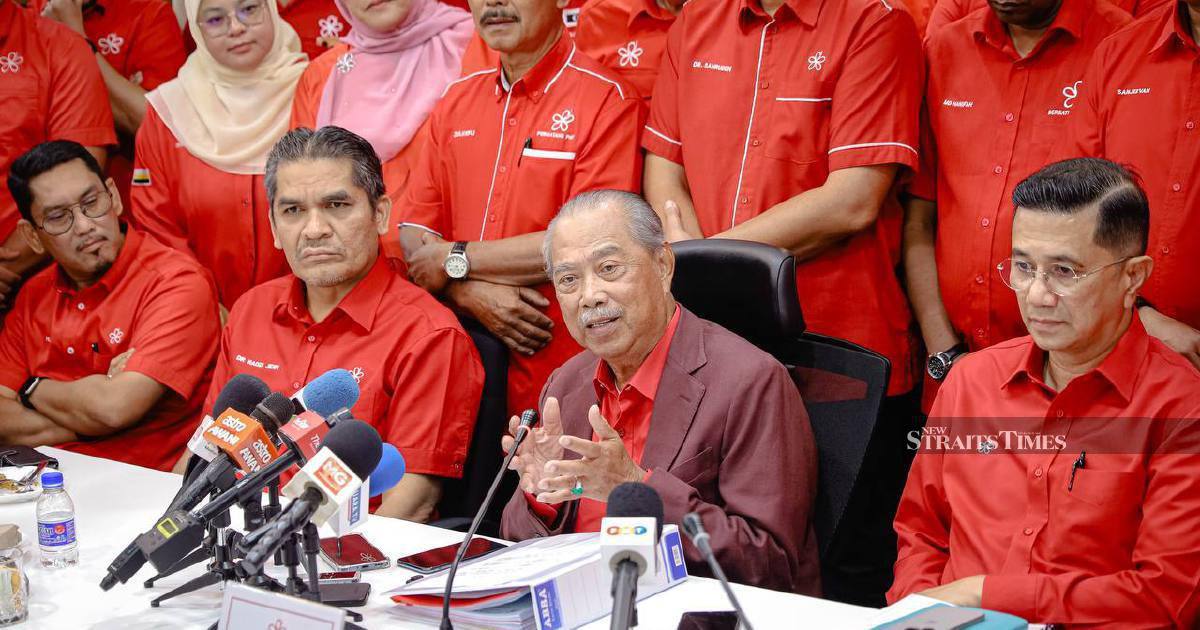
Bersatu leadership has adopted a combative stance towards a potential electoral showdown with Pas in Johor, with party president Tan Sri Muhyiddin Yassin declaring that his faction stands prepared to face the conservative Islamic party directly should seat allocation negotiations break down between the two organisations. The statement underscores mounting tensions within Malaysia's Islamist and Malay-centric political ecosystem, where competing visions for dominance in the peninsula's southern state have begun to overshadow earlier attempts at unity among right-leaning coalitions.
The brash messaging from Bersatu's highest-ranking official reflects the delicate dance of coalition politics in contemporary Malaysia, where parties routinely project confidence in electoral confrontation whilst simultaneously attempting to negotiate advantageous seat-sharing arrangements. Muhyiddin's remarks carry particular weight given Bersatu's track record of navigating between alliance partners—the party has shifted between federal government coalitions multiple times since its formation in 2016, and its leadership remains acutely aware that electoral performance in state contests frequently shapes national political calculations.
Johor represents consequential political territory for both Bersatu and Pas, albeit for differing strategic reasons. The sultanate has traditionally served as a stronghold for moderate Malay-Muslim politics and the United Malays National Organisation (Umno), though recent years have witnessed intensifying contestation from various quarters competing for influence among the state's substantial Malay-Muslim voter base. For Bersatu, maintaining and expanding its presence in Johor is essential to sustaining its relevance as a national political force, particularly given its relatively modest parliamentary representation compared to larger coalition partners. Pas, conversely, views Johor as a territory where its particular brand of Islamic governance advocacy can compete effectively, having already established electoral footholds in some constituencies.
The prospect of direct confrontation between Bersatu and Pas in Johor carries implications extending well beyond the state's borders. Both parties maintain competing claims on similar voter demographics—rural and semi-urban Malay Muslims with conservative social values—and their organisational presence overlaps significantly across numerous constituencies. Rather than representing a straightforward ideological divide, the potential contest reflects more fundamental questions about which coalition framework will ultimately dominate Malay-Muslim political representation in a state long considered critical to national power arrangements.
Coalition negotiations preceding state elections have become increasingly complicated across Malaysia, with seat-sharing discussions frequently creating friction between ostensible allies who maintain competing territorial ambitions. The Johor context adds additional layers of complexity given the state's historical significance and the presence of multiple political organisations simultaneously seeking to claim leadership credentials among Malay voters. Muhyiddin's declaration essentially signals that Bersatu will not accept subordinate positioning to Pas should negotiations reach an impasse, and that the party possesses sufficient confidence in its electoral prospects to contest contested seats aggressively.
Pas leadership has built significant organisational capacity across multiple Malaysian states during recent years, translating grassroots support into tangible electoral gains particularly in northern peninsular states. The party's expansion southward into Johor would represent a meaningful geographical advancement for its political project, however Bersatu's presence complicates such aspirations. Both organisations claim substantial support among traditionalist Muslim constituencies, and their messaging often converges on similar themes regarding Islamic governance and Malay-Muslim interests, creating a crowded marketplace for similar voter segments.
The Johor dynamic must additionally be contextualised within broader shifts in Malaysian coalition structures. The federal government configuration has altered repeatedly during recent years, with both Bersatu and Pas participating in various governmental and opposition arrangements. These fluid alignments mean that electoral performance in state contests carries outsized significance, as political parties utilise state-level victories to demonstrate organisational strength and policy credibility ahead of national contests. A significant Bersatu advance in Johor could substantially enhance Muhyiddin's positioning within broader Malay-Muslim political circles, whilst simultaneous Pas gains might suggest the conservative Islamic party's trajectory of expanding influence beyond its traditional northern strongholds.
Muhyiddin's public readiness to confront Pas electorally also reflects internal Bersatu calculations regarding party morale and activist motivation. Projecting confidence in electoral competition serves to energise party machinery and volunteers, communicating to party members that leadership possesses strategic vision and determination to secure the organisation's political future. This messaging becomes particularly crucial for mid-sized political parties like Bersatu, which must constantly demonstrate relevance to supporters and coalition partners alike whilst competing against larger, more established organisations with deeper institutional resources.
The prospective Johor electoral contest exemplifies the intricate choreography characterising Malaysian state-level politics, where public declarations of competitive readiness coexist with behind-the-scenes negotiations aimed at preventing wasteful direct competition between ostensible ideological allies. Political observers will scrutinise coming weeks carefully, monitoring whether coalition negotiations produce a negotiated settlement allocating distinct constituencies to each party, or whether electoral rivalry ultimately prevails. The outcome will likely reverberate through Malaysian politics considerably, offering bellwether indicators regarding the trajectory of right-wing Malay-Muslim political organisation and the durability of broader coalition frameworks spanning competing parties with overlapping political bases.