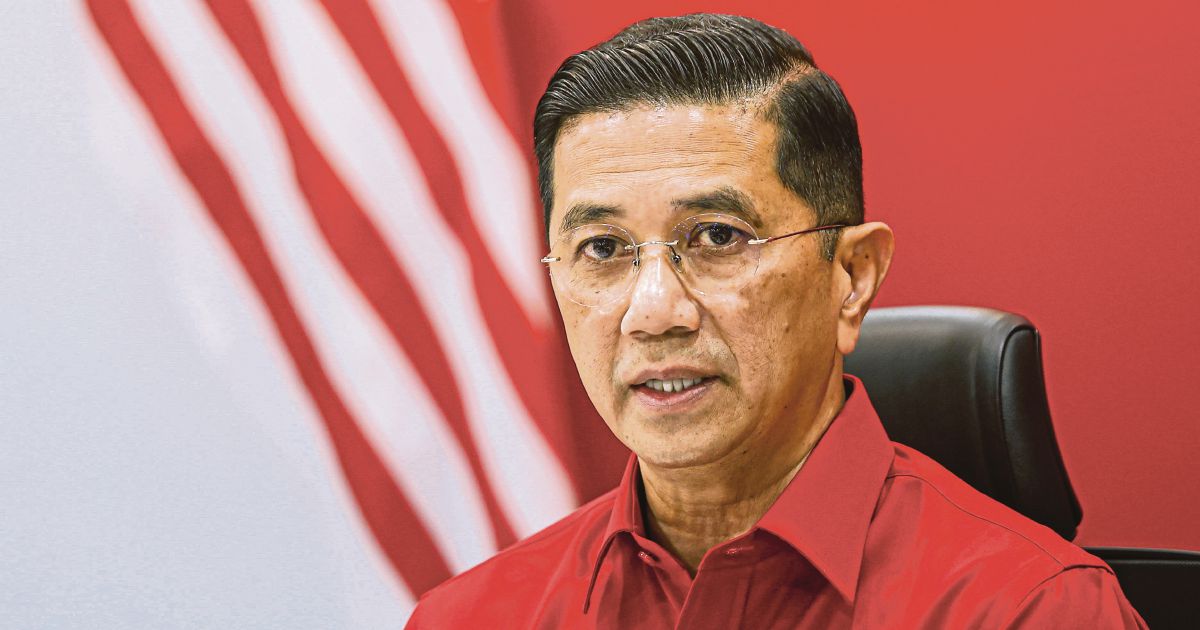
Bersatu has moved swiftly to dispute claims from PAS president Tan Sri Abdul Hadi Awang that the party's standing within Perikatan Nasional has been automatically cancelled. The disagreement centres on whether Tan Sri Muhyiddin Yassin's recent declaration about forming a new political coalition has triggered an immediate termination of Bersatu's membership in PN, a question that strikes at the heart of Malaysia's complex multiparty coalition dynamics and threatens the stability of an already fragile political arrangement.
The assertion by Hadi that membership lapsed without formal notice or procedure represents a significant escalation in tensions within PN, which has served as a crucial counterbalance to the federal government since 2020. This dispute reflects deeper fractures within the coalition regarding authority, decision-making processes, and the rights of individual parties to pursue alternative political alignments. For Malaysian political observers, the disagreement underscores the absence of clear constitutional frameworks governing how major coalitions can be dissolved or how member parties can exit such arrangements.
Bersatu's rejection of Hadi's claim hinges on a critical interpretation of coalition membership rules. The party's leadership contends that any withdrawal from PN cannot occur unilaterally or automatically based on announcements alone, but rather requires formal procedures, notification, and adherence to the coalition's founding agreements. This position suggests that Bersatu intends to maintain its PN status while simultaneously pursuing Muhyiddin's new coalition initiative, a stance that raises questions about whether parties can simultaneously participate in multiple coalition structures or whether such dual membership might constitute a technical violation of political arrangements.
The timing of this dispute carries significant implications for Malaysia's political landscape. Perikatan Nasional has functioned as an important alternative to the Pakatan Harapan-led federal government, and any fracturing of the coalition could substantially weaken opposition forces. For regional observers tracking Southeast Asian politics, Malaysia's coalition instability mirrors similar challenges in other democracies where multi-party systems struggle with coalition management and party discipline. The dispute between Bersatu and PAS demonstrates how quickly consensus can fragment even among parties sharing similar ideological foundations and political interests.
Muhyiddin's announcement about establishing a new coalition reflects broader strategic calculations within Malaysia's political ecosystem. Rather than seeking to dismantle PN entirely, the former prime minister appears to be building an alternative framework that might appeal to parties dissatisfied with current arrangements or seeking greater influence in opposition politics. This manoeuvre resembles tactics seen in coalition politics across Asia, where leaders frequently attempt to reorganise political alliances to enhance their leverage and broaden their base of support without necessarily abandoning existing formal affiliations.
Hadi's counter-claim that automatic membership lapse has occurred likely stems from PAS's interpretation of what constitutes a fundamental breach of coalition loyalty. The PAS president may view Muhyiddin's new coalition announcement as incompatible with continued PN participation, suggesting that such actions constitute de facto withdrawal from the broader arrangement. This interpretation reflects a more rigid understanding of coalition membership, viewing political commitment as an either-or proposition rather than permitting the kind of strategic flexibility that Bersatu appears to be claiming.
The legal and procedural dimensions of this dispute remain ambiguous. Malaysia's political system lacks comprehensive written rules governing how formal coalitions operate, with most arrangements resting on informal understandings and periodic consensus-building among participating parties. This ambiguity creates space for conflicting interpretations, as we see with Bersatu and PAS offering fundamentally different readings of what Muhyiddin's actions signify for PN membership status. Clarifying these rules would require either formal agreement among all coalition members or legislative action, neither of which appears imminent.
For ordinary Malaysians and the broader electorate, this behind-the-scenes manoeuvring raises concerns about political stability and the reliability of coalition arrangements. When major parties dispute basic questions about membership status and procedural legitimacy, public confidence in institutional governance suffers. The situation also complicates efforts to present a coherent opposition position on key national issues, from economic policy to institutional reform, potentially disadvantaging PN parties in their appeals to voters.
The dispute between Bersatu and PAS also illuminates the strategic calculations underpinning Muhyiddin's proposed new coalition. By maintaining nominal PN membership while simultaneously establishing alternative structures, Bersatu preserves options and avoids antagonising other coalition members unnecessarily. This approach allows Muhyiddin to pursue his political objectives while leaving open the possibility of reconciliation or return to PN if circumstances change. However, such tactical manoeuvring risks being perceived as inconsistent or duplicitous, potentially undermining trust among coalition partners.
PAS's position suggests the party may be growing impatient with coalition arrangements that fail to deliver clear political advantages or adequately amplify its voice in opposition politics. By challenging Bersatu's membership status directly, Hadi appears to be signalling that parties cannot pursue alternative alliances while maintaining PN credentials. This stricter interpretation, if accepted, would force other parties to choose between existing coalition commitments and new political opportunities, effectively consolidating coalition discipline.
Moving forward, this dispute will likely require resolution through negotiation among senior PN leaders, or possibly through formation of a coalition-wide mechanism for adjudicating membership disputes. The outcome carries implications extending far beyond the immediate parties involved, potentially establishing precedents for how Malaysian coalitions operate and what obligations membership entails. How Bersatu and PAS resolve this disagreement may ultimately determine whether PN can function as a cohesive political force or whether it gradually fragments into competing factions pursuing divergent strategic objectives.

