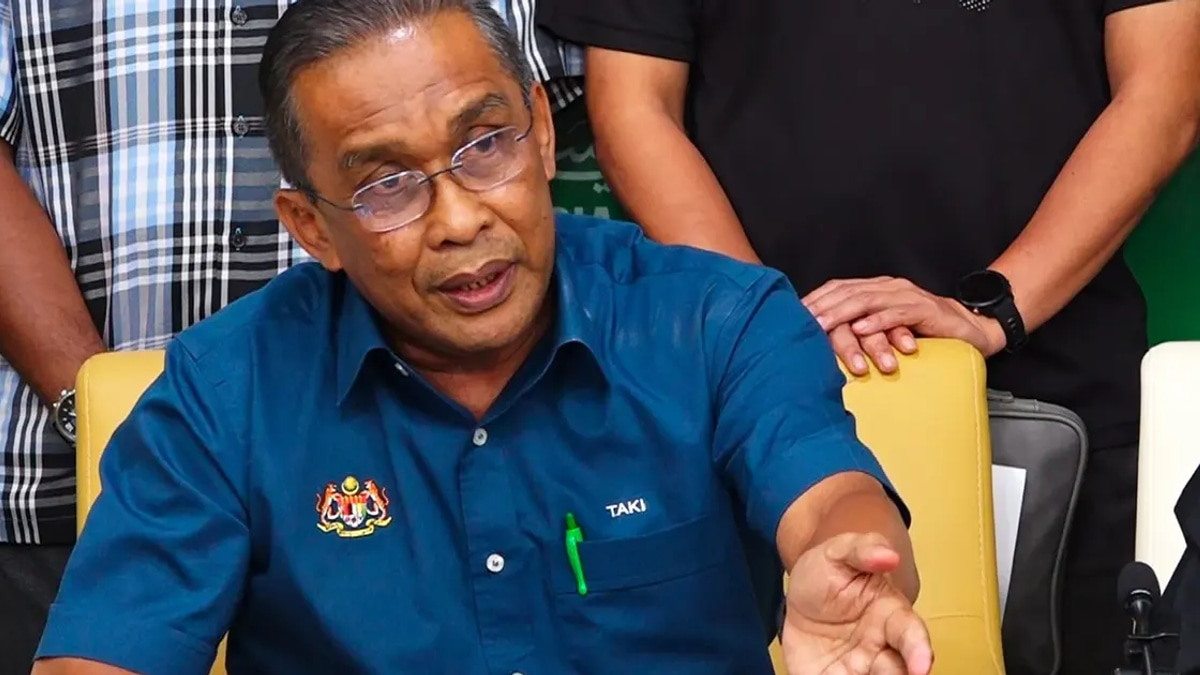
Bersatu will maintain its position as a Perikatan Nasional component party and deploy the coalition's logo in forthcoming state elections in Johor and Negeri Sembilan, party president Tan Sri Muhyiddin Yassin declared on June 16, pushing back against growing fractures within the Islamic-Malay alliance. The announcement came at a media briefing held at Bersatu headquarters following a Supreme Leadership Council session, underscoring the party's determination to weather the latest political headwinds threatening the stability of PN.
Muhyiddin's public commitment to PN carries particular significance given the recent rupture between the coalition's two dominant Islamic parties. PAS had formally severed all political cooperation with Bersatu, citing irreconcilable differences over strategic direction and power-sharing arrangements. The move represented a serious blow to PN's cohesion and raised questions about the coalition's viability as a unified political force heading into a series of crucial state-level contests.
The Bersatu president emphasised that the party's membership within PN cannot be terminated unilaterally by any single partner without adhering to established constitutional procedures and securing consensus among coalition members. This statement appeared designed to address potential pressure from other PN components, particularly PAS, which may have sought to leverage its electoral strength to influence Bersatu's status within the alliance. Muhyiddin's invocation of procedural safeguards suggested the party viewed its PN membership as protected by contractual and constitutional guarantees that transcend the preferences of individual partners.
The constitutional argument carries weight in Malaysian coalition politics, where inter-party agreements typically stipulate formal mechanisms for membership disputes and require supermajority agreement for drastic actions such as expulsion. By highlighting these provisions, Muhyiddin was signalling that Bersatu would resist any unilateral attempt to marginalise it, effectively establishing a legal and procedural barrier against removal. This defensive posture implies that PN's internal tensions have reached a point where formal protections have become operationally necessary.
Bersatu's decision to contest the Johor and Negeri Sembilan elections under the PN banner represents a calculated gamble. The July 11 Johor poll and the August 1 Negeri Sembilan contest will serve as important tests of PN's electoral appeal and organisational capacity following the PAS-Bersatu rupture. By maintaining the PN logo, the party is betting that the coalition brand remains sufficiently robust to attract votes despite internal divisions. The alternative—contesting independently or under a different banner—would have signalled weakness and possibly triggered a spiral of defections and recriminations.
The timing of Muhyiddin's declaration is strategically astute, coming early enough before the polling dates to allow for campaign preparations while simultaneously serving as a public statement of resolve directed at both PN partners and potential voters. By anchoring Bersatu firmly to the PN platform, the party leadership is attempting to stabilise internal morale and project an image of confidence rather than fragmentation. This messaging becomes crucial in Malaysian electoral politics, where perceptions of party strength and unity significantly influence voter behaviour, particularly among swing voters and undecided constituents.
PAS's decision to sever cooperation with Bersatu appears rooted in disagreements over coalition governance and seat allocation strategies. The Islamic party, which has gained significant electoral momentum in recent years and commands substantial parliamentary representation, likely views itself as the dominant force within PN and has sought to exercise proportionate influence over coalition decision-making. Bersatu's resistance to subordinate positioning under PAS leadership has created a fundamental misalignment of interests that procedural mechanisms alone may struggle to resolve.
The presence of Bersatu's senior leadership at the June 16 briefing—including vice-presidents Datuk Dr Radzi Jidin and Datuk Seri Ahmad Faizal Azumu, as well as secretary-general Datuk Seri Mohamed Azmin Ali—underscored the seriousness with which the party treats its PN commitment. The unified front presented by these senior figures suggests that Bersatu's top echelon is aligned on maintaining coalition membership, at least in the immediate term. This internal coherence stands in contrast to other Malaysian political parties that have experienced splits or defections when factional disagreements arise.
For Malaysian voters and regional political observers, the Bersatu-PAS tensions within PN reflect broader challenges facing Islamist-nationalist coalitions in Southeast Asia. Such alliances often struggle to balance ideological commitments with pragmatic power-sharing considerations, particularly when partner parties experience differential electoral fortunes. PN's trajectory will likely influence perceptions of coalition stability and governance capacity among both domestic and international stakeholders assessing Malaysian political developments.
The upcoming state elections in Johor and Negeri Sembilan will provide empirical data on whether PN can function effectively despite internal divisions. If the coalition performs credibly in these contests, Muhyiddin's confidence in PN's resilience may prove justified. Conversely, poor electoral results could accelerate internal disintegration and vindicate concerns that the PAS-Bersatu rupture has fatally compromised PN's political viability. The electoral outcomes will therefore carry implications extending well beyond these two states, potentially reshaping Malaysia's political landscape ahead of the next federal election.
Meanwhile, Bersatu's insistence on maintaining PN membership and using the coalition logo signals the party's calculation that PN, despite its current turbulence, remains a more viable platform than pursuing an independent path. This reflects pragmatic recognition that Malaysian electoral mathematics increasingly favour coalition formation and that fragmenting further would disadvantage all parties. Whether this commitment survives the rigours of campaign competition and post-election recriminations will depend on PN partners' willingness to accommodate Bersatu's interests and sustain the difficult work of maintaining coalition discipline.