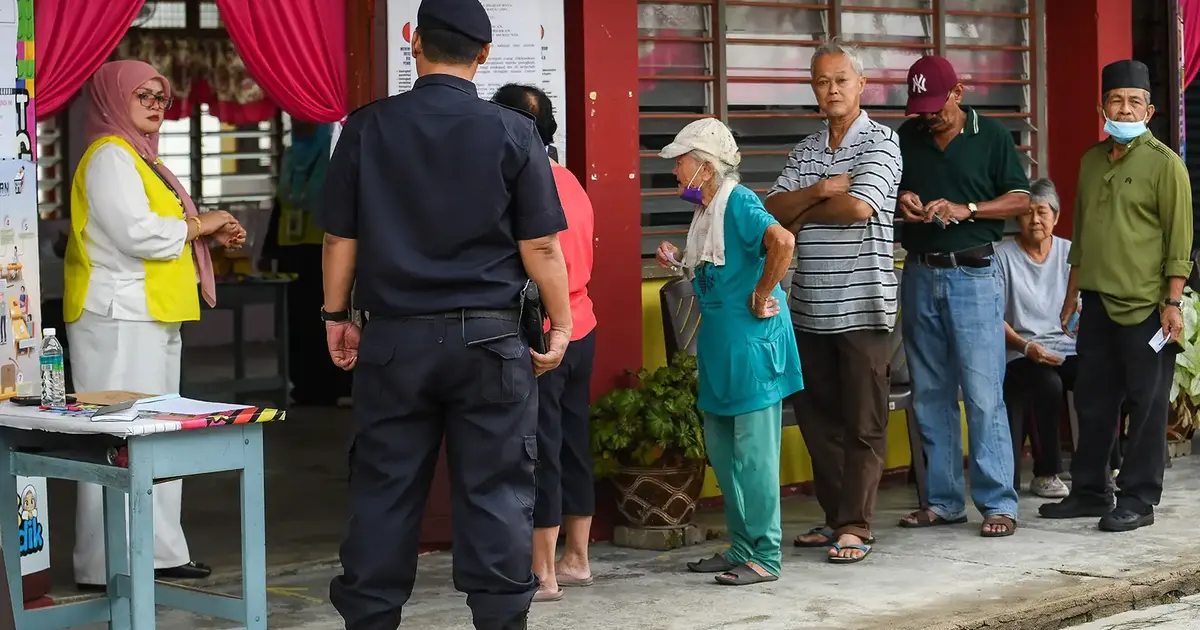
Tensions within Malaysia's fractious opposition coalition are creating unexpected opportunities for Pakatan Harapan, as analysis suggests disgruntled Bersatu supporters may deliberately cast their votes for PH candidates to punish their coalition partner PAS. The potential realignment reflects growing frustration within Perikatan Nasional over seat negotiations and campaign priorities, signalling how personal political rivalries can reshape electoral outcomes across multiple constituencies.
Bersatu's leadership has notably refrained from issuing any directive instructing its base to support specific parties in constituencies where the coalition fielded no candidates. This hands-off approach stands in sharp contrast to the more aggressive positioning adopted by other PN components. The absence of clear marching orders leaves significant room for grassroots decision-making, and analysts contend this vacuum creates space for anti-PAS sentiment to influence voting behaviour among Bersatu's traditional support base.
Meanwhile, PAS appears to be pursuing a dual-track strategy that prioritises electoral cooperation with Barisan Nasional in numerous seats, even where such decisions directly contradict Bersatu's interests. In at least two constituencies where Bersatu is mounting contested campaigns, PAS has reportedly signalled backing for BN candidates instead of rallying behind their nominal coalition partner. Such moves underscore the degree to which PN has fractured into competing fiefdoms driven by narrow organisational interests rather than unified opposition strategy.
The roots of this discord run deep within Malaysian politics. Bersatu, formed relatively recently by defectors from UMNO, has long occupied an awkward position within PN, never fully trusted by the more ideologically rigid PAS establishment. PAS, drawing its base primarily from Islamist constituencies, views Bersatu's secular-leaning leadership with suspicion. These underlying tensions have periodically erupted into public disputes over resource allocation and campaign messaging, creating fertile ground for voter frustration.
For Malaysian observers, the implications extend beyond mere parliamentary mathematics. When opposition parties prioritise internal rivalries over coherent electoral strategy, they squander opportunities to challenge the ruling coalition effectively. Bersatu voters gravitating toward PH would represent a significant transfer of political support, potentially reshaping constituency-level contests across multiple regions. The arithmetic of Malaysian electoral politics means that even modest vote shifts in closely contested seats can determine winners and losers.
PAS's apparent willingness to back BN candidates in seats where Bersatu is competing suggests a calculated gamble. The party may be wagering that direct competition with Bersatu matters less strategically than maintaining cordial relations with Barisan Nasional for potential post-election negotiations. This transactional approach to coalition politics reflects the reality that Malaysian political alignments remain fundamentally fluid, with formal alliances often serving as temporary vehicles for power consolidation rather than ideological commitments.
Bersatu supporters considering PH options face a complex calculus. Many joined the reformist movement hoping to escape UMNO's grip on power, yet found themselves constrained within PN's rigid framework. A vote for PH would simultaneously punish PAS while potentially strengthening Pakatan's overall parliamentary position. For voters motivated by anti-corruption sentiment or demands for institutional reform, such strategic voting becomes an attractive option, particularly in marginal constituencies where their votes carry maximum impact.
The phenomenon of protest voting within coalition frameworks reflects a broader pattern in Southeast Asian politics, where multiparty systems produce unstable alignments prone to sudden shifts. Indonesia, Thailand, and the Philippines all exhibit similar dynamics where frustrated coalition members pursue independent strategies or defect to rival alliances. Malaysia's experience demonstrates how such instability can fundamentally alter electoral outcomes without any formal reorganisation of the political landscape.
Analysts emphasise that Bersatu's passive stance regarding its voters' choices in non-contested seats effectively grants those voters extraordinary agency. Rather than being told where their loyalty should lie, Bersatu supporters can exercise genuine electoral discretion. In an environment saturated with political messaging from competing coalitions, such autonomy can prove decisive. Voters operating without firm guidance often respond to immediate grievances, recent party performance, and local candidate quality rather than high-level coalition strategy.
The potential for Bersatu voters to drift toward PH also reflects broader public mood. If surveys indicate voter frustration with PN's internal dysfunction and apparent inability to present unified opposition positions, such sentiment will influence grassroots decision-making. Voters seeing their preferred parties squabbling over seat allocations while Barisan retains power may simply decide that reformist alternatives deserve their support, regardless of formal coalition memberships.
Looking forward, the fragility evident within PN could reshape Malaysia's political landscape significantly. Should Bersatu voters substantially migrate toward PH in key constituencies, the effective opposition against Barisan would strengthen considerably. Conversely, if PAS continues prioritising BN relations over PN solidarity, the coalition may face accelerated disintegration. Either scenario demonstrates how internal coalition dynamics prove as consequential as inter-party competition in determining electoral outcomes.
The unfolding drama within PN illustrates a fundamental political truth: formal alliances survive only when member parties believe they generate mutual benefit. When benefits appear inequitably distributed, when partners pursue contradictory strategies, and when grievances accumulate without resolution, even nominally allied voters begin exploring alternatives. Bersatu's silent supporters may ultimately prove the most consequential players in determining which coalition effectively challenges Barisan Nasional's continued dominance.

