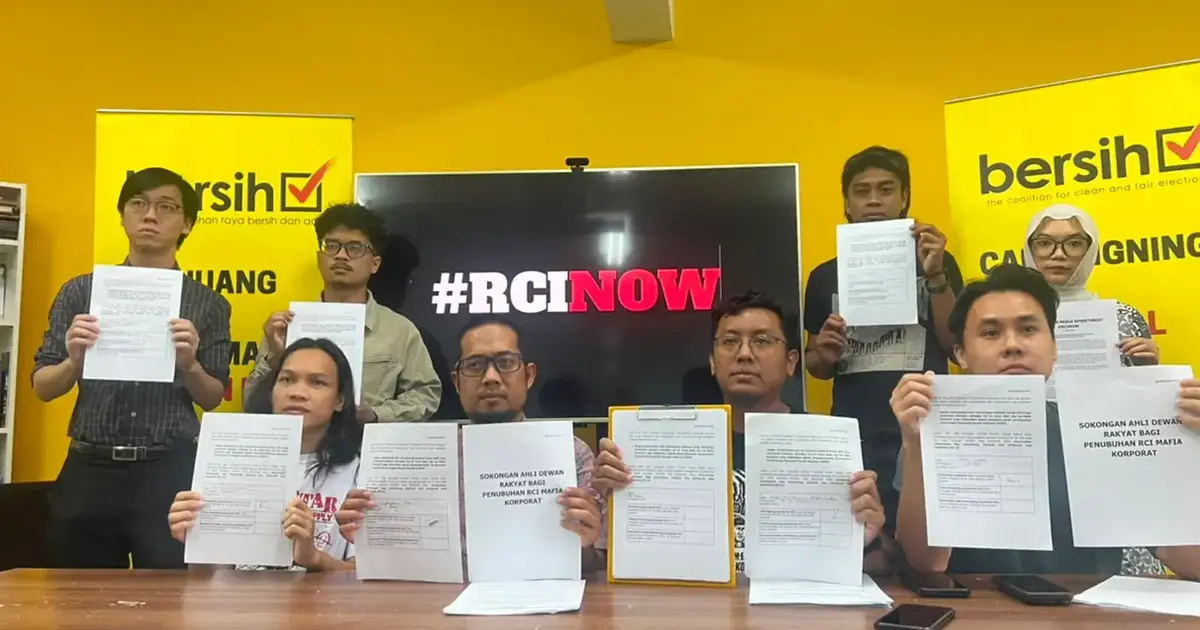
The electoral watchdog Bersih has declared that it has secured backing from 34 members of parliament across the political spectrum for the establishment of a royal commission of inquiry aimed at probing what the group characterises as corporate mafia operations in Malaysia. The gathering of support from legislators representing diverse political interests—including PKR, PAS, DAP and Umno—suggests that concerns about systemic corporate misconduct have transcended traditional partisan divisions and struck a chord among lawmakers from opposing sides of the political divide.
The breadth of parliamentary backing, cutting across ideological and factional lines, underscores a broader anxiety within the legislature regarding the influence and activities of what civil society groups have described as organised corporate criminal networks. Bersih's assertion that these 34 MPs have pledged their support represents a significant mobilisation of legislative opinion, even if the number falls short of the legislative majority needed to formally initiate such an inquiry through parliament. The cross-party composition of the endorsements suggests that the issue has resonated beyond the echo chambers of individual political factions.
Bersih's assertion gains particular significance given Malaysia's history with corporate scandals and allegations of misconduct within major businesses and financial institutions. The country has experienced several high-profile corporate failures and controversies that have raised questions about regulatory oversight, accountability mechanisms, and the potential for organised crime networks to operate within legitimate business structures. A royal commission inquiry, should one be established, would provide a formal investigative framework with statutory powers to compel testimony and examine documentary evidence.
The composition of the supporting lawmakers is particularly noteworthy. PKR's participation reflects the Anwar Ibrahim-led party's positioning on anti-corruption and institutional reform. PAS's involvement introduces an Islamist perspective on the matter, potentially framing corporate misbehaviour as a moral and religious issue alongside its legal dimensions. DAP's backing aligns with the opposition party's consistent emphasis on transparency and accountability across all sectors of the economy. Umno's inclusion is perhaps most significant, suggesting that even within the previously dominant party, there are voices calling for systemic investigation of corporate irregularities.
The mechanisms and scope of a potential royal commission would prove crucial to its effectiveness. Such inquiries typically operate with broader investigative powers than parliamentary committees, including the ability to subpoena witnesses, demand production of documents, and compel testimony under oath. The commission's terms of reference would determine whether it focuses exclusively on criminal activities or adopts a wider lens encompassing civil misconduct, regulatory failures, and systemic vulnerabilities that permit mafia-style operations to flourish.
From a regional perspective, Malaysia's experience in addressing corporate organised crime carries implications for Southeast Asia's broader regulatory environment. As ASEAN nations grapple with ensuring business transparency and combating economic crime, Malaysia's approach to investigating alleged corporate mafia networks could establish precedents that other regional jurisdictions might emulate or learn from. The credibility of such an inquiry would partly depend on its independence from political interference and its capacity to follow evidence wherever it leads.
The actual establishment of a royal commission remains uncertain despite the parliamentary backing that Bersih claims to have secured. Forming such a body requires governmental action, typically initiated through the executive rather than parliament alone. The current political configuration in Malaysia would determine whether the government views such an inquiry as beneficial or potentially problematic. Previous attempts to establish commissions into corporate misconduct have sometimes stalled due to executive reluctance or concerns about political implications.
Bersih's role in publicising these pledges serves to maintain pressure on policymakers and create accountability for the lawmakers who have expressed support. By documenting and announcing the 34 MPs' positions, the watchdog group converts private commitments into public records against which future parliamentary voting patterns can be measured. This transparency mechanism itself constitutes a form of civil society oversight, particularly important in systems where formal checks on executive power may be constrained.
The framing of the issue as corporate mafia rather than isolated corporate fraud carries distinct connotations. The term suggests organised, systematic, and potentially violent criminal networks integrated into legitimate business operations—a characterisation that implies threats not merely to individual investors or stakeholders but to the broader integrity of economic institutions. Such framing may have motivated the cross-party support by positioning the issue as fundamentally about institutional integrity rather than partisan advantage.
If established, such a commission would likely examine the intersection between corporate structures, financial crime, regulatory gaps, and law enforcement capacity. It might investigate relationships between alleged corporate criminal networks and political patronage systems, a sensitive area that nonetheless requires examination for genuine systemic reform. The commission's findings could lead to legislative reforms strengthening corporate governance, enhancing regulatory authority, and closing institutional loopholes that permit organised crime to operate with relative impunity.
The political capital required to sustain momentum for a royal commission inquiry remains substantial. While 34 MPs represent meaningful parliamentary engagement, translating this support into formal governmental action demands sustained advocacy and political will. Bersih's announcement of these pledges indicates that civil society organisations intend to maintain this pressure, leveraging public awareness and democratic participation to ensure that the issue remains on the national agenda until concrete action materialises.
The outcome of Bersih's campaign will likely offer insights into Malaysian civil society's capacity to mobilise cross-party legislative support for structural investigations into institutional misconduct. Should a royal commission be established, its conduct and recommendations could influence how Malaysia addresses corporate accountability for years to come, while also signalling to the international business community the seriousness with which the nation approaches economic crime and institutional integrity.

