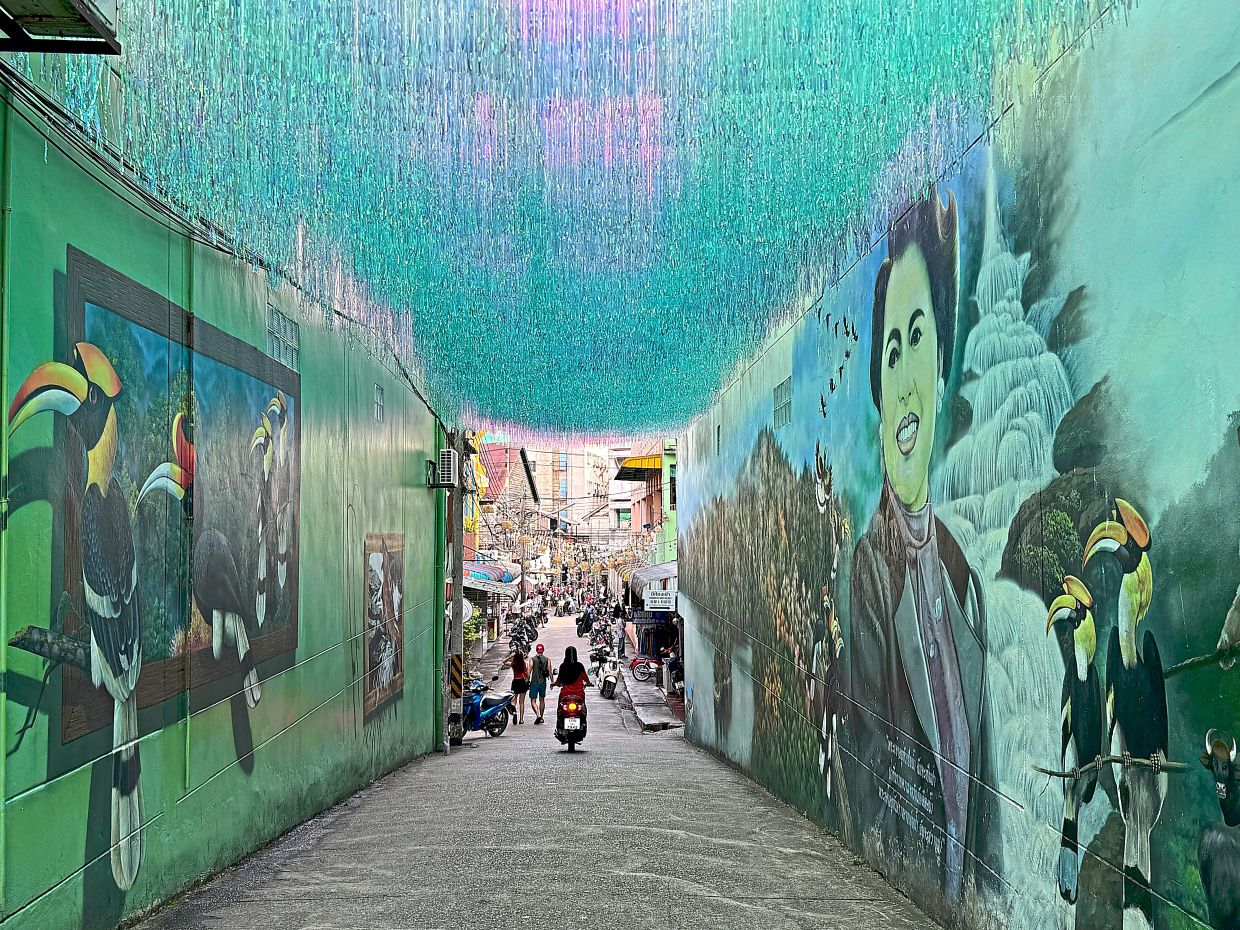
Betong might appear unremarkable at first glance, a modest Thai town situated close to Malaysia's Kelantan state. Yet this border community, positioned roughly 380 kilometres from Kuala Lumpur, harbours an intriguing mix of attractions that reveal themselves gradually to curious visitors. The town's distinctive identity centres on an unexpected obsession: chickens. Peculiar sculptures adorning lamp posts throughout Betong hint at something deeper, prompting travellers to investigate the local fixation that has quietly shaped the town's character and culinary reputation.
The Betong chicken, a local breed, stands as the town's most celebrated symbol and source of considerable pride among residents. This heritage has manifested in an unmistakable culinary landscape where chicken dishes dominate menus at virtually every dining establishment. Whether served as crispy rice, fragrant porridge, or countless other preparations, poultry appears as the default protein across Betong's food culture. The two monumental chicken statues designated as the primary tourist attraction represent far more than quirky roadside decoration; they embody genuine cultural significance and commemorate the breed's importance to local identity and economic livelihood. For Malaysian day-trippers seeking distinctive regional food experiences, Betong's chicken-forward dining scene offers authentic gastronomic exploration distinct from mainstream tourist circuits.
Beyond culinary curiosity, Betong's infrastructure tells stories of ambition and modernization in Thailand's periphery. The Mongkollit Tunnel, Thailand's inaugural mountain tunnel constructed in 2001, initially appeared unremarkable during daytime traversal. Yet evening transformation entirely reimagines the experience; brilliant blue illumination saturates the passage, drawing pedestrians to dedicated walkways flanking the tunnel where photography enthusiasts and casual admirers gather beneath the glowing canopy. This theatrical approach to infrastructure demonstrates how Southeast Asian communities increasingly recognize economic potential in dramatic reinterpretation of functional structures.
Yet Betong's most historically significant attraction occupies an entirely different register. The Piyamit Tunnel, stretching approximately one kilometre through dense jungle roughly 15 kilometres from town centre, represents preserved testimony to Cold War-era conflict. Constructed during the late 1970s, this underground complex functioned as a clandestine headquarters for the Communist Party of Malaya, serving simultaneously as air raid shelter, supply repository, and guerrilla escape route during military operations. The architecture itself reveals strategic ingenuity: multiple entrances and exits enabled fighters to scatter in divergent directions when threatened, while an ingeniously engineered cooking stove channelled charcoal smoke underground to prevent aerial detection by opposing forces.
The Piyamit Histories Museum, accessible after a covered 15-minute pathway approach, documents this largely forgotten chapter through historical photographs and recovered artefacts. The exhibition recounts daily existence within the jungle encampment, humanizing abstract historical narratives through intimate details of how communist insurgents lived, organized, and ultimately ceased operations. This historical dimension carries particular resonance for Malaysian visitors, given the Communist Insurgency's profound impact on Malaysian security consciousness during the 1948-1960 Emergency and subsequent decades. Understanding the conflict from the opposite perspective—through the eyes of Thai-based guerrilla fighters—enriches regional historical comprehension and complicates triumphalist national narratives.
The insurgency's legacy extends beyond Betong's preserved tunnels. Approximately 120 kilometres distant, the Chulabhorn Phatthana Village 9 in Mae Wat offers ongoing documentation of post-conflict transition. This settlement, originally established for former communist operatives seeking reintegration following the insurgency's conclusion, evolved into a cultural site where visitors encounter lived experiences of ideological commitment, armed struggle, and ultimately reconciliation with Thai society. The village's existence underscores how Southeast Asian nations managed historical grievances through pragmatic reintegration policies rather than punitive measures alone.
Betong's pedestrian accessibility enhances its appeal for casual exploration. The old town concentrates primary attractions within comfortable walking distance, rendering vehicle dependency unnecessary despite Thailand's general automobile culture. Parking scarcity actually encourages this pedestrian orientation; locals employ a practical colour-coding system where black-and-white painted kerbs indicate permitted parking whilst red-and-white combinations signal prohibition. This simple visual language demonstrates how communities develop low-cost regulatory systems appropriate to local conditions.
Route 410, alternatively designated the Pattani-Betong Highway, traverses approximately 160 kilometres through mountainous terrain renowned for dramatic elevation changes and serpentine road design. This stretch has earned prominence among motorcycle enthusiasts throughout Southeast Asia who appreciate technical riding challenges presented by steep ascents and winding mountain passes. Commercial establishments catering to motorcycle culture cluster along Route 410, including shops specializing in custom Thai-style number plates and motorcycle-themed merchandise. The highway phenomenon illustrates how infrastructure itself generates distinct subcultures and recreational communities.
Wat Phutiwhat temple, positioned prominently along this scenic route, features a towering bronze Buddha statue dominating the town vista from the temple entrance. The structure simultaneously houses important Buddhist relics, drawing pilgrims alongside secular tourists. Early morning visits prove advisable given visitor concentrations during peak hours, though the temple's spiritual significance transcends tourist convenience. For Malaysian visitors familiar with Thailand's ubiquitous Buddhist architecture, Betong's temple represents relatively modest manifestation of religious expression rather than monumental complexes encountered in major pilgrimage destinations.
Betong's most improbable landmarks emerge from postal infrastructure. Thailand's standard mailbox dimensions match typical adult height; Betong distinguishes itself through oversized postal receptacles that evolved into local monuments. The original 3.2-metre structure, positioned near Betong Clock Tower and dating to 1924, originally incorporated a built-in loudspeaker system enabling government broadcast announcements to residents. Despite age and obsolescence of its amplification function, this mailbox continues serving postal purposes. Subsequently, a 9-metre replica was constructed outside City Convention Hall along Sukyang Road, explicitly designed as tourist attraction acknowledging the original's unexpected fame.
These oversized mailboxes exemplify how modest towns develop distinctive identity markers through amplification of ordinary objects. Rather than importing standardized tourist infrastructure, Betong claimed existing elements and magnified them beyond expected proportions, creating memorable visual landmarks with genuine local history. This approach to placemaking costs considerably less than purpose-built attractions whilst generating authentic distinctiveness reflecting actual community composition rather than generic tourist-friendly aesthetics.
Betong rewards visitors embracing unstructured exploration over predetermined itineraries. The town's surprises—from illuminated tunnels to historical underground installations to oversized mailboxes—reveal themselves through wandering and local conversation rather than following conventional guidebook sequences. This discovery process transforms casual roadtrip into genuine cultural immersion, revealing how provincial Southeast Asian communities maintain distinctive character despite globalization pressures. For Malaysian travellers accustomed to standardized tourist infrastructure, Betong's combination of quirky attractions and substantive historical preservation offers refreshing alternative to mass-market tourism destinations, simultaneously remaining geographically accessible for weekend excursions.

