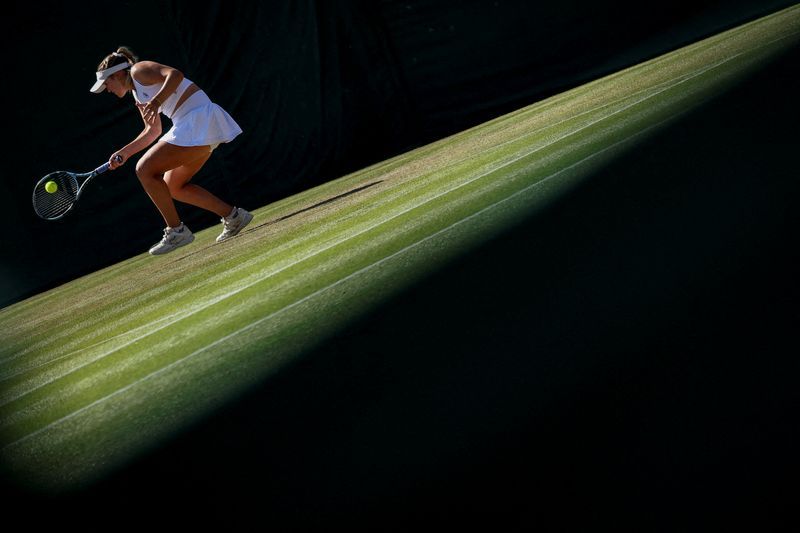
The All England Club's annual fortnight in July presents an intriguing paradox. To casual observers, Wimbledon remains synonymous with British pageantry, strawberries and cream, and a sea of white-clad competitors observing centuries-old dress codes. Yet beneath this meticulously maintained veneer of tradition and decorum thrives one of professional tennis's most ruthlessly competitive environments. The 149-year-old Grand Slam, hosting approximately 675 matches across all divisions, demonstrates how sporting prestige can coexist comfortably with strict social convention.
The tournament's visual presentation stands in marked contrast to contemporaneous sporting spectacles. During the same fortnight in 2024, the FIFA World Cup unfolded across continents with an altogether different aesthetic and cultural footprint. Wimbledon's players in immaculate white attire, the manicured grass courts, and the presence of royal family members create an atmosphere of refined elegance foreign to most modern sporting venues. The strawberries, the creative millinery in the stands, and the strict enforcement of an all-white dress code have become so synonymous with the event that first-time visitors often expect the competition itself to reflect this genteel atmosphere. This assumption, however, fundamentally misunderstands the nature of championship-level tennis unfolding daily on these hallowed courts.
Photographic documentation from the tournament reveals this hidden intensity with stark clarity. The images captured during the fortnight tell stories of desperation, resilience, and the psychological toll of competing at the highest level. These visual narratives expose the chasm between Wimbledon's public image and the raw competitive reality underlying every match. Players experience the same emotional extremes seen in any major sporting competition—the crushing weight of defeat, the exhilaration of unexpected victory, the quiet determination of athletes pushing physical limits.
Consider the moment when Philippine player Alexandra Eala, ranked significantly lower than her opponent, fell while attempting a challenging forehand return against third seed Iga Swiatek, a six-time Grand Slam champion. Eala's expression during this fall encapsulated the mental fortitude required to compete against vastly more accomplished opponents. The 21-year-old's gritted teeth in that split second conveyed not despair but rather unwavering commitment to the contest, regardless of the odds arrayed against her. Photographer Toby Melville, positioned to capture what he anticipated would be a victory celebration, instead documented one of the tournament's most compelling moments of competitive grit. The unplanned nature of this photograph—the unexpected pivot from celebration to struggle—mirrors the unpredictability inherent in professional tennis, where momentum shifts instantaneously and mental resilience becomes as crucial as technical skill.
Similarly, images capturing other competitors revealed the psychological landscape of tournament play. Otto Virtanen's first-round match produced a moment of such acute frustration that the Finnish player approached a courtside barrier with body language suggesting a desire to escape the enormity of the occasion. These instances, often occurring in matches where the stakes feel insurmountable or where superior opponents appear unbeatable, demonstrate that even players accustomed to performing at elite levels experience doubt and frustration. The difference between champions and also-rans frequently lies not in technical superiority but in psychological management during these moments of acute pressure.
Wimbledon did produce its share of triumphant narratives, particularly Naomi Osaka's remarkable return to form. The two-time Grand Slam champion's progression to the quarter-finals represented a significant personal achievement following previous struggles. Osaka's appearance on Centre Court in her distinctive kimono-inspired dress became visually symbolic of her fearless approach to competition. Her willingness to embrace distinctive fashion choices while competing at the highest level reflected a player unburdened by external expectations and fully committed to performing on tennis's most traditional stage. The imagery of Osaka striding across Centre Court encapsulated confidence and championship pedigree—a reminder that Wimbledon does produce moments of pure athletic brilliance alongside the struggle and disappointment.
The tournament's visual documentation also captured the interplay between triumph and shadow, a metaphorical representation of championship sport's dual nature. Jannik Sinner's championship-winning final against Alexander Zverev produced an extraordinary image: the champion mid-air, extending to the absolute limit to reach an impossible return. Sinner's elongated shadow in the photograph appeared to extend beyond his physical body, suggesting the extraordinary effort required to claim the men's title. This image powerfully conveys the gap between ordinary athletic performance and championship-level excellence—Sinner's reach, both literal and metaphorical, exceeded normal human boundaries.
The women's doubles triumph of Guo Hanyu and Kristina Mladenovic similarly produced iconic imagery. Their post-match embrace, captured from an angle where their combined shadow appeared to form a raised fist of triumph, visually synthesised the relief and joy accompanying victory in a Grand Slam doubles competition. These photographs demonstrate how professional photographers working at Wimbledon navigate the tension between capturing celebration and documenting struggle, often finding that the most powerful images emerge from unexpected moments rather than planned compositions.
The tournament's physical landscape also tells stories of competitive intensity. Time-lapse photography of Centre Court documented the wear patterns created by thousands of players' footsteps across the pristine grass surface. These worn patches, particularly concentrated near the baselines and service boxes where rallies reach their most intense, provide visual evidence of the relentless competition conducted across the fortnight. The grass courts, maintained with obsessive precision, nonetheless bear visible scars of championship-level play. These worn patches represent the cumulative physical toll of hundreds of matches, each contested with championship intensity.
For Malaysian and Southeast Asian readers, Wimbledon's example offers instructive insights into how sporting traditions and competitive intensity need not exist in opposition. The tournament demonstrates that institutional heritage and championship-level competition can coexist, that tradition provides context and meaning to achievement rather than diluting it. The emergence of Asian players in recent years—Alexandra Eala representing the Philippines, Naomi Osaka embodying Japanese presence at the highest level—indicates that Wimbledon's traditions remain accessible to competitors from diverse backgrounds willing to engage with both the sport's technical demands and its cultural expectations.
Ultimately, Wimbledon's enduring significance stems not from its traditions or its social conventions but from its role as the stage where the world's finest tennis players compete for sport's most prestigious title. The white uniforms, the strawberries, and the royal appearances constitute the tournament's aesthetic packaging, but the championship's true soul resides in the competitive battles waged daily. Photographers capturing these moments reveal an truth often obscured by Wimbledon's refined public image: beneath the tradition lies a crucible of competitive intensity fully equivalent to any modern sporting spectacle. This duality—between heritage and excellence, tradition and achievement—explains why Wimbledon endures as tennis's most prestigious venue.

