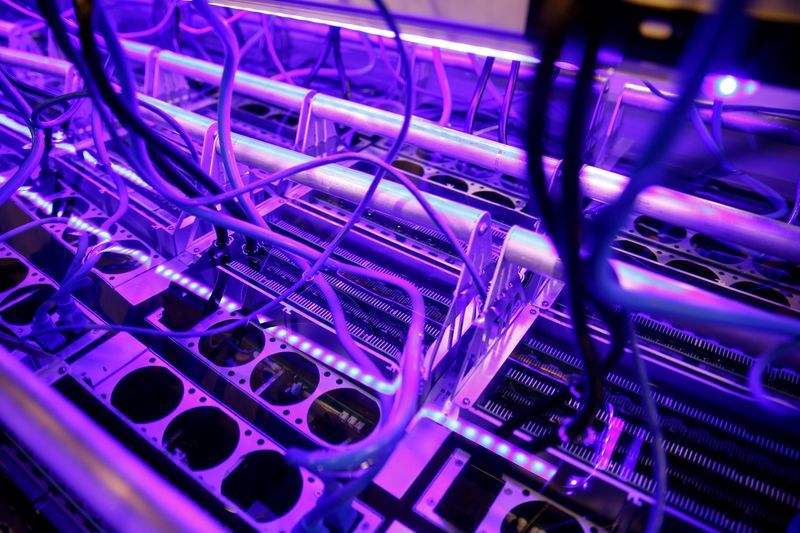
Ionic Digital, a cryptocurrency mining and artificial intelligence infrastructure firm, has submitted paperwork to list its shares on Nasdaq through a direct listing mechanism, signalling confidence in the digital assets sector despite years of turbulence that shook investor confidence across the industry. The listing, which would trade under the ticker symbol IOND, represents a notable milestone for a company that emerged from the wreckage of one of crypto's most prominent lending failures and underscores the sector's continued capacity for recovery and reinvention.
The New Jersey-based company traces its origins to January 2024, when it was specifically established to acquire and operate the cryptocurrency mining operations previously held by Celsius Mining, a division of Celsius Network. This acquisition followed Celsius's successful navigation through Chapter 11 bankruptcy restructuring, which received formal approval from U.S. bankruptcy courts in November 2023. The path to this point was protracted and painful for creditors who had funds frozen across the platform during the height of the 2022 crypto market downturn.
Celsius Network itself had become emblematic of the industry's excesses and fragility. The lending platform filed for bankruptcy protection in July 2022, merely one month after implementing a controversial freeze on all customer withdrawals—a decision that locked millions of dollars in user assets and triggered panic across the broader crypto community. The bankruptcy was one of several high-profile collapses among cryptocurrency lending platforms, institutions that had proliferated during the explosive growth phase of digital assets during the COVID-19 pandemic when retail interest in crypto reached fever pitch and institutional participation accelerated.
The direct listing structure that Ionic has chosen offers a distinctive approach compared to conventional initial public offerings. Rather than underwriting new shares through investment banks in a traditional IPO process, a direct listing permits an existing company to place its current shares directly onto an exchange. This method eliminates the creation of additional equity, meaning no dilution occurs from freshly minted shares. Importantly for existing shareholders, the structure allows insiders and early investors to liquidate their holdings immediately upon listing, providing liquidity without the typical lockup periods that characterise standard IPOs.
Ionic's registered shareholders have indicated their intention to offload up to 10.8 million shares during the listing process. The scale of this secondary offering suggests substantial insider confidence in the company's trajectory, alongside a desire to crystallise gains from the venture's formation and early development. As part of Celsius's bankruptcy reorganisation, Ionic distributed approximately 37 million Class A shares to creditors of the defunct platform, converting those affected parties into equity holders in the new enterprise. This mechanism transformed Celsius's creditors from financial victims into potential beneficiaries of Ionic's future success, a common feature of bankruptcy restructurings designed to restore value to wronged stakeholders.
The timing of Ionic's public market entry follows closely on a substantial capital raise that validates investor appetite for the company's positioning. Last week, the firm completed a funding round that generated $400 million at a pre-money valuation of $2 billion, attracting both established and specialist investors. The syndicate was anchored by Attestor, Oaktree Capital Management, and Sachem Head Capital Management, institutional investors with significant experience deploying capital in alternative assets and distressed situations. Their participation suggests confidence that Ionic's combination of mining operations and artificial intelligence infrastructure applications represents a defensible business proposition in an increasingly competitive sector.
Ionic's dual focus on cryptocurrency mining and AI infrastructure reflects broader trends reshaping the digital assets landscape. As Bitcoin mining has matured into an energy-intensive, capital-dependent operation requiring industrial-scale facilities and operational expertise, the sector has consolidated around larger, professionally-managed entities. Simultaneously, the convergence of AI demand and cryptocurrency mining—both computationally intensive activities requiring substantial electrical power and specialised hardware—has created strategic opportunities for platforms that can optimise infrastructure across both domains. This positioning distinguishes Ionic from legacy mining firms and potentially offers investors exposure to multiple high-growth technology narratives simultaneously.
For Malaysian and Southeast Asian investors and market observers, Ionic's listing carries broader significance for regional financial markets. The direct listing route represents an increasingly viable alternative to traditional IPO processes, potentially influencing how growth-stage technology companies in the region approach public markets. Furthermore, the successful restructuring of Celsius through bankruptcy and the subsequent creation of viable enterprise value from its assets demonstrates how distressed situations in the crypto sector can generate investment opportunities for sophisticated capital. The involvement of international institutional investors in Ionic's funding suggests that despite regulatory headwinds and sector-specific challenges, capital flows remain robust for credible digital assets businesses with sound fundamentals.
J.P.Morgan, Jefferies, and BTIG have been appointed as financial advisors guiding Ionic through the listing process, indicating the engagement of heavyweight institutional resources in bringing the company to public markets. These firms bring extensive experience in technology and alternative assets listings, critical expertise for navigating both the technical requirements of Nasdaq listing procedures and the particular sensitivities surrounding cryptocurrency-related public companies in the current regulatory environment. The choice of advisors reflects Ionic's determination to execute the listing with institutional rigour and to signal legitimacy to institutional investors who may harbour residual concerns about the crypto sector following years of high-profile failures and fraud.
The broader context of Ionic's listing reflects maturation within the cryptocurrency industry following years of consolidation and regulatory clarification. Where the sector once attracted primarily retail speculation and venture capital betting on technology adoption, it increasingly draws institutional capital seeking exposure to established revenue-generating businesses with defined competitive advantages. Ionic's emergence from Celsius's bankruptcy, combined with recent capital raises and now a path to public markets, demonstrates how destructive periods in nascent industries can paradoxically accelerate consolidation and create platforms with stronger operational and financial foundations than their predecessors possessed.

