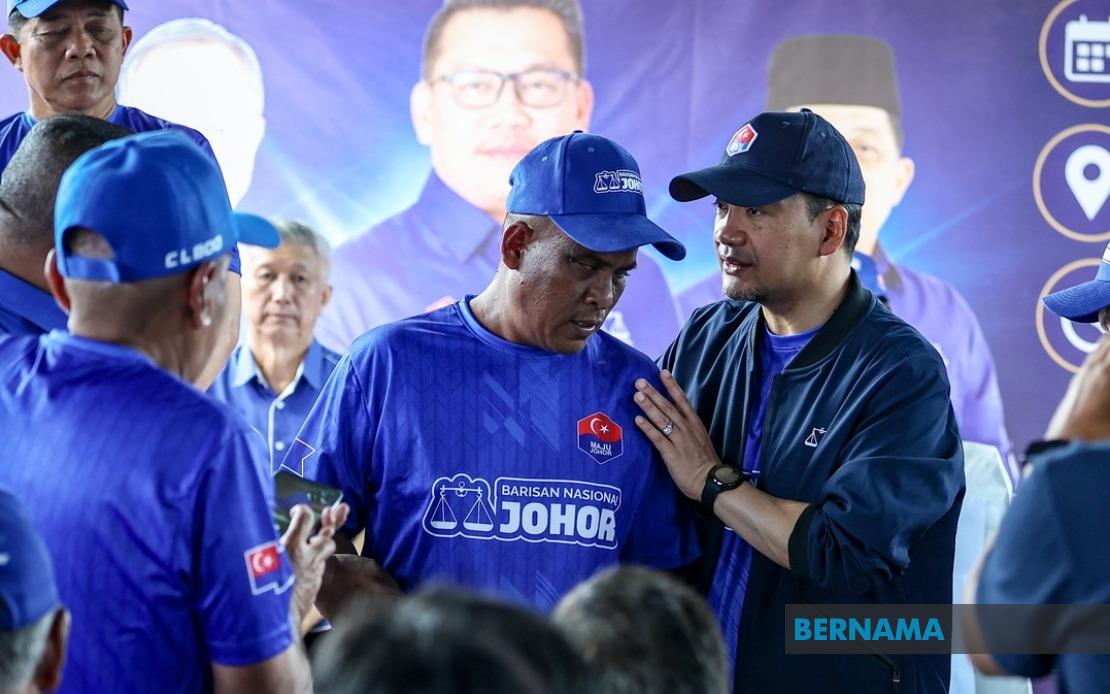
Mohd Hairol Leman has never allowed blindness to prevent him from casting his ballot. The 46-year-old from Kampung Sri Pantai, Senggarang, in Batu Pahat has maintained a consistent voting record spanning 16 years, participating in every general and state election since the 2008 General Election. For him, the upcoming 16th Johor State Election on July 11 represents far more than a routine civic ritual—it embodies a personal commitment to shaping his state's future, a responsibility he views as fundamental to citizenship regardless of physical circumstance.
Born without sight, Mohd Hairol has constructed a life centred on meaningful participation within his community. His electoral engagement represents one dimension of this broader engagement with civic life. The fact that he has never missed an opportunity to vote across six separate elections—both at federal and state levels—underscores a deliberate philosophy that disability should not translate into political marginalisation. He works in partnership with Election Commission officials who facilitate his voting process, a practical accommodation that enables his participation without compromising ballot security or integrity.
For Mohd Hairol, voting extends beyond the act of marking a ballot. He articulates a deeper understanding that every mandate carries genuine weight in determining how resources are allocated and which policies are prioritised. This perspective gains particular resonance given his reliance on government welfare systems. As a beneficiary of support from the Department of Social Welfare and the Johor State Islamic Religious Council's Baitulmal programme, he experiences directly how leadership decisions translate into material conditions for vulnerable populations. His insistence on participating electorally thus reflects gratitude for past assistance coupled with determination to influence future provision.
The accessibility framework that enables Mohd Hairol's participation carries implications extending beyond his individual experience. Malaysia's electoral system, through the Election Commission, has developed practical protocols allowing persons with visual impairments to cast votes independently while maintaining ballot secrecy. These mechanisms—whether through sighted assistance, accessible voting booths, or procedural accommodations—represent essential infrastructure for inclusive democracy. However, such systems often remain invisible in public discourse, with limited attention paid to how institutional design either facilitates or obstructs participation by citizens with disabilities.
Mohd Hairol's consistency across multiple election cycles demonstrates that disability-related barriers to voting are not insurmountable given appropriate institutional support. His participation challenges assumptions that persons with severe visual impairments inevitably withdraw from political engagement. Instead, his record suggests that with reasonable accommodations and personal determination, electoral participation becomes achievable. The broader question for Malaysian policymakers involves ensuring that such accommodations are standardised across all constituencies and that awareness campaigns reach citizens who might otherwise assume voting is unavailable to them.
The 16th Johor State Election, featuring 172 candidates competing for 56 State Legislative Assembly seats, provides the immediate context for Mohd Hairol's anticipated participation. Early voting on July 7 and ordinary polling on July 11 will determine the state's political direction for the coming term. For Mohd Hairol, this election carries particular significance as his sixth voting experience since 2008. Each election cycle reinforces his conviction that selecting capable leaders represents an irreplaceable opportunity to influence governance quality and policy priorities affecting communities like his own.
Mohd Hairol's expressed hope that elected leaders will prioritise welfare expansion and continued support for vulnerable populations reflects practical concerns grounded in lived experience. Persons with disabilities often depend substantially on government assistance programmes; changes in political leadership can substantially affect programme generosity, accessibility, and reach. His insistence on participating electorally thus represents rational self-interest aligned with broader civic responsibility. He recognises that silence during elections forfeits influence over decisions directly affecting his material security and social inclusion.
The institutional recognition of Mohd Hairol's right to vote represents progress within Malaysia's democratic architecture. However, meaningful inclusion requires more than technical accommodation of voting procedures. Public awareness campaigns must actively encourage persons with disabilities to participate, recognising that some potential voters might internalise assumptions about their exclusion. Political candidates and parties might benefit from directly engaging with disability communities, understanding their policy priorities, and demonstrating responsiveness to their concerns. Johor's election presents opportunity for candidates to engage substantively with voters like Mohd Hairol whose experiences illuminate how governance decisions cascade into lived reality.
Mohd Hairol's steady participation across elections spanning 16 years provides a quiet but powerful counternarrative to assumptions that disability inevitably means political disengagement. His commitment reflects neither martyrdom nor exceptional heroism but rather ordinary civic responsibility exercised under circumstances requiring institutional accommodation. That such participation remains noteworthy speaks less to his determination than to the limited visibility of disabled voters within electoral discussions and media coverage. Normalising such participation requires sustained attention to accessibility, representation within campaign messaging, and policy responsiveness to disability community concerns.
As Johor voters prepare for July 11, Mohd Hairol's anticipated participation exemplifies the principle that universal suffrage requires universal accessibility. His experience demonstrates both the feasibility and necessity of ensuring that electoral systems welcome all citizens. The broader challenge facing Malaysian democracy involves extending such accessibility beyond individual accommodation to systematic design ensuring that voting facilities, procedures, and information campaigns serve all eligible citizens regardless of sensory, mobility, or cognitive capacity. Mohd Hairol's consistent engagement demonstrates the democratic dividends available when such systems function effectively, enabling fuller representation and more legitimate electoral outcomes.

