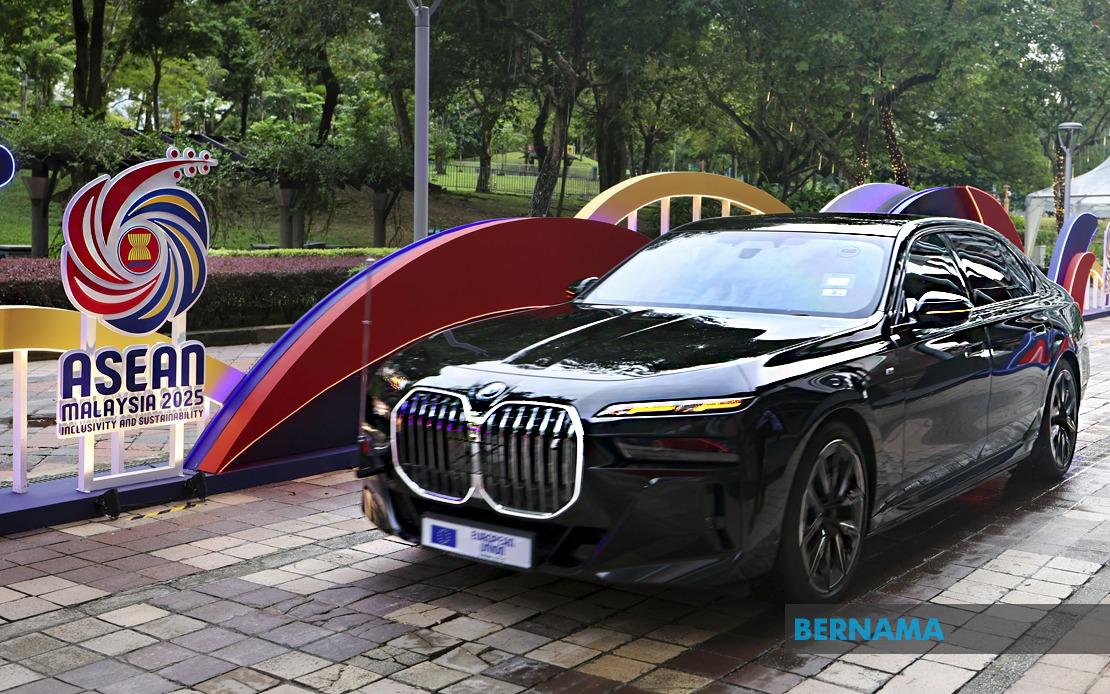
The Prime Minister's Department (JPM) has moved to quash online speculation about the ownership of a luxury BMW vehicle recently seen in use by Prime Minister Datuk Seri Anwar Ibrahim, confirming that the car is an established government asset rather than a newly procured official vehicle. The clarification, issued jointly by JPM and the Ceremonial and International Conference Secretariat Division (BIUPA), addresses mounting social media discussion that had emerged following public sightings of the vehicle accompanying the Prime Minister.
According to the statement released through official channels, the BMW falls under BIUPA's purview and forms part of the government's existing fleet dedicated specifically to state-level logistics operations. The vehicle's assignment to Prime Minister Anwar is described as temporary in nature, necessitated by security circumstances rather than representing any change in permanent official transport arrangements. This distinction carries importance in light of heightened public sensitivity around government expenditure and the deployment of state resources.
The rationale for the vehicle's deployment centres on Malaysia's obligations under international security protocols and diplomatic standards. When heads of state or government leaders holding presidential or prime ministerial rank conduct official visits to Malaysia, the hosting nation must provide transport infrastructure meeting stringent protective specifications. These requirements extend far beyond conventional vehicle features, encompassing ballistic-resistant construction and systems capable of withstanding high-impact threats of multiple varieties. The specifications represent baseline international practice rather than extraordinary measures, reflecting globally recognised standards for protecting senior dignitaries during official engagements.
The protective capabilities embedded in the BMW address a comprehensive spectrum of contemporary security threats that have become standard considerations in diplomatic transport. Beyond traditional ballistic protection, the vehicle incorporates engineering designed to mitigate explosion-related risks and defend against emerging drone-based threats, reflecting the evolving nature of security challenges facing global leadership. Such multi-layered protection requirements explain why diplomatic security vehicles demand specialised manufacturing and significant resource investment, differentiating them markedly from standard commercial automobiles.
JPM's statement indicates that the temporary deployment resulted from advice and formal security assessments conducted by the Royal Malaysian Police (PDRM). This attribution to independent security evaluation provides institutional grounding for the decision, suggesting the deployment reflects professional law enforcement judgment rather than administrative preference. The involvement of Malaysia's premier police authority lends weight to the assertion that the vehicle's use responds to identified protective necessities rather than ceremonial convenience or personal preference.
Underlying the temporary nature of the BMW's assignment is the fact that the Prime Minister's principal official vehicle, a separate car gifted by the Yang di-Pertuan Agong, currently undergoes scheduled maintenance. This disclosure furnishes practical context for why an alternative from the government's diplomatic fleet entered temporary service. The maintenance cycle represents routine operational activity standard across all high-use government vehicles, particularly those assigned to senior public office holders whose security and mobility demands place significant operational strain on transport assets.
The timing of JPM's clarification reflects growing scrutiny of government expenditure and asset deployment across Malaysian public discourse. In an era of heightened fiscal awareness and social media's capacity to amplify speculation, government agencies increasingly find themselves compelled to address online narrative with rapid factual correction. The proactive approach by JPM and BIUPA demonstrates recognition that allowing unsubstantiated claims to circulate unchallenged risks accumulating into established public perception, potentially undermining institutional credibility.
For Malaysian readers, the episode illustrates the technical and diplomatic complexities underlying what might otherwise appear as straightforward transport logistics at the highest levels of government. International diplomatic protocols impose specific material requirements on host nations, creating legitimate necessity for specialised assets that would otherwise seem extravagant when viewed through conventional purchasing frameworks. The existence of such vehicles within government fleets reflects these binding international obligations rather than discretionary acquisitions.
The broader context involves Malaysia's positioning as a regional diplomatic hub and occasional venue for significant international gatherings. Maintaining appropriate infrastructure for protecting visiting dignitaries represents an investment in national standing and diplomatic capacity. When foreign leaders visit Malaysia, the nation's ability to provide security transport meeting international standards reflects both commitment to their protection and respect for diplomatic protocol. Such considerations help explain why governments maintain dedicated diplomatic vehicle fleets despite their considerable acquisition and maintenance costs.
Looking forward, the clarification may serve to establish clearer communication protocols between government agencies and the public regarding asset deployment and utilisation. As public interest in government resource allocation continues intensifying, particularly following periods of fiscal constraint, transparency around the rationale underlying specific operational decisions becomes increasingly important for maintaining public confidence in institutional governance. The JPM statement represents one approach to addressing such concerns through direct factual explanation rather than allowing speculation to develop unchallenged.

