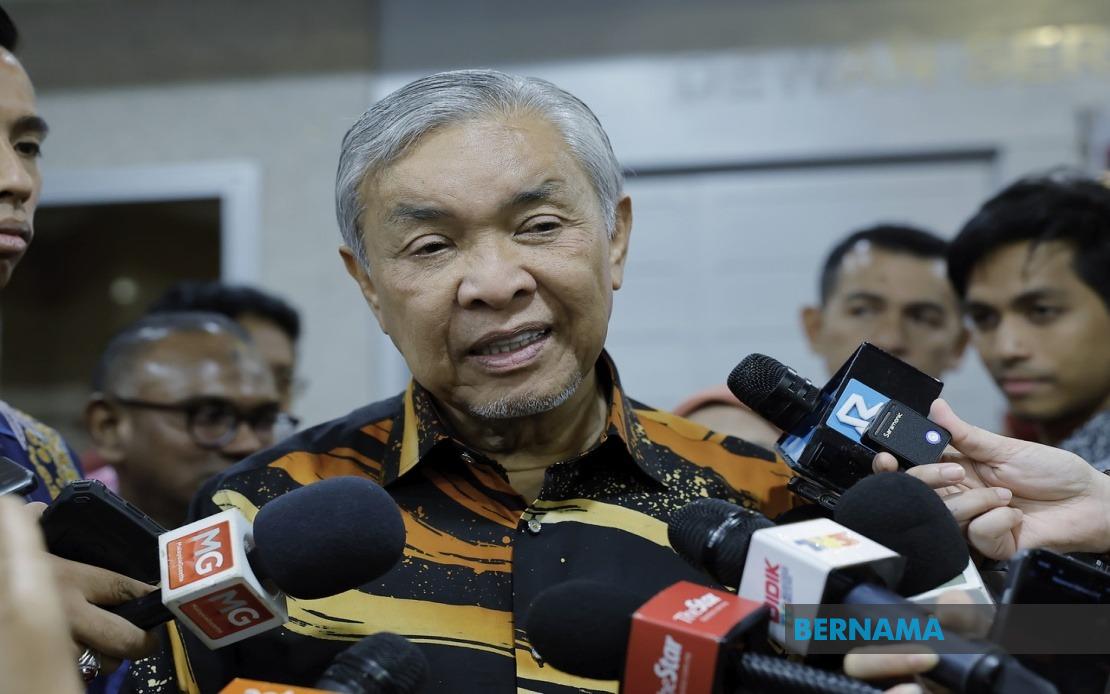
Barisan Nasional leadership has drawn a firm line on governance standards at Tabung Haji, with BN chairman Datuk Seri Dr Ahmad Zahid Hamidi announcing that the coalition and UMNO will adopt an uncompromising stance towards any instances of financial impropriety or administrative failures at the Islamic pilgrimage fund. Addressing reporters in Putrajaya on August 6, Ahmad Zahid, who also serves as Deputy Prime Minister, underscored that wrongdoing within government agencies and statutory bodies must invariably result in consequences for those responsible, signalling a departure from past practices that had allowed mismanagement to persist unchecked.
The timing of Ahmad Zahid's declaration arrives as Parliament prepares for a special sitting on August 11 dedicated to examining the Royal Commission of Inquiry's comprehensive report on Tabung Haji, which unveiled a troubling pattern of questionable investment decisions and information concealment spanning the 2014-2020 period. The RCI's investigation, which concluded in late July, identified suspicious transactions and systematic concealment of material information, painting a picture of an institution where oversight mechanisms had fractured and accountability had eroded significantly over the seven-year window examined.
The scale of mismanagement uncovered proved substantial enough to warrant recommendations for a forensic audit into preceding investment choices that precipitated a marked deterioration in Tabung Haji's asset base. This decline had direct implications for Malaysian Muslims who contribute to and depend upon the fund for their Hajj pilgrimage arrangements, making the governance failures not merely administrative concerns but matters affecting ordinary citizens' religious obligations and financial security. The fund's diminished asset position had already triggered calls for systemic reforms and enhanced regulatory oversight among stakeholder groups and civil society organisations.
Ahmad Zahid's statement carries particular weight given UMNO's historical custodianship of Tabung Haji and the political vulnerability that prolonged mismanagement represents for the Malay-Muslim establishment. By explicitly rejecting any compromise on accountability, the Deputy Prime Minister positioned the government as responsive to public concern and determined to restore institutional credibility. Such pronouncements, however, require substantiation through concrete administrative and investigative action to prove meaningful beyond rhetorical reassurance.
The special parliamentary session scheduled for August 11 will provide the forum for detailed scrutiny of the RCI's findings and for government members to articulate their remedial framework. Parliament's involvement signals recognition that Tabung Haji governance failures transcend internal management concerns and implicate broader questions about how Malaysia's statutory authorities operate and whether existing safeguards prove adequate. The session will likely generate pressure on relevant ministers to outline specific measures for implementing the RCI's audit recommendations and for preventing recurrence of identified vulnerabilities.
The RCI's discovery of concealed information represents a particularly serious dimension of the governance breakdown, suggesting deliberate obfuscation rather than mere incompetence. Such deliberate concealment typically indicates awareness among decision-makers that certain transactions or investments would face scrutiny or disapproval if disclosed, thereby compromising the integrity of the fund's management structure at foundational levels. Addressing this systemic erosion of transparency will require not only personnel changes but also architectural reforms to institutional processes and reporting frameworks.
For Malaysian Muslims, the Tabung Haji controversy carries heightened significance given the fund's pivotal role in facilitating Hajj arrangements and managing accumulated savings designated for religious purposes. Any diminution of the fund's asset base directly affects the quality of pilgrimage services available and the security of contributors' financial interests. The governance failures thus represent not merely institutional malfeasance but breaches of a sacred trust, lending urgency to remedial efforts and intensifying public expectations for robust accountability measures.
The broader implications extend to Southeast Asian perceptions of Malaysian institutional governance and regulatory efficacy. Regional observers monitor how Malaysia addresses such high-profile governance failures, with implications for investment confidence and institutional reputation. A credible response demonstrating genuine accountability and systemic reform would reinforce Malaysia's positioning as an institution-respecting democracy, whereas inadequate remediation risks reinforcing narratives of governance weakness and selective accountability.
The Parliamentary debate on August 11 will serve as a crucial test of political resolve. Beyond Ahmad Zahid's declarative commitments, observers will scrutinise whether the government translates rhetorical opposition to misconduct into legislative changes, enhanced regulatory mechanisms, and personnel accountability. The debate will reveal whether existing parliamentary oversight mechanisms prove sufficiently robust to interrogate findings and compel substantive remedial action, or whether institutional inertia undermines reform efforts. These questions will shape perceptions of governance quality and public confidence in Malaysia's administrative institutions during a period when institutional credibility demands careful stewardship.

