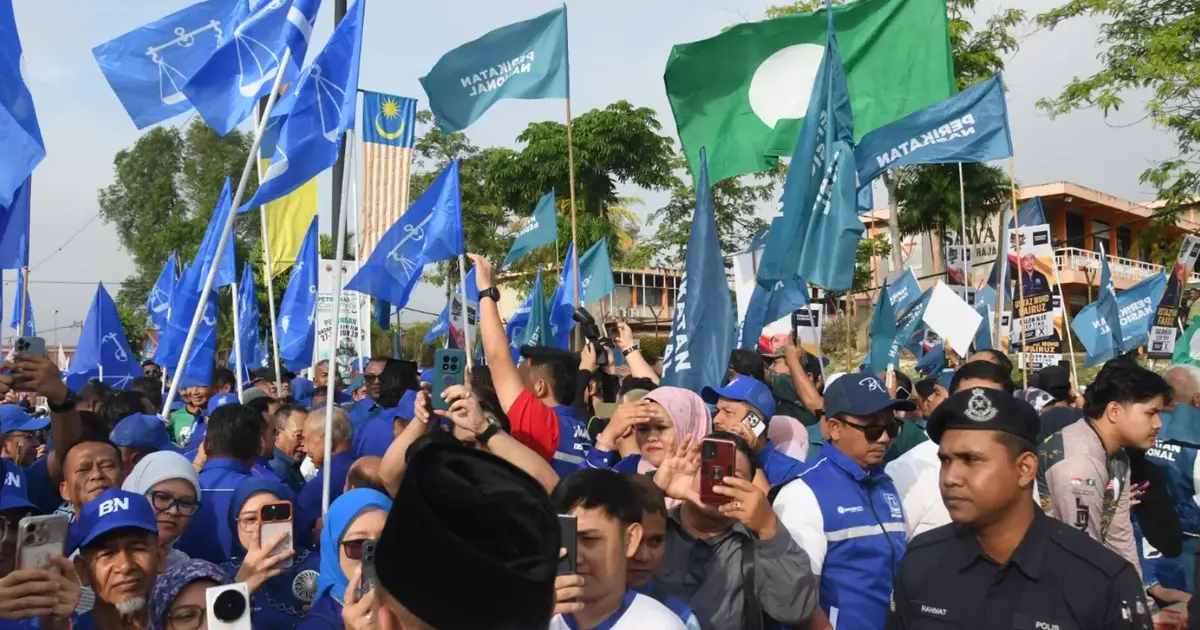
Perikatan Nasional's ambitions to capture Selangor face a structural challenge that may prove difficult to overcome: Barisan Nasional, touted as a replacement coalition partner, lacks the electoral machinery and grassroots reach that Bersatu once deployed to help the opposition coalition gain traction in Malaysia's most urbanised and economically developed state. Political analyst Azmi Hassan has raised concerns that BN simply cannot replicate the strategic value Bersatu brought to PN's previous electoral efforts in the state, a development that raises questions about the viability of PN's path to power in Selangor.
Bersatu's withdrawal from active participation in Selangor politics has created a void that alliance-builders within PN are attempting to fill through closer cooperation with Barisan Nasional. However, the two entities operate from fundamentally different positions within Malaysia's political ecosystem. Bersatu, despite its relatively recent formation and smaller parliamentary representation, possessed distinct advantages that made it an effective force multiplier for PN's campaigns. The party maintained a lean but dedicated organisational structure and could mobilise support in specific constituencies where it had built targeted influence, particularly among segments of the Malay-Muslim electorate that PN sought to activate.
Barisan Nasional, by contrast, operates as an established coalition rather than a single cohesive party with unified strategic direction. Its component parties, including UMNO, MCA, and MIC, pursue varying priorities and maintain competing power structures. This fragmentation means that even when BN formally commits to electoral cooperation, translating that commitment into coordinated ground-level activity presents considerable logistical challenges. The coalition's traditional strength lies in peninsular Malay-majority areas, but Selangor's electorate is considerably more diverse and sophisticated, incorporating significant urban middle-class voters and communities that have demonstrated volatility in recent electoral cycles.
The timing of this realignment carries particular significance for PN's strategy. In Selangor's previous state election, Bersatu's presence allowed PN to concentrate resources on specific battleground constituencies whilst maintaining presence across a broader swath of contested seats. The party served as both a credible alternative to established players and a coalition partner that could field candidates without facing the baggage associated with UMNO's long governance of the state. That dual function—legitimacy through novelty combined with organisational capacity—proved valuable for PN's electoral penetration in a state where voter sentiment has shifted multiple times over the past decade.
Analyst Hassan's assessment highlights a deeper problem within opposition coalition dynamics in Malaysia. Perikatan Nasional has historically struggled with stability, with member parties entering and exiting the alliance based on calculations of electoral advantage and internal party politics. Bersatu's gradual distancing from active PN participation reflects both the party's repositioning following internal leadership changes and shifting calculations about where electoral opportunities lie. For PN, this means losing a partner that, however modest in formal representation, possessed particular utility in specific contexts.
Selangor's political landscape has become increasingly unpredictable, presenting both opportunities and hazards for any coalition seeking to govern the state. The electorate has demonstrated capacity to fragment its support across multiple parties, punishing coalitions perceived as weak or internally divided. Barisan Nasional's involvement may add institutional heft and traditional party machinery, but it simultaneously risks complicating PN's messaging. Some segments of voters that PN successfully attracted during previous campaigns—particularly those voting against establishment politics—may view a formal alliance with BN as a retreat toward conventional political arrangements.
The strategic implication extends beyond Selangor itself. How PN manages this transitional phase in its coalition architecture will signal to opposition supporters across other states whether the coalition can sustain coherent strategy or whether it will continually recalibrate its partnerships in ways that undermine long-term positioning. Malaysia's two most urbanised and politically decisive states, Selangor and Kuala Lumpur, represent crucial battlegrounds for determining the balance of power in national politics. A PN that cannot convincingly compete in these areas faces structural limitations in any bid for federal power.
For Barisan Nasional, deepening ties with PN in Selangor creates its own complications. The coalition has worked to rebuild its image following a historic electoral defeat in 2018 and subsequent political turbulence. Voters who supported BN's revival may view cooperation with an opposition coalition as inconsistent with the coalition's stated positioning. Moreover, BN's credibility rests partly on its claim to stable governance; being perceived as merely a supporting actor in someone else's political strategy may diminish its appeal to pragmatic middle-ground voters.
The broader Southeast Asian context adds another layer of consideration. Malaysia's state-level politics frequently prefigure national developments, and how coalitions manage transitions in partnership arrangements offers insight into governance models that resonate with voters in this region. Thai, Indonesian, and Philippine analysts of Malaysian politics closely observe coalition stability precisely because such arrangements determine policy continuity and institutional functionality.
Malaysian political observers should monitor whether PN can articulate a compelling vision for Selangor that incorporates BN's participation without appearing to dilute PN's core appeal. The analyst's concern about BN's inability to replace Bersatu may underestimate BN's capacity for tactical innovation, but it reflects a real constraint: there is no simple substitute for an alliance partner that possesses both organisational presence and the perceived legitimacy of being an outsider to established power structures. PN's challenge is to construct a winning coalition whilst managing these contradictions.

