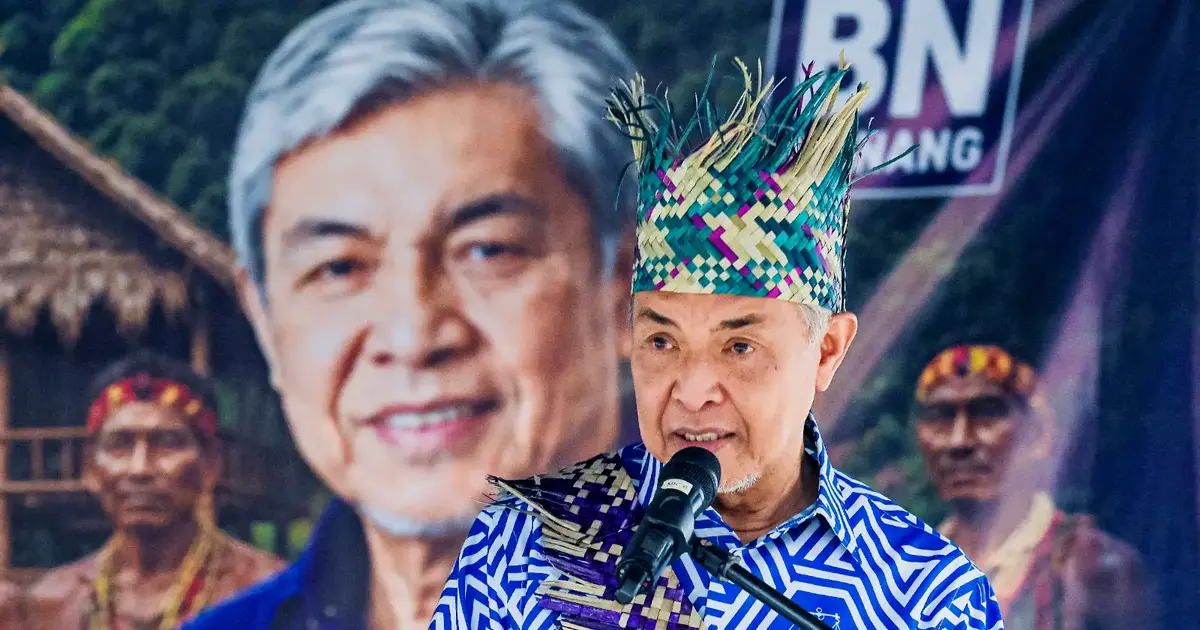
Barisan Nasional has made a fresh campaign promise regarding indigenous affairs, pledging to create a dedicated special officer post to address Orang Asli concerns should the coalition be returned to government after the upcoming elections. The commitment signals the coalition's attempt to strengthen its appeal among Malaysia's original inhabitants, a constituency that has historically received sporadic political attention despite comprising significant populations across multiple states.
According to Ahmad Zahid Hamidi, chairman of Barisan Nasional, the proposed position would be housed within the office of the Negeri Sembilan menteri besar, enabling the officeholder to work directly with state leadership on indigenous matters. The party chairman indicated that such an administrative arrangement could be implemented without requiring major legislative changes, suggesting the position could be operationalised relatively swiftly following an election victory.
The pledge represents an acknowledgement of longstanding grievances within Orang Asli communities regarding land rights, education access, healthcare provision, and economic marginalisation. These communities, scattered across peninsular Malaysia, have frequently expressed frustration over slow progress on developmental initiatives and what they perceive as inadequate representation in policy discussions affecting their welfare.
Negeri Sembilan, where the proposed position would be established, is home to several Orang Asli settlements, making it a strategically significant location for demonstrating commitment to indigenous affairs. The state's geography and demographic composition make it an appropriate choice for piloting enhanced institutional focus on Orang Asli needs, potentially creating a model that could be replicated in other states with substantial indigenous populations.
The creation of a dedicated officer position addresses a recurring criticism that Orang Asli concerns often fall between departmental silos, with responsibility diffused across multiple agencies including local government, the Department of Orang Asli Development, and various federal bodies. Having a single point of contact reporting directly to the menteri besar could theoretically improve coordination and accelerate decision-making on indigenous affairs.
However, the effectiveness of such a position would depend substantially on the appointee's actual authority, the allocation of dedicated resources, and whether the role carries genuine influence over state spending and policy priorities. Previous initiatives aimed at improving indigenous affairs have sometimes foundered when appointed officials lacked sufficient budgetary control or political support to implement meaningful change.
Barisan Nasional's initiative comes amid broader political competition for Orang Asli support. The indigenous vote has become increasingly significant in certain constituencies, and both coalition and opposition parties recognise that more targeted policy engagement with these communities could yield electoral advantages. This competitive dynamic has begun pushing indigenous affairs higher on the national political agenda, though critics argue that commitments made during campaigns frequently fail to translate into substantive action once governments take office.
The proposed role would need to navigate complex jurisdictional questions involving both state and federal competencies. Land matters affecting Orang Asli communities involve multiple stakeholders, including state governments, the federal government, and in some cases, traditional rulers. A menteri besar's office position would require clear definition of its authority relative to these other actors to avoid becoming merely a symbolic appointment without practical leverage.
Industry observers and indigenous rights advocates will be watching closely to see whether this commitment materialises if Barisan Nasional returns to power, and whether similar positions are created in other states with substantial Orang Asli populations. The credibility of such pledges depends on implementation, proper funding, and demonstrated responsiveness to indigenous community priorities rather than merely structural reorganisation.
For Malaysia's broader political landscape, the BN announcement reflects a recognition that inclusive governance requires specific institutional mechanisms for representing marginalised communities. Whether this represents a genuine reorientation toward indigenous affairs or primarily reflects electoral calculation will become apparent through subsequent policy actions and budgetary allocations post-election. The strength of this commitment will ultimately be measured not by the announcement itself, but by the tangible improvements in Orang Asli welfare and autonomy that follow.

