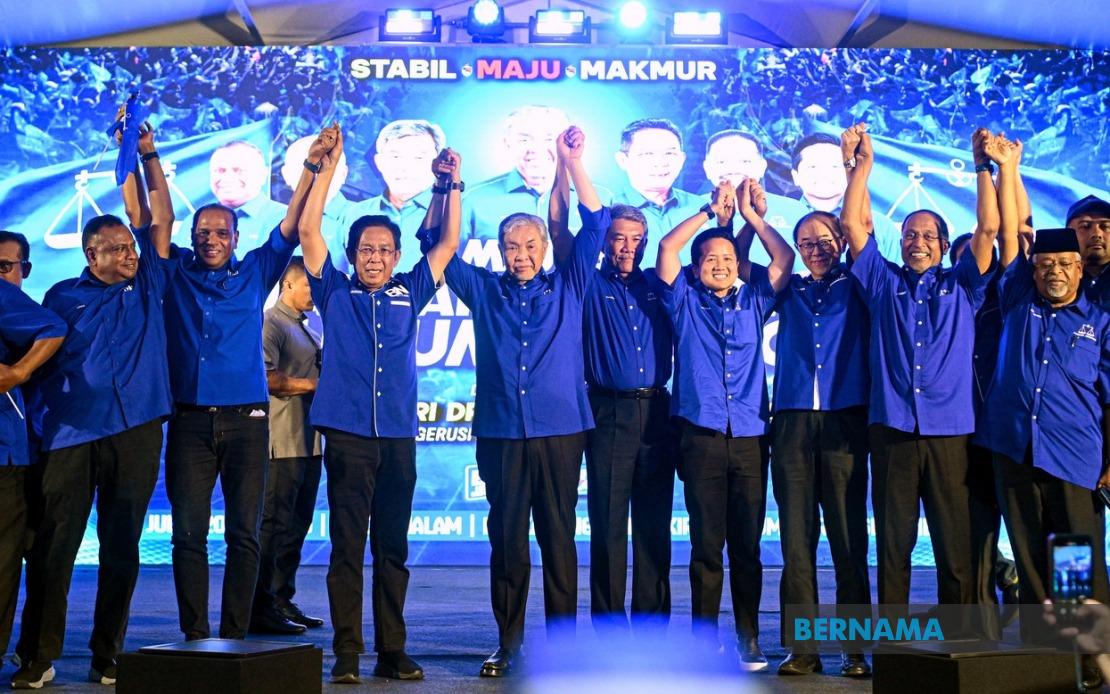
Barisan Nasional's leadership formally introduced its 25-candidate lineup for the upcoming Negeri Sembilan state election on Monday evening, signalling the coalition's readiness to contest the crucial ballot across the central state. The announcement, made at a packed gathering at Tuanku Abdul Rahman Stadium in Paroi, underscores BN's determination to consolidate its hold on a territory it has traditionally dominated in Malaysian electoral politics.
Negeri Sembilan BN chairman Datuk Seri Mohamad Hasan confirmed his intention to retain the Rantau seat, a constituency he has represented continuously since 2004. The two-decade stewardship of the area represents one of the more durable tenures in state politics, and his reselection signals confidence within the coalition's upper echelons regarding his electoral viability. Mohamad acknowledged the backing of UMNO President Datuk Seri Dr Ahmad Zahid Hamidi in securing the party's nomination, emphasising the continuity of leadership the coalition intends to project during the campaign.
Alongside Mohamad, the coalition has retained Datuk Seri Jalaluddin Alias as its standard-bearer in Pertang, where he has held the seat since 2013. Jalaluddin's reselection, announced by Mohamad in his capacity as both state BN chairman and the party's deputy chairman at the national level, reflects the coalition's confidence in preserving ground it currently controls. His dual role as Negeri Sembilan UMNO Liaison Committee chairman and as Jelebu's Member of Parliament adds administrative weight to his candidacy, positioning him as a bridge between federal and state BN structures.
The slate encompasses a deliberate blend of established figures and newcomers, a strategic balancing act typical of ruling coalition electioneering. Among the incumbents securing reselection are Datuk Mohd Faizal Ramli in Linggi and Datuk Mustapha Nagoor in Palong, both defending their existing mandates. This retention of sitting representatives suggests BN's assessment that these individuals retain sufficient ground support and organisational machinery to withstand anticipated opposition challenges. The decision to stand pat with familiar faces may also reflect calculations that wholesale candidate changes could introduce unnecessary vulnerabilities in constituencies where the coalition enjoys established advantages.
However, the announcement simultaneously revealed significant gaps in the coalition's preparations. BN has not yet finalised candidates for eleven constituencies: Klawang, Serting, Lobak, Sikamat, Ampangan, Bukit Kepayang, Mambau, Paroi, Lukut, Bagan Pinang, and Gemas. This delay is noteworthy, as it suggests ongoing internal negotiations within the coalition regarding seat allocation between UMNO, MCA, and MIC, or protracted deliberation concerning optimal candidate selection in competitive divisions. The outstanding selections represent nearly half the state's contested seats, indicating that considerable organisational work remains before formal nomination day.
The incomplete slate carries implications for BN's electoral momentum. For Malaysian observers monitoring coalition dynamics, such delays often signal either factional resistance to proposed candidates or difficulty reconciling the ambitions of coalition component parties. In Negeri Sembilan specifically, where BN enjoys historical advantages but faces increasingly assertive opposition from Pakatan Harapan and independent candidates, swift and decisive candidate announcements typically project organisational cohesion. Extended deliberation may inadvertently raise questions about internal harmonisation.
Negeri Sembilan occupies a unique position within Malaysian electoral geography. The state sits at the confluence of Kuala Lumpur's urban influence and rural constituencies vulnerable to shifting voting patterns. Its 26 state assembly seats have proven receptive to BN's rule, yet recent electoral cycles nationally have demonstrated that the coalition cannot assume voter loyalty unconditionally. The composition of the candidate list—balancing continuity with fresh recruitment—suggests the coalition is attempting to preserve existing advantages whilst signalling renewal to constituencies potentially fatigued by prolonged one-coalition governance.
The launch event itself served dual purposes: formally introducing candidates to party machinery and signalling the coalition's election readiness to the broader public. Holding the announcement at a stadium rather than a hotel ballroom conveyed scale and organisational confidence. The presence of senior national figures, alongside Mohamad's emphasis on receiving the UMNO president's endorsement, situated the Negeri Sembilan contest within broader national coalition politics rather than treating it as merely a localised affair.
For political analysts tracking opposition strategy, the BN announcement provides a roadmap against which to measure counter-positioning. Opposition parties monitoring the 25 announcements will identify constituencies they perceive as vulnerable and those where BN appears entrenched. The eleven pending selections offer opposition researchers additional targets, as delayed announcements sometimes indicate seats where BN itself doubts its competitive standing and therefore struggles to attract strong candidates.
Moving forward, the completion of BN's candidate slate will represent a critical juncture. The announcement of the remaining eleven candidates will reveal the coalition's strategic priorities—which divisions it prioritises for competitive advantage, how component parties have resolved allocation disputes, and whether the coalition has successfully recruited candidates perceived as possessing genuine electoral competence. These decisions will essentially determine the political battlefield's contours and establish the parameters within which the campaign will unfold.
The retention of experienced figures like Mohamad and Jalaluddin provides BN's campaign messaging with stability and demonstrated governance capability. However, the incomplete candidate list suggests the coalition still confronts complex internal calculations regarding resource allocation and candidate viability. How expeditiously BN resolves these outstanding selections will likely influence both the coalition's internal cohesion and the confidence voters perceive the governing coalition to project as it seeks fresh electoral endorsement.

