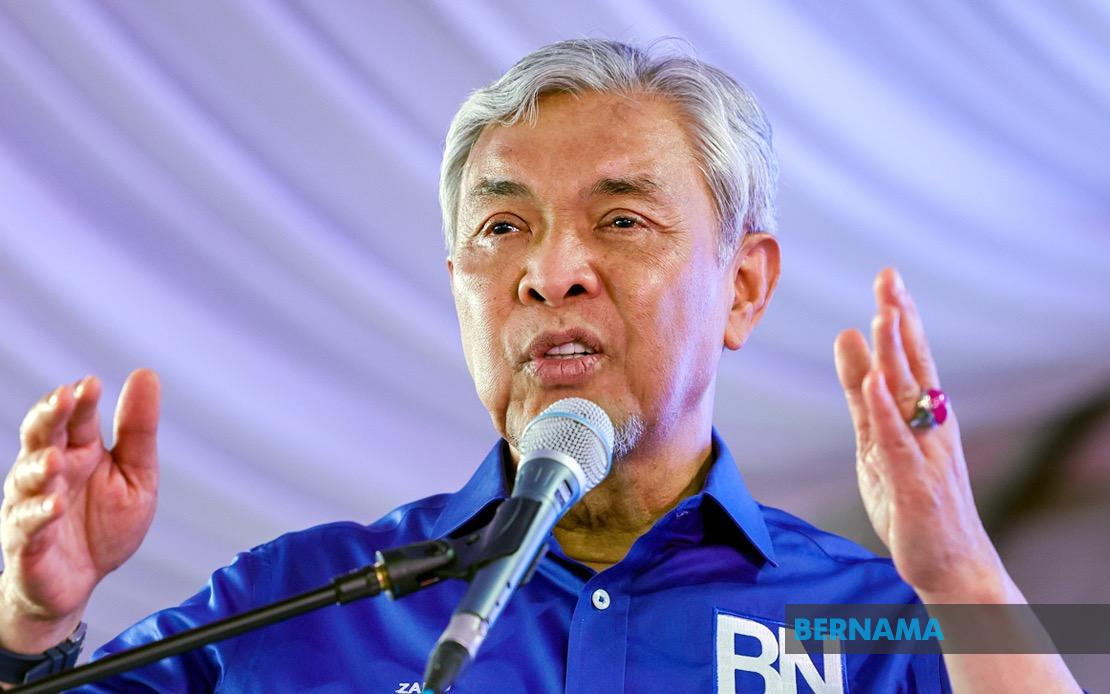
The Barisan Nasional coalition has made an explicit commitment to delivering every promise contained in its manifesto if voters grant it the mandate in the upcoming Johor state election. Speaking at an engagement session with local community leaders in Kluang, BN chairman Datuk Seri Dr Ahmad Zahid Hamidi underscored that implementing these pledges represents a critical priority for maintaining development momentum and improving living standards across the state.
Ahmad Zahid, who also serves as Malaysia's Deputy Prime Minister, framed the manifesto commitments as non-negotiable obligations rather than aspirational rhetoric. He emphasized that party leadership would take an active supervisory role throughout the next term to ensure each commitment translates into concrete action. This assertion comes amid broader concerns across Malaysia about the gap between election promises and post-election delivery, a recurring criticism that has shaped voter sentiment in recent contests.
The deputy prime minister's remarks reflect a recognition that electoral mandates carry significant public trust. He articulated that securing votes should not be viewed as licence for government complacency or self-congratulation, but rather as a solemn responsibility to advance the collective interest. This framing distinguishes between populist electioneering and genuine governance, suggesting BN's strategy rests partly on positioning itself as a serious, accountability-focused alternative.
At the national level, Ahmad Zahid indicated he would personally monitor implementation progress in collaboration with other party leaders. This commitment to oversight structures could prove significant for Johor voters concerned about follow-through, particularly given Malaysia's history of election cycles where manifesto items fall away after balloting concludes. The explicit promise of leadership-level scrutiny offers a degree of institutional backstopping, though enforcement mechanisms remain unclear.
The concept of Bangsa Johor—a distinctive Johor identity and unity—featured prominently in Ahmad Zahid's messaging. He characterized electoral victory not as a triumph for partisan advantage but as an opportunity to strengthen cohesion within the state's political and social fabric. This appeal to state-level identity could resonate with voters who view themselves as Johoreans first, transcending typical communal or party divisions that dominate national politics.
The 16th Johor state election represents a significant contest in Malaysia's political calendar, with 172 candidates seeking to represent voters across 56 state seats. The election attracts particular attention given Johor's economic importance, its substantial population of 2.7 million registered voters, and its historical role as a BN stronghold. Recent state elections elsewhere in Malaysia have demonstrated that traditional power bases cannot be taken for granted, making BN's manifesto commitment strategy an effort to rebuild confidence among constituents.
Polling is scheduled for this Saturday, following the engagement and campaigning activities that have intensified across the state. The compressed timeframe between announcement and voting day means that BN's manifesto promises will likely feature prominently in final campaign messaging. For voters evaluating their choices, the explicitness of these commitments provides a measurable standard against which to assess post-election performance.
The emphasis on manifesto delivery reflects broader regional trends in Southeast Asian politics, where voters increasingly demand transparency and accountability from elected leaders. As Malaysia navigates complex governance challenges—from economic pressures to the need for infrastructure investment—state governments that can demonstrate reliable implementation of announced plans may enjoy greater electoral longevity. BN's positioning of itself as a responsible steward of public mandates appears designed to contrast with narratives of political instability or policy inconsistency.
For Johor specifically, the stakes extend beyond state-level administration. The state's political complexion influences national coalition dynamics and can signal shifting voter preferences across Malaysia's broader electorate. A strong BN performance would reinforce the coalition's claim to represent mainstream Malaysian politics, while a weakened showing might accelerate existing conversations about political realignment. Ahmad Zahid's emphasis on delivery thus carries implications that extend beyond Johor's borders.

